

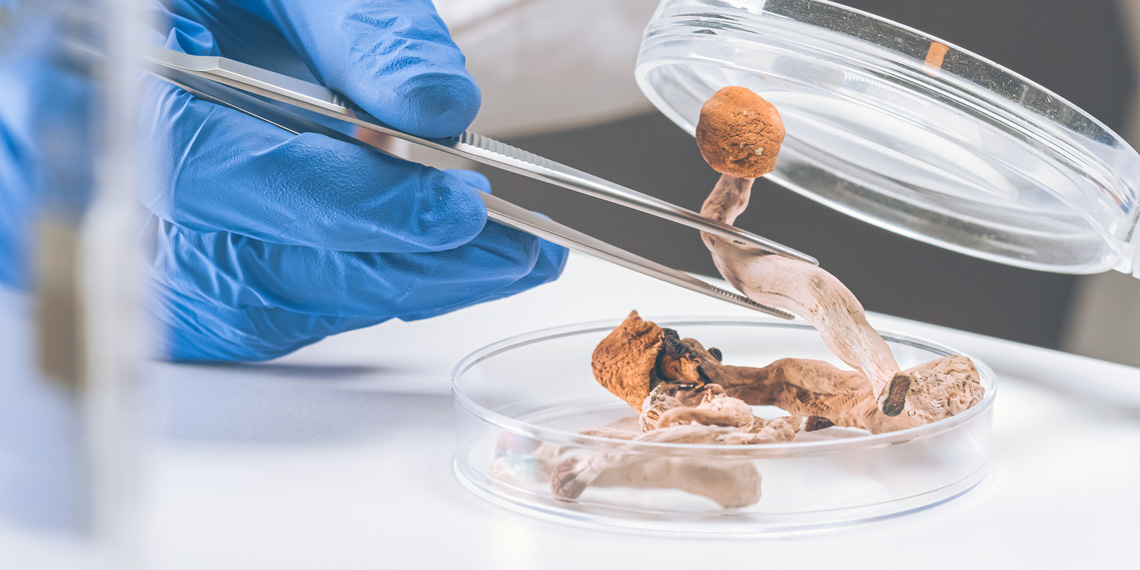
People with depression who use psilocybin mushrooms do not appear to be abandoning standard psychiatric care, according to a new nationally representative study published in Psychological Medicine. Instead, they use conventional services such as outpatient care, telehealth, and prescription medications at roughly the same rates as depressed individuals who do not use psilocybin, while being notably more likely to feel their mental health care needs are going unmet. The findings suggest that real-world psilocybin use among people with depression often coexists with ongoing struggles to obtain adequate relief or care.
Psilocybin is a naturally occurring psychedelic compound found in certain species of mushrooms that alters mood, perception, and thinking by interacting with serotonin pathways in the brain. Public interest in the substance has grown alongside state and local policy changes, including decriminalization in several U.S. jurisdictions, and clinical trials showing that psilocybin-assisted therapy can reduce symptoms of major depression. An observational analysis tracking U.S. trends between 2019 and 2023 found that psilocybin use climbed sharply across age groups during that period, with particularly high rates among people experiencing moderate to severe symptoms of depression or anxiety.
In clinical trials, psilocybin is administered under tightly controlled conditions that include measured dosing, trained psychological support, and medical supervision. Outside of research settings, however, people take mushrooms in unstructured environments ranging from music festivals to self-directed efforts to manage their own mood. The authors of a 2025 evidence review warned that public enthusiasm and access to unregulated psilocybin are outpacing scientific understanding and medical oversight, raising questions about how unsupervised use interacts with standard health care.
Because people use psilocybin for many different reasons, its relationship to conventional psychiatric treatment has been uncertain. Some observers have worried that excitement around psychedelics might lead people with depression to skip proven therapies in favor of self-medicating, while others have noted that people might take psilocybin alongside ongoing care if standard treatments provide only partial relief. At the same time, a 2023 study of more than 12,000 U.S. residents with depression linked unmet mental health care needs to greater use of cannabis, illicit drugs, and prescription drugs. That pattern is consistent with the idea that some people look elsewhere when they cannot get the care they need.
To investigate how recent psilocybin use relates to mental health care among people living with depression, Avery Chan Eun, a medical student at the University of California, San Diego School of Medicine, and colleagues examined nationwide survey data.
“Psilocybin use has increased substantially alongside growing public interest in its potential mental health benefits,” Eun told PsyPost. “At the same time, much of the discussion has focused on whether people may be turning to psychedelics instead of conventional psychiatric care. We wanted to examine that question empirically among people with depression: whether those who use psilocybin differ in their use of mental health treatment and, importantly, whether they still report unmet needs for care.”
The researchers analyzed data from the 2024 National Survey on Drug Use and Health, an annual federal survey designed to represent the U.S. population aged 12 and older living outside of institutions such as hospitals or prisons. The 2024 survey was the first edition to ask how recently respondents had taken psilocybin, allowing the team to identify use within the previous 12 months. The analysis focused on 6,793 respondents who met standard clinical criteria for a major depressive episode during the past year. Under those criteria, a person experiences at least five of nine depressive symptoms over the same two-week period, including persistent depressed mood or a loss of interest or pleasure.
Participants were asked whether they had ever used psilocybin found in mushrooms and, if so, when they last used it. The authors then compared past-year psilocybin users and nonusers across eight past-year mental health care outcomes grouped into three categories. General mental health outcomes covered receiving any form of treatment as well as four individual services: outpatient visits, inpatient hospital care, telehealth appointments by phone or video, and prescription psychiatric medication. Depression-specific outcomes measured whether participants had seen a medical professional for depressive feelings or taken prescription medication specifically for depression, while the third category captured perceived unmet need, defined as seeking treatment or thinking one should get care without receiving it.
Because people who use psychedelics often differ from nonusers in age, background, and other substance use, the researchers used statistical models to account for demographic and socioeconomic variables such as age, sex, race and ethnicity, income, education, marital status, employment, and health insurance. They also controlled for past-year use of cannabis, LSD, MDMA (ecstasy), ketamine, misuse of prescription medications (including opioids, tranquilizers, stimulants, and sedatives), and alcohol use disorder.
Overall, an estimated 7.3% of U.S. individuals with a past-year major depressive episode reported using psilocybin in the past year. Compared with nonusers, those who had used psilocybin were more likely to be male (54.3% compared with 34.8%), never married, and employed full-time. They also tended to be younger, with adults aged 50 and older making up 4.5% of psilocybin users compared with 22.2% of nonusers.
Psilocybin users also reported much higher rates of other substance use during the same year. Roughly nine in ten (90.2%) had used cannabis, compared with 39.5% of nonusers, and 36.2% met criteria for alcohol use disorder, compared with 17.9% of nonusers. Rates of LSD, MDMA, ketamine, and prescription medication misuse were also substantially higher among those who had used psilocybin.
When the researchers examined standard mental health care, they found that roughly two-thirds of depressed individuals who used psilocybin (66.5%) had received some form of treatment in the past year, closely matching the 64.2% rate among nonusers. In an initial comparison before statistical adjustments, psilocybin users showed higher telehealth usage (50.0% compared with 40.2%), but that difference was no longer statistically significant once demographics and other substance use were taken into account.
Across all seven measures of conventional care, including outpatient visits, inpatient stays, telehealth, seeing a doctor for depression, and taking psychiatric or depression medications, differences between psilocybin users and nonusers were not statistically significant in the adjusted analyses.
“I was somewhat surprised that psilocybin use was not associated with lower use of conventional mental health treatment,” Eun said. “Given some of the public discourse around psychedelics as alternatives to traditional psychiatric treatment, I initially wondered whether we would see evidence that people who use psilocybin were less likely to engage with conventional care. Instead, treatment utilization was broadly similar, while unmet treatment need was higher.”
The null findings on conventional care contrast with earlier population-based surveys that pointed in the opposite direction. A 2013 study of more than 130,000 U.S. adults using national survey data from 2001 to 2004 found that lifetime psilocybin use was linked to lower inpatient psychiatric treatment. Similarly, a 2022 analysis of young adults linked past-year LSD use to lower overall mental health care receipt. The authors of the new study suggest those discrepancies may reflect differences in the specific substances studied, how recently people used them, the populations examined, and the time periods when the surveys were conducted.
A distinct gap appeared when the researchers looked at perceived unmet need for care. Just over half of depressed individuals who had used psilocybin (52.0%) reported wanting or thinking they should get mental health treatment during the past year but not receiving it, compared with about a third of nonusers (33.9%). Even after adjusting for demographic factors and other substance use, psilocybin users remained about 44% more likely than nonusers to report an unmet need for mental health treatment.
“One important takeaway is that psilocybin use did not appear to simply replace conventional mental health treatment,” Eun explained. “People with depression who had used psilocybin generally accessed mental health services at similar rates to those who had not. However, they were more likely to report an unmet need for mental health treatment, suggesting that psilocybin use may occur in a group that is still looking for additional or more effective ways to address their mental health needs.”
In interpreting the pattern, the authors suggest that psilocybin use in the community does not reflect a single uniform behavior. Some individuals may be using mushrooms alongside standard therapy or medication because they have only experienced partial relief, while others may be experimenting with self-directed symptom management while facing practical barriers such as cost, limited provider availability, or stigma. Still others may simply be using psilocybin recreationally.
“I would focus less on any individual effect estimate and more on the overall pattern,” Eun noted. “We did not see evidence of a dramatic difference in conventional treatment utilization, but we did see a meaningful difference in reported unmet treatment need. At the population level, that distinction is important because it suggests that using psilocybin does not necessarily mean someone has disengaged from the mental health care system; in some cases, it may coexist with continued difficulty getting the care they feel they need.”
There are a few things to keep in mind when interpreting these findings. Because the survey captured a single snapshot in time rather than following participants over months or years, it cannot establish the sequence of events behind the numbers.
“The most important caveat is that this was a cross-sectional observational study, so we cannot determine causality or the direction of these relationships,” Eun cautioned. “We cannot say that psilocybin use causes greater unmet treatment need, nor can we determine whether people began using psilocybin because their existing treatment needs were not being met. We also studied psilocybin use in the general population, which should not be equated with receiving psilocybin in a structured clinical trial or therapeutic setting.”
The survey also recorded past-year psilocybin use only as a simple yes-or-no question, without asking about dosage, frequency, motivations, or setting. As a result, a person who tried mushrooms once recreationally at a concert was placed in the same category as someone taking them repeatedly in hopes of easing depression. Unmeasured factors such as how severe or long-lasting a person’s depression was, or whether prior medications failed to help, could also influence both psilocybin use and feelings of unmet need. Perceived unmet need itself is a subjective measure that can stem from either practical obstacles, like cost, or personal attitudes, such as skepticism toward standard care.
In addition, the survey excluded people living in institutional settings such as psychiatric hospitals or residential treatment facilities, meaning the findings may not generalize to every group experiencing severe depression. Its weighted interview response rate was 51.5%, which could skew estimates for a relatively uncommon substance like psilocybin if nonrespondents differ in their substance use or care patterns. Because the researchers examined several related treatment outcomes without applying a statistical correction for multiple comparisons, they note that the findings should be viewed as exploratory.
“I’m interested in better understanding why people with mental health conditions choose to use psychedelics outside of clinical settings and how that use fits into their broader treatment trajectories,” Eun added. “Future work could examine motivations for psychedelic use, changes in conventional treatment before and after psychedelic use, and whether particular groups are more likely to turn to psychedelics because of barriers to care or dissatisfaction with existing treatment.”
“More broadly, I think it will be increasingly important for clinicians to understand how psychedelic use intersects with conventional mental health care,” Eun continued. “As these substances become more visible and accessible, clinicians should be prepared to have open, nonjudgmental conversations with patients about why they are using them, what they hope to gain from them, and any potential risks.”
The study, “Psilocybin use, mental health treatment utilization, and unmet treatment need among US individuals with depression,” was authored by Avery Chan Eun, Kevin H. Yang, and Joseph J. Palamar.