

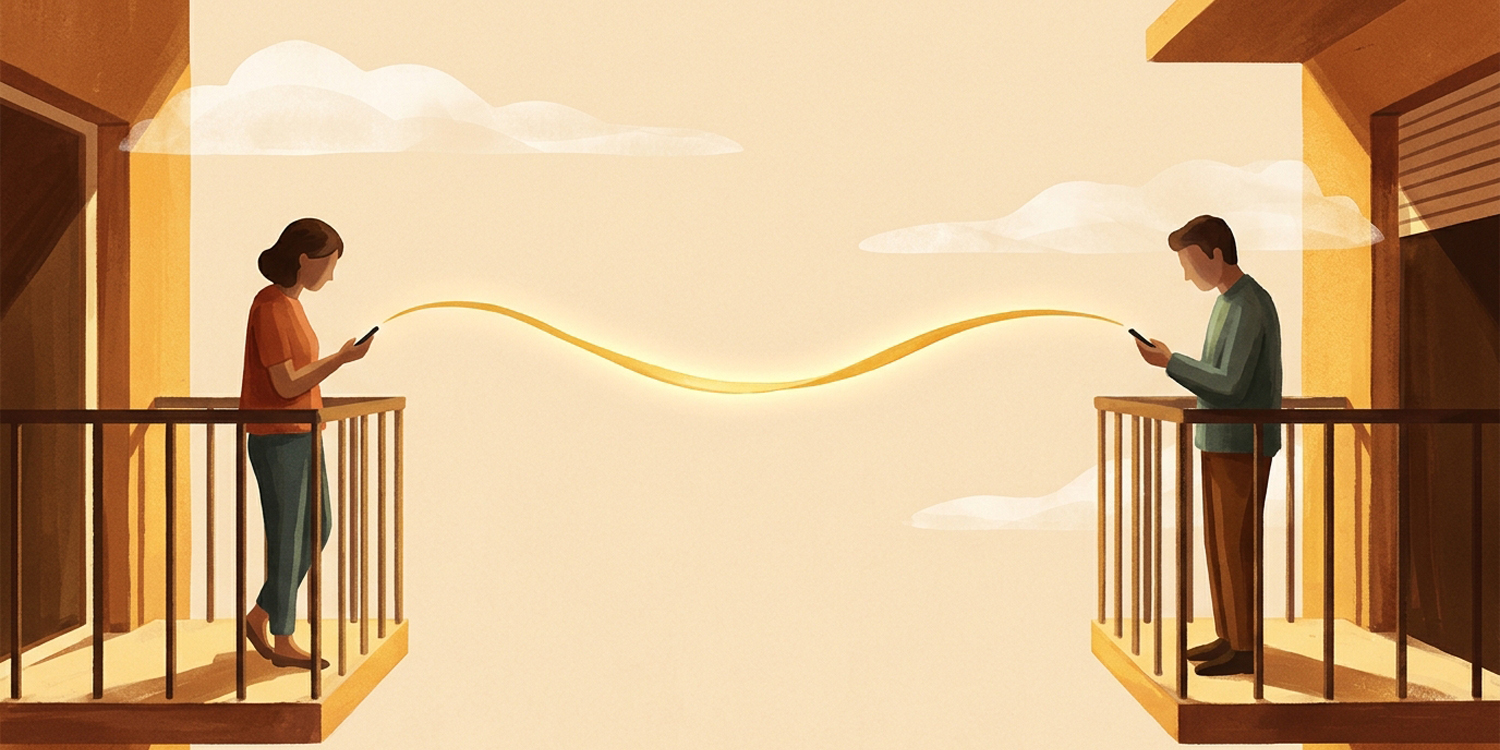
Think about the last time someone really came through for you. Maybe a friend dropped everything to help you move, or a coworker quietly rescued a project before a deadline.
In that moment, you have a small choice to make. You can sit with that warm feeling privately, post a glowing shout-out on social media for everyone to see, or pull out your phone and fire off a quick, direct text.
Most of us treat that choice as an afterthought. If anything, a casual text can feel like the lowest-effort option compared with writing a heartfelt letter or honoring someone in front of an audience online. Yet when psychologists put those everyday habits head-to-head, the humble text message turned out to carry a surprising social punch.
Why how you say thanks matters
For years, gratitude exercises have been one of the most popular tools in positive psychology. Classic approaches usually look like keeping a private gratitude list—noting good things like your health or a sunny morning—or writing a formal thank-you letter.
Researchers draw a useful line between two flavors of gratitude. There is gratitude for the positive parts of your life, and there is gratitude to a specific person whose kindness made a difference. Both can lift your mood, though gratitude directed toward another person naturally pulls you into a social space.
Even so, psychologists have pointed out that much of the older research on gratitude came from small studies that weren’t preregistered, leaving big questions about how the social side of giving thanks actually works. Does keeping appreciation to yourself work just as well as sharing it? And if you do share it, does an online audience help or get in the way?
Putting everyday thank-yous to the test
To find out, researchers Lisa C. Walsh, Annie Regan, Jean M. Twenge, and Sonja Lyubomirsky ran a large, preregistered experiment published in the journal Affective Science. They recruited an ethnically and economically diverse group of 916 undergraduate students and randomly assigned each person to one of four routines.
Over roughly a week, every participant completed their assigned activity four times. Students in the gratitude groups either wrote private letters they kept to themselves, texted thanks directly to someone one-to-one, or posted gratitude publicly on social media—focusing on different people each time—while a comparison group simply tracked their daily activities.
By the end of the week, every gratitude group came out ahead of the control group. Whether students kept their thanks private, texted someone directly, or posted online, they felt more grateful, reported more positive emotions and fewer negative ones, and felt less lonely. They also experienced more of what researchers call elevation—that moved, uplifted feeling of optimism about humanity.
The quiet power of a direct text
Where the groups parted ways was in how close and supported the students felt. Compared with writing unsent letters, posting publicly on social media, or tracking daily routines, sending a one-to-one text delivered the biggest boost in feeling socially connected and supported.
That pattern fits neatly with a psychological concept known as the “find-remind-and-bind” theory, which suggests gratitude strengthens ties with responsive people in our lives. While private reflection lets you savor a kind gesture on your own and a public post puts appreciation on stage for onlookers, a direct message speaks straight to the person who mattered.
The study contributes to the scientific understanding of how everyday digital expressions of gratitude shape well-being. However, the experiment relied on undergraduate students tracked over about a week, so it cannot confirm whether other age groups respond the same way or how long those social boosts last.
None of this means private reflection or public shout-outs are wasted—both still helped students feel brighter and less lonely over a single week. Still, the findings suggest there is nothing second-rate about a simple message sent to an audience of one, and letting someone know directly may be the clearest path to feeling genuinely connected.