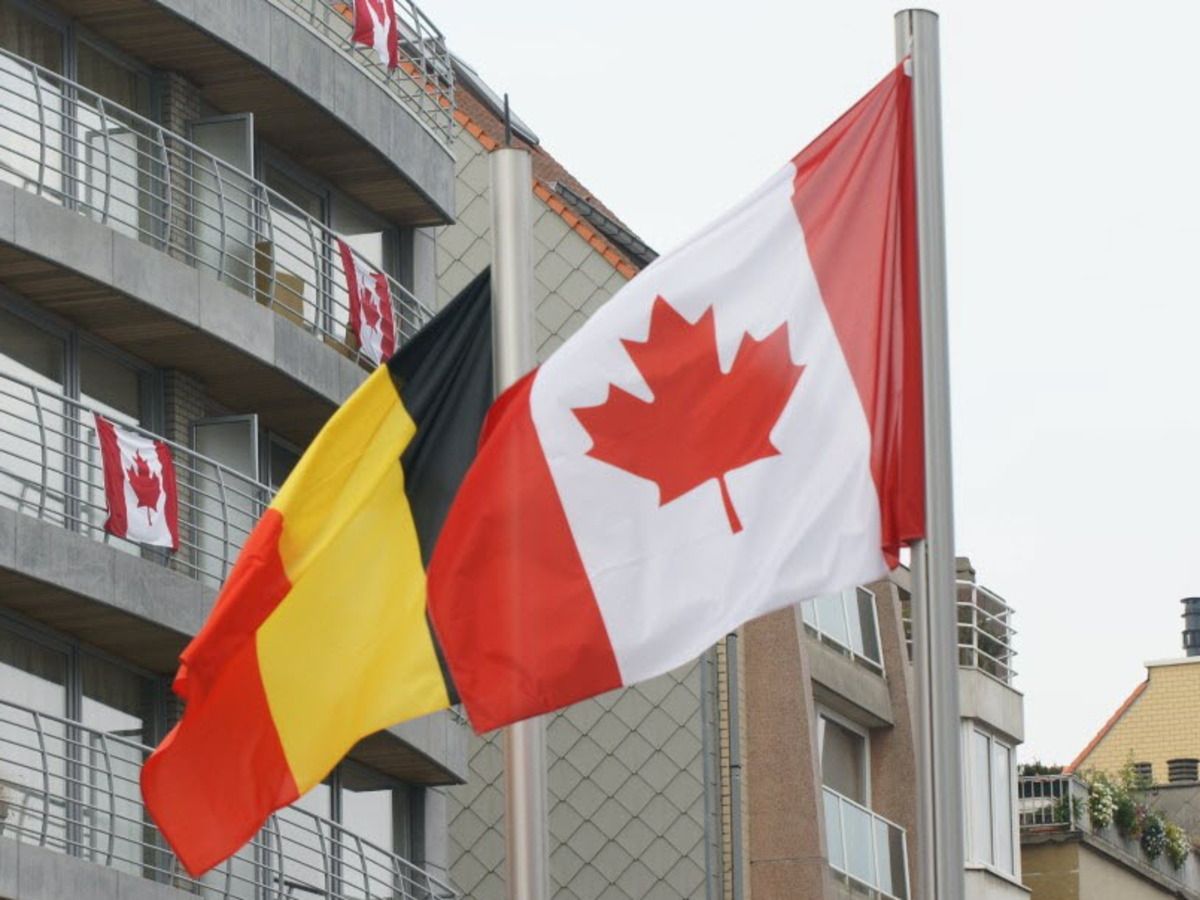


Belgium and Canada, though separated by the Atlantic Ocean, are remarkably close. Our relationship is rooted in history , forged through the sacrifice of Canadian soldiers who helped liberate Belgium during both World Wars. Today, it is sustained by shared values: a commitment to democracy, the rule of law, multilateral cooperation and an international order based on rules and trust. Yet history and friendship, while essential, are not enough. In an increasingly uncertain world, Canada and Belgium have an opportunity, and indeed a responsibility, to deepen their economic partnership. By doing so, both countries can strengthen their prosperity, enhance their economic security, and contribute to a more resilient transatlantic economy. The foundations are already in place. The Comprehensive Economic and Trade Agreement (CETA) between Canada and the European Union , which entered into force in 2017, has transformed our commercial relationship. Trade between Canada and the EU has grown significantly, and the results have demonstrated the benefits of open and rules-based trade . Between 2016 and 2025, trade between Canada and Belgium increased by more than 80 per cent. Today, Belgium is Canada’s fifth-largest trading partner within the European Union, with bilateral trade in goods and services reaching approximately €8.5 billion, or more than $13 billion, in 2025. This is a strong performance, but it is also only the beginning of what our countries can achieve together. The case for closer cooperation is particularly compelling because our economies are highly complementary. One area where this complementarity is especially visible is logistics and port connectivity. Canadian ports serve as gateways to North America, while Belgian ports serve as gateways to Europe. The Port of Antwerp-Bruges, Europe’s second-largest port and the continent’s leading chemical cluster (and biggest in the world after Houston), connects international trade flows to the economic heart of Europe. North Sea Port provides similar strategic advantages through its extensive industrial ecosystem. Over the past several years, Belgian and Canadian ports have intensified their cooperation. Strengthening these transatlantic gateways will help both countries diversify trade routes and improve economic resilience. Energy and critical minerals offer another major avenue for cooperation. As Europe seeks to strengthen its energy security and diversify its sources of supply, Canada is emerging as an increasingly important partner. Canada’s vast reserves of critical minerals are essential for the global energy transition, while Belgium with top companies such as Umicore and Solvay has internationally recognized expertise in processing, refining, recycling, and integrating these materials into advanced industrial value chains. This creates a natural partnership. By combining Canadian resources with Belgian technological and industrial know-how , our countries can contribute to secure and sustainable supply chains for batteries, clean technologies and advanced manufacturing. The same logic applies to renewable and low-carbon energy. Belgian companies are global leaders in offshore wind, maritime infrastructure, and energy engineering. Firms such as DEME, Jan De Nul and Tractebel are already involved in projects that support the energy transition around the world. As Canada accelerates the development of offshore wind projects and explores new opportunities in hydrogen production and export, Belgian expertise can help turn ambition into reality. Hydrogen, in particular, offers significant promise. Canada has immense production potential, while Belgium is developing one of Europe’s most sophisticated hydrogen ecosystems, anchored by the strategic Port of Antwerp-Bruges, featuring the world-class Zeebrugge LNG terminal, and supported by extensive industrial infrastructure. A closer partnership could help create future transatlantic hydrogen corridors that benefit both economies. Innovation and technology also deserve a central place in the Canada-Belgium relationship. By encouraging cooperation between research institutions, startups, technology firms and universities, we can help shape an innovation ecosystem that is both dynamic and trustworthy. The life sciences sector provides an excellent example of what such collaboration can achieve. Belgium is one of the world’s leading pharmaceutical hubs and a major exporter of vaccines and innovative medicines. Canadian and Belgian companies are already working closely together, and recent investments by firms such as UCB demonstrate confidence in Canada’s market, talent pool, and research environment. Expanding these partnerships will contribute to better health outcomes as well as economic growth. Defence and aerospace are equally promising sectors. As founding members of NATO, Canada and Belgium share strategic interests and a growing commitment to strengthening their defence capabilities. Cooperation between trusted allies, supported by innovative companies and compatible equipment platforms, offers opportunities for industrial collaboration and technological development that extend beyond traditional security considerations. Economic partnerships, however, are ultimately built by people. Business leaders, researchers, students, entrepreneurs and travellers are the true engines of lasting relationships. Academic exchanges, youth mobility programs, scientific collaboration through Horizon Europe and growing air connectivity all help bring Canadians and Belgians closer together. These human connections create the trust and understanding that underpin successful economic cooperation. The years ahead offer a unique opportunity. Canada is pursuing greater economic diversification . Europe is seeking reliable partners and more secure supply chains. Belgium, as a highly connected European economy, is ideally positioned to help bridge these ambitions. Europe has the missing piece of the critical minerals puzzle that Canada needsOpinion: We can’t diversify our trade with uncompetitive ports The Belgian Economic Mission to Canada, led by Her Majesty Queen Mathilde in October 2027, will provide an important milestone on this journey. It will bring together business leaders, policymakers, innovators, and investors from both countries to explore new partnerships and new opportunities. Canada and Belgium may differ in size and geography, but they share a belief that openness, innovation, and international cooperation remain the best path to prosperity. At a time when global uncertainty is increasing, deepening our economic partnership is not simply desirable. It is a strategic necessity. Together, Canada and Belgium can help build a stronger, more resilient, and more prosperous transatlantic future. Karl Dhaene is the Ambassador of Belgium to Canada
Why Canada and Belgium are only scratching the surface when it comes to trade