


The S&P 500 has had a strong 2026. Most of the gains have come from the same group of technology and AI stocks that have been driving the market for two years. One portfolio manager just decided to look somewhere else.Chris Versace, portfolio manager of the TheStreet Pro Portfolio, initiated two new positions on Aug. 5, adding the Health Care Select Sector SPDR ETF (XLV) and the Robo Global Robotics and Automation Index ETF (ROBO). The moves follow the portfolio’s existing cybersecurity strategy and extend its exposure into two additional end markets Versace says he expects to grow over multiple years.What Versace bought and how he sized the positionsThe Pro Portfolio bought 395 shares of XLV at or near $164. That stake represents roughly 1% of total portfolio assets. It also bought 575 shares of ROBO at or near $84.50, coming in at about 0.75% of assets. Versace gave both new positions an initial rating of Two. The market has had a strong run recently, and the Two ratings reflect that caution.Versace said both positions will be built up over time, using pullbacks to add shares rather than buying everything at once. Related: Vanguard’s global ETF fixes the S&P 500’s biggest weaknessHe has done this before. The portfolio used the same approach to build its stake in the First Trust Nasdaq Cybersecurity ETF (CIBR). Start small, watch how things develop, and add more when the setup looks better.Initial price targets are $180 for XLV and $95 for ROBO. From the entry prices, that is roughly 10% upside on XLV and about 12% on ROBO. The portfolio also set checkpoint levels at $144 for XLV and $70 for ROBO. If either ETF falls to those levels, Versace will take another look at the position. Selling is not automatic at those prices, but a review is.Why Versace is buying healthcare now through XLVXLV tracks the Health Care Select Sector Index. It covers pharmaceuticals, biotechnology, medical devices, healthcare providers, and life sciences. The fund manages more than $41 billion in assets across 63 companies. The top 10 positions make up about 62% of the fund. The biggest names inside it include Eli Lilly, Johnson & Johnson, AbbVie, Merck, and Amgen, per State Street. In its Q3 2026 outlook, State Street upgraded healthcare from neutral to positive after nearly a year of caution, a signal that the fund’s own issuer sees improving conditions ahead.More Wall Street:Wall Street’s AI trade faces its biggest valuation testThe next Wall Street shift is already underwayWall Street sends strong 4-word verdict on the stock marketVersace said the portfolio had already been looking at the healthcare sector before pulling the trigger on XLV. Going the ETF route rather than picking one stock gives the portfolio broad exposure without betting everything on one company’s drug pipeline, regulatory decision, or earnings report. He said the portfolio may eventually mix XLV with an individual healthcare stock or just build the ETF position bigger, depending on how things develop.The longer-term case for healthcare is not complicated. The U.S. population is getting older. Older people use more healthcare. That demand is not going away. Healthcare has also lagged large-cap technology over the past two years, which is part of what makes the entry point interesting now.The robotics and automation thesis behind ROBOROBO targets companies involved in robotics, automation, artificial intelligence applications, and the industrial technologies that support them. Versace said the robotics market opportunity is becoming too big to ignore, and the portfolio is seeing a growing number of signals for automation investment across multiple industries. ROBO Global reports the ETF has delivered an annualized return of 8.64% since its launch in January 2014.Robotics is not just a factory story anymore. Automation is expanding in logistics, healthcare, manufacturing, defense, and agriculture. A lot of those industries are dealing with labor shortages and pressure to cut costs. Versace also cited the One Big Beautiful Bill’s depreciation provisions as a near-term boost. Companies that invest in automation and equipment can write off more of that spending under the new rules, which makes the investment more attractive.ROBO also connects to themes already present in the portfolio. Versace said the markets ROBO covers will drive additional demand for compute and networking, similar to the demand the portfolio expects from autonomous vehicles. That linkage extends the AI and technology thesis into industrial deployment rather than just infrastructure spending.The robotics trade is more sensitive to valuation and capital spending cycles than the healthcare trade. Companies in ROBO can fall sharply when customers delay investment or investors rotate away from higher-growth themes. That is part of why the initial position is smaller at 0.75% of assets compared with 1% for XLV.
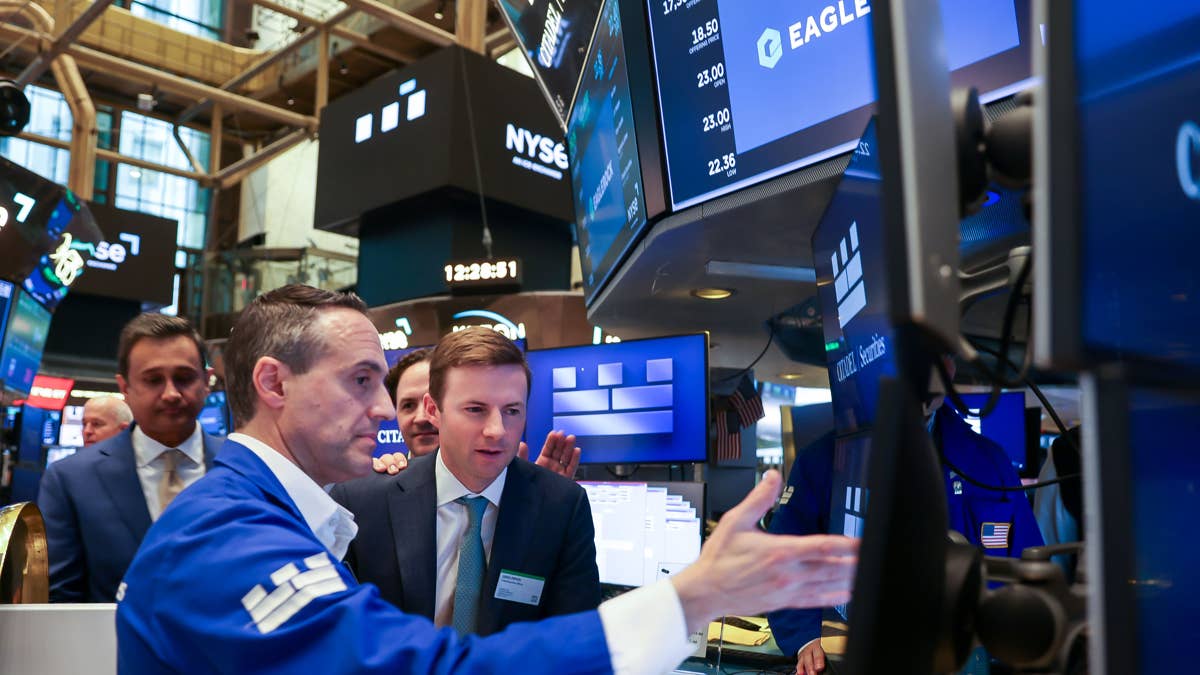
Versace said both positions will be built up over time, using pullbacks to add shares rather than buying everything at once.Michael M. Santiago / Getty Images
What could move both positions from hereVersace said he plans to revisit both price targets as Wall Street analysts update their numbers on the major underlying holdings during earnings season. A strong quarter from Eli Lilly or AbbVie could push the XLV target higher. Better capital spending data or more clarity on automation policy could do the same for ROBO.Both positions could also get a boost if money starts rotating out of the biggest technology stocks and into healthcare and industrial names. Falling rates would help ROBO in particular, since lower borrowing costs tend to lift valuations on growth-oriented names.The checkpoint levels are there if things go the other way. A drop toward $144 on XLV or $70 on ROBO would trigger a review. Versace would look at whether the reasons for buying still make sense. If they do, the lower price could be a chance to add more shares. If they do not, the portfolio walks away.Versace was clear that these are not trading positions. The plan is to hold both over a longer time horizon and build exposure as the opportunities come. At less than 2% of the portfolio combined, the initial bets are sized to leave plenty of room to be wrong and still adjust.Related: Warren Buffett keeps pointing at the same ETF for a reason