


UBS Wealth Management USA has raised its forecast from one rate hike to two and expects the first to come later in September.
But a more hawkish Fed doesn’t necessarily imply a deteriorating investment outlook, according to UBS Executive Director and Senior U.S. Economist Andrew Dubinsky.
“Investors should maintain diversified exposure and use market volatility around economic data and Fed decisions to rebalance portfolios toward their long-term targets,’’ Dubinsky said in a Sept. 7 note.
Strong employment and inflation data have reinforced the case for tighter policy, and “we now expect two rate hikes in 2026” in September and December, the UBS note said.
“Investors should maintain diversified exposure and use market volatility around economic data and Fed decisions to rebalance portfolios toward their long-term targets,’’ the UBS note said.
Resilient economic activity, AI investment, strong employment and healthy profits support “our constructive view on global equities, even if higher yields create short-term volatility,’’ the UBS note added.
UBS revises forecast to 2 Fed rate hikes this year
The persistently high inflation of the last five years is haunting not only your household budget, but also your investment portfolio and other financial matters.
Escalating oil and energy prices from the Iran war and tariffs from the last trade war — the newest ones don’t count yet — are top of mind for Fed Chairman Kevin Warsh and other key Fed policymakers.
But with the newest inflation data coming later this week, Fed watchers are divided as to whether the central bank will vote to raise benchmark interest rates later this month to tamp down the sticky inflation that Warsh has vowed to tame.
“If the Fed moves onto a hiking path, the relative advantage of short-duration bonds over cash would likely narrow. But recent moves higher in yields may be opening up portfolio diversification opportunities in medium- to long-maturity high-quality bonds,’’ the UBS note said.
TheStreet
Fed rate hike path tied to looming inflation data
As I’ve reported, Fed officials are divided over how the central bank should act in the short term but agree that new evidence of sticky price pressures could shift the Federal Open Market Committee into a rate hike Sept. 15-16.
Warsh displayed a noticeable hawkish shift during an Aug. 28 speech at Jackson Hole in which he pledged the central bank would work to tame elevated inflation, which has been above the Fed’s 2% target for five years.
“We have work to do,” Warsh said.
The CME Group FedWatch Tool calls for the probability of a 25 basis-point hike this month at 60.4%, a 70% chance in October, and an 86% likelihood in December, the FOMC’s final meeting of the year.
Fed’s dual mandate focuses on jobs, prices
The Fed’s dual mandate from Congress requires maximum employment and stable prices.
Lower interest rates support hiring but can fuel inflation. This risks fueling further inflation, potentially leading to an inflationary spiral.
Higher rates cool prices but can weaken the job market. This increases the cost of borrowing and further stifles economic activity.
The Sept. 4 blowout jobs report demonstrates the U.S. labor market is plowing through the economic uncertainty and financial jitters from the Iran war, despite higher gas and other energy prices.
Related: Fed rate-hike threat heats up as August inflation data looms
U.S. job growth surged in August and the unemployment rate held steady at 4.1%, topping all estimates and hinting that the labor market has more momentum than previously thought.
The Bureau of Labor Statistics will release August data for the Producer Price Index on Sept. 10 and the Consumer Price Index Sept. 11.
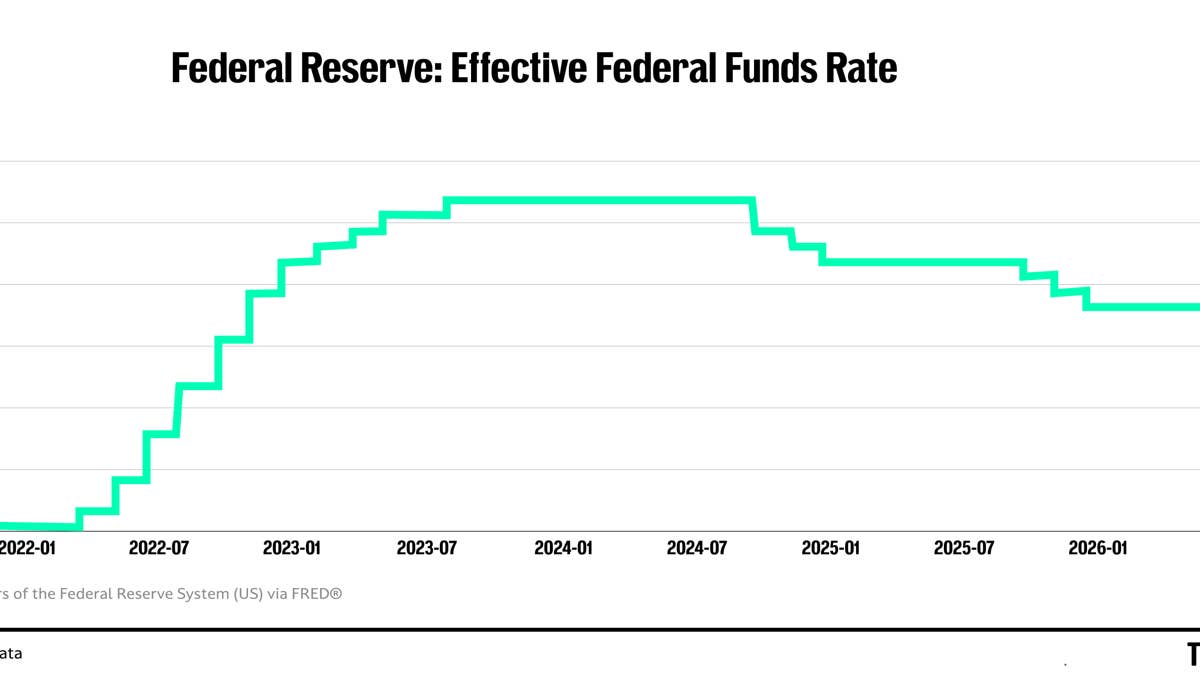
Cool PPI and CPI headlines could keep the Federal Funds Rate on hold at 3.50% to 3.75%.
How Fed monetary policy affects you
The rate-setting FOMC voted 9-3 in July to hold the benchmark Federal Funds Rate target in a range of 3.5% to 3.75%. The three dissenters wanted to raise rates by 25 basis points because of inflation concerns.
Policymakers had cut rates by 25 basis points at its last three meetings of 2025 to shore up the softening labor market.
These “insurance” cuts stopped after the majority of policymakers decided the risk from higher prices was outweighing signs that the jobs market was stabilizing.
The funds rate is the interest rate at which banks lend balances at the Federal Reserve to other banks overnight.
A change in the funds rate triggers moves in short-term borrowing costs ranging from credit cards to student loans and home equity loans.
Higher interest rates also increase the yield on fixed income and alter how equity markets value future corporate earnings.
“We expect the growth effects of two rate hikes to be modest and still see economic growth remaining near trend,’’ the UBS note said.
Related: Investors drop two-word verdict on Warsh’s Fed rate shift