

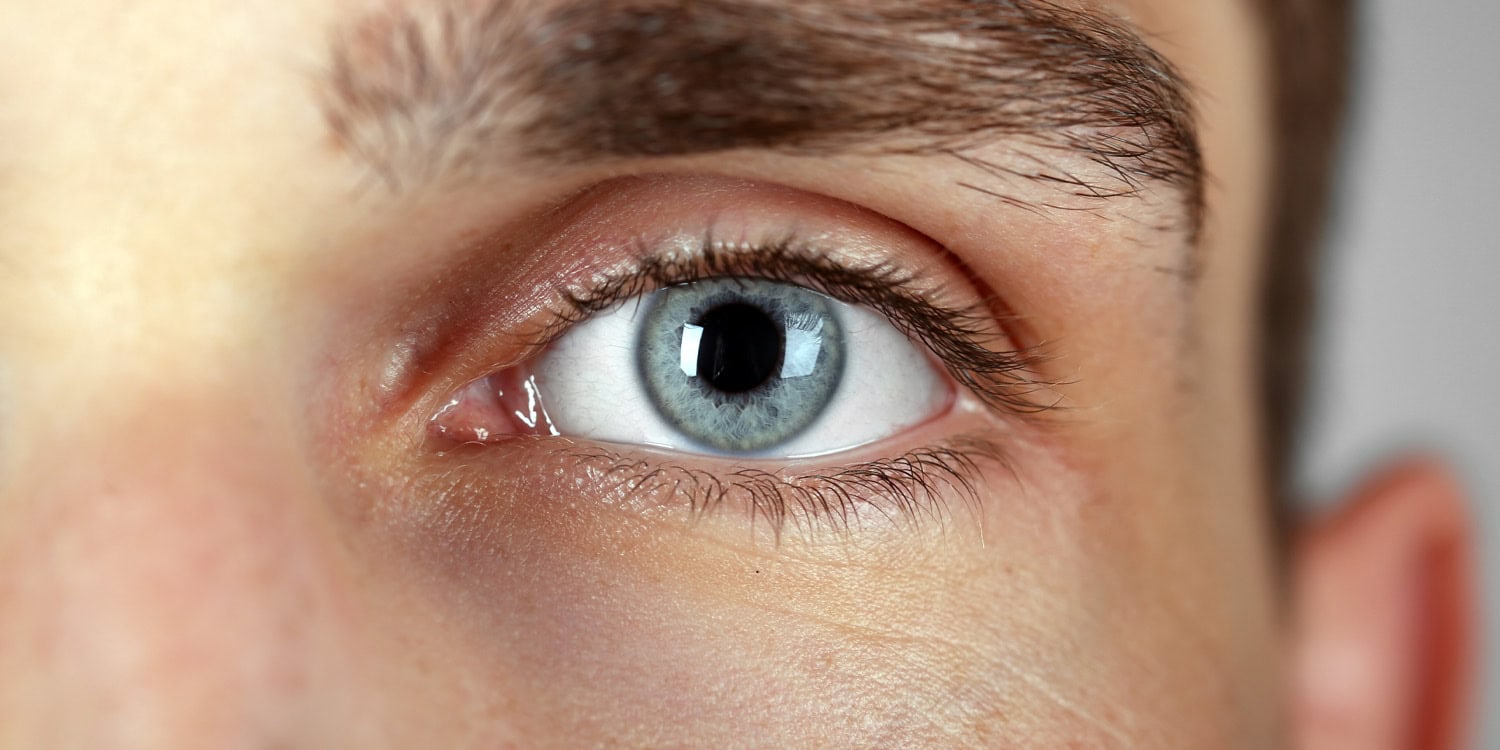
Human beings rely on subtle visual signals to figure out where other people are looking. A new small study reveals that the tiny reflections of light on the surface of the eye help observers accurately track gaze direction across changing lighting and head positions. The research was published in Psychological Science.
Tracking another person’s gaze is a fundamental part of social interaction. It allows people to understand intentions, anticipate actions, and coordinate behavior. Observers typically determine gaze direction by looking at the dark circle of the iris against the lighter white background of the eye.
Environmental factors like shadows or head rotation can alter how the eye appears to an observer. These visual distortions can trick the brain into misjudging where someone is looking. Researchers Gwenisha J. Liaw and Colin J. Palmer of the National University of Singapore wanted to know if the brain uses extra information to correct these errors.
They focused on a tiny visual feature called eye glint. Eye glint refers to the small, mirror-like reflections of light that bounce off the glossy surface of the eye. The cornea and the wet layer of the eyeball naturally create these reflective highlights.
Commercial video-based eye-tracking cameras use glint to calculate gaze. The researchers wanted to test if the human brain naturally does the same thing. They proposed that eye glint might help observers maintain a stable perception of gaze despite confusing environmental conditions.
To investigate this question, the researchers conducted three experiments using computer-generated three-dimensional human faces. In the first small study of 40 participants, they tested whether eye glint improves gaze perception under perfect viewing conditions. The face models were lit directly from the front and faced the participants straight on.
Participants looked at the digital faces, which were programmed to look at specific points ranging from direct eye contact to looking slightly to the side. Half of the faces featured realistic eye glints. The other half had the glints digitally removed while all other features remained exactly the same.
The participants completed two tasks during the first study. In the first task, they reported whether the face was making eye contact with them. In the second task, they used a computer mouse to rotate a pointer on the screen to indicate the exact angle of the gaze.
Under these simplified conditions, eye glint had almost no effect on the judgments of the participants. The differences in accuracy and precision between faces with and without glint were not statistically significant. Participants were no better at detecting subtle deviations from direct eye contact when the glint was visible.
In the second small study, the researchers made the viewing conditions more difficult by rotating the heads of the computer-generated faces. Maintaining an accurate perception of an object despite changes in viewpoint is a major challenge for the human visual system. This ability to maintain visual stability is known as perceptual constancy.
When a person turns their head to one side but keeps their eyes fixed on you, the physical position of the iris shifts within the eye opening. This shift usually causes a perceptual illusion. The observer is often tricked into thinking the gaze has moved in the opposite direction of the head turn.
The researchers asked 40 participants to view faces with heads turned 20 degrees to the left or right. The participants then indicated whether the face was looking to their left, looking directly at them, or looking to their right.
The presence of eye glint made a noticeable difference during this task. When the eye glint was visible, participants made fewer visual errors caused by the rotated heads. Their estimates of the gaze direction also became more precise compared to the trials without glint.
The researchers noted that the physical position of the glint on the iris stays relatively stable regardless of how the head is turned. This stability provides the brain with a reliable reference point to estimate the true gaze direction. It helps the observer overcome the confusing signals caused by the rotated head.
The third small study examined the effects of changing light sources. Off-center lighting creates shadows across the face and eyes. This can darken one side of the eye and create another optical illusion, similar to what happens when one side of the eye is artificially darkened.
Lighting a face from the left can darken the opposite side of the eye and make it look like the person is looking to the right, because perceived gaze tends to shift toward the darkened side of the eye. The shadows interfere with the basic visual cues that the brain relies on to calculate where the iris is located.
The researchers presented 40 participants with faces illuminated from a 45-degree angle to either the left or the right. As in the previous tests, they compared responses to faces with and without eye glints. Participants indicated whether each face appeared to be making eye contact.
The researchers found that eye glints reduced the visual errors caused by side lighting. Without the glint, the angle of the lighting strongly biased the perception of eye contact. With the glint, this bias was reduced.
The position of the glint on the eye surface shifts depending on where the light is coming from. The brain likely uses this tiny reflection to figure out the lighting direction. This helps the observer compensate for the confusing shadows and properly judge the orientation of the eye.
The researchers also asked the participants if they noticed any differences in the appearance of the eyes during the tests. Only about half of the participants in each experiment reported noticing the eye glints.
When the researchers compared the results of participants who noticed the glints to those who did not, the performance was nearly identical. The effect of eye glint did not depend on conscious awareness. This suggests that the brain processes this information automatically as part of its visual background computations.
A potential limitation of these findings is that lighting conditions in the real world are highly variable. Moving through a room could constantly shift the position of the light source relative to a person’s face. The changing reflections could theoretically make the glint a less reliable cue in a chaotic environment.
Human eye movements happen very quickly, often several times per second. Because people glance at each other so rapidly, lighting usually remains fixed for the duration of a single glance. This gives the brain enough time to process the glint as a reliable cue for that specific moment in time.
Future research will explore if eye glint influences other social judgments. Scientists may test whether glint affects how people recognize emotions or assess age based on skin texture. Researchers also want to test whether people can be trained to consciously use eye glint to track subtle eye movements in natural settings.
The study, “Eye glint as a novel Perceptual Cue in human vision,” was authored by Gwenisha J. Liaw and Colin J. Palmer.