

For millions of families, a second paycheck isn’t a luxury. It’s how the mortgage, the grocery bill, and the day care tab get covered. Roughly half of married-couple families have both spouses working, according to the Bureau of Labor Statistics.
Amazon founder Jeff Bezos thinks AI is about to change that math, and he’s predicting plenty of households will decide one of those jobs is optional.
Read more: Warren Buffett told Jeff Bezos the real reason people don’t just ‘copy’ his investing strategy to get rich
Bezos says 1 income could be enough
“Because of the productivity in the economy, many people are going to decide — let’s say you have a two-earner income household,” Bezos said on Fox News’ “Special Report” in October. “You’re not going to need to have a two-earner household. If you want it, fine. If you don’t want to have it, one of the people might drop out.”
“Some people will decide, ‘I can support my family working three days a week.’ That’s what productivity in the economy means,” he continued.
Bezos said that would flip the usual AI fear on its head. Instead of mass unemployment, he sees employers scrambling to find workers.
“You’ll have a labor shortage,” Bezos said. “It’s going to be difficult to hire people because the productivity in the economy will make it so that if people don’t want to work two jobs, they won’t have to.”
The segment aired live from Blue Origin’s factory floor in Cape Canaveral, Florida, as part of Fox News Channel’s 30th anniversary coverage.
Bezos isn’t just talking about AI. He’s spending on it. Project Prometheus, the AI startup he launched in 2025, is building tools he said will be “so easy to use that anyone will be able to be an engineer.”
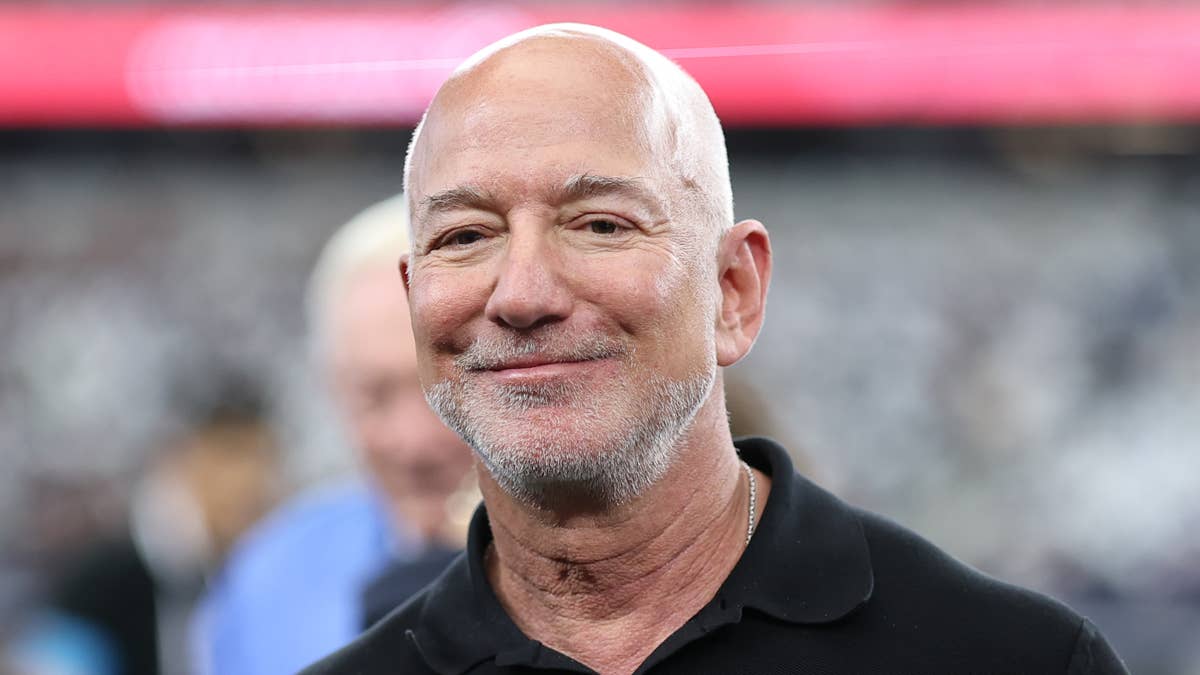
Jeff Bezos says he thinks AI will give households the option to work less. JULIEN DE ROSA / Getty Images
Amazon’s own job cuts complicate the pitch
The optimism lands next to an uncomfortable fact. Amazon has eliminated nearly 30,000 corporate roles since late 2025, including about 14,000 in October 2025 and 16,000 in January.
Amazon CEO Andy Jassy wrote in a 2025 memo to employees that AI would “reduce our total corporate workforce as we get efficiency gains from using AI extensively across the company.”
Pressed on the cuts, Bezos pointed to the pandemic rather than AI.
“Well, Amazon is in a very special position where coming out of COVID, we had hired so many people,” Bezos said.
Shoppers stuck at home sent orders soaring, and the company staffed up to keep pace.
“The whole team worked extremely hard and did so much. We really grew our head count,” he said.
More Jeff Bezoz:
Jeff Bezos doubles down on AI message for American workers
Jeff Bezos sends stunning message to American workers
Jeff Bezos just named Amazon’s next big pillar
Bezos has company in the shorter-workweek camp
Tesla CEO Elon Musk has gone even further. “My prediction is that work will be optional,” Musk said at the U.S.-Saudi Investment Forum in 2025.
He later doubled down on X. “AI+Robots will be able to do everything, resulting in universal high income. Work will be optional,” Musk wrote.
Microsoft co-founder Bill Gates floated an even shorter week. “What will jobs be like?” Gates said on “The Tonight Show Starring Jimmy Fallon” in 2025. “Should we just work like two or three days a week?”
JPMorgan Chase CEO Jamie Dimon puts it on a longer clock. “I believe that 30 years from now, your kids are probably working three and a half days a week,” Dimon told CBS earlier this year.
Not everyone is buying the abundance pitch
Gates has also warned the road there could get rough. “Even under the best circumstances, the transition to this new AI era will be one of the most turbulent times in human history,” Gates wrote in a recent Gates Notes essay.
Investor Michael Burry, who famously bet against the housing market before the 2008 crash, answered Musk’s optional-work post on X in five words.
“False,” Burry wrote, according to Business Insider. “There will be revolution first.”
Anthropic CEO Dario Amodei has warned that AI could eliminate half of all entry-level white-collar jobs within five years.
That’s the gap in the three-day dream. Productivity gains only shrink the workweek if they show up in paychecks. If companies pocket the savings as profit or fewer hires, a family doesn’t gain a day off. It loses an income.
The 2nd paycheck isn’t retiring yet
Nobody is handing in a resignation letter over a billionaire’s forecast just yet.
Bezos is betting AI turns the two-paycheck household into a choice instead of a necessity. Until those gains start showing up in household budgets, plenty of families will keep both jobs and let the robots prove it first.
Related: Read More: