

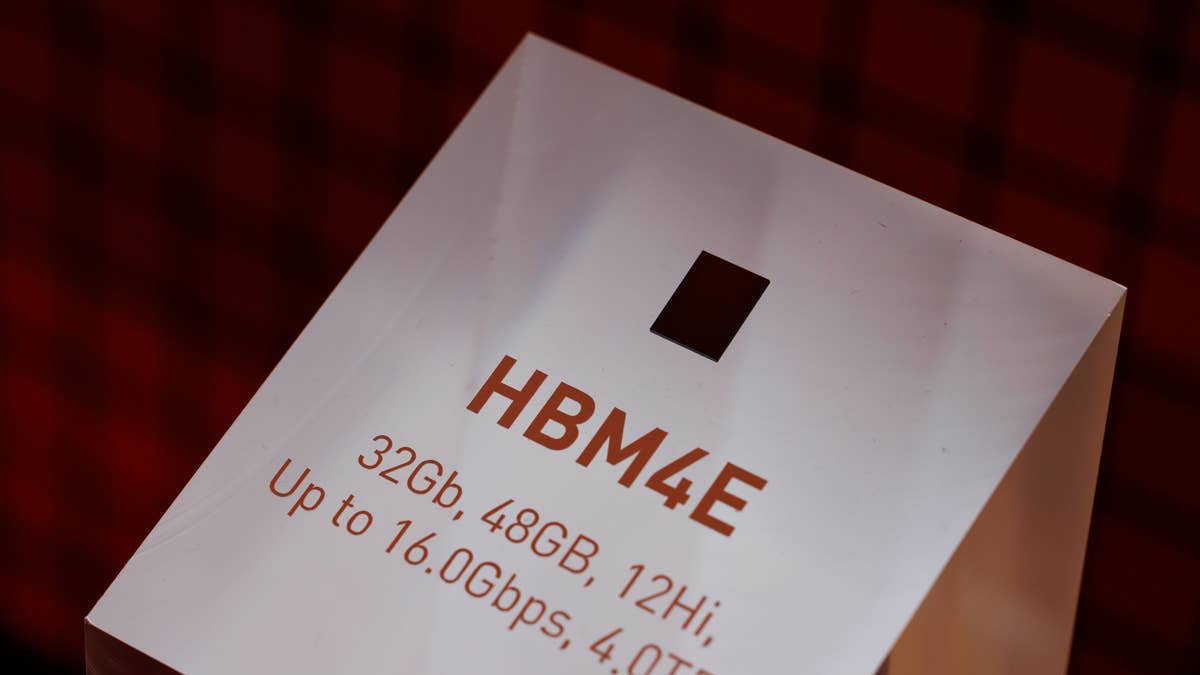
Three companies are having the kind of year most industries never see. Samsung Electronics, SK Hynix, and Micron Technology make the memory that powers artificial intelligence, and buyers are now competing for supply rather than haggling over price, according to Counterpoint Research.
Samsung said last month that it became the world’s first tech company to earn more than 100 trillion won (about $80 billion) in operating profit in a single quarter, according to its results. Nearly all of that profit came from its chip division.
Across the industry, DRAM revenue reached nearly $200 billion in the third quarter, close to five times the level a year earlier, Counterpoint said. Bit shipments rose only about 4% in the quarter, so higher prices did most of the work.
If you plan to buy a phone or a laptop, this boom applies to you too. Counterpoint expects strong server demand to push memory prices higher again next year, creating headwinds for phones, PCs and other devices.
Also read: SK hynix will pay suppliers that fail. Blame a hidden bottleneck
Now, the one big customer those three cannot legally serve wants to build the chip itself.
Huawei researchers have designed high-bandwidth memory, or HBM, with twice the data-pin density of chips Samsung and SK Hynix mass-produce today, Bloomberg reported. The design is expected to debut at the International Solid-State Circuits Conference in San Francisco in February.
One stacked chip turned memory into a gold mine
AI processors are only as fast as the data they receive. HBM stacks memory chips vertically and sits beside the processor so the two can trade data quickly, like moving the pantry next to the stove.
Making it is hard, so only three companies do it at scale. SK Hynix held 50% of global HBM revenue in the second quarter, Samsung 33% and Micron 18%, according to Counterpoint figures cited by Reuters.
That control explains the profits. Counterpoint analyst Jeongku Choi called the boom “a pricing super-cycle, not yet a volume cycle,” and said suppliers are on track for new earnings records next quarter.
Relief is far off. Counterpoint expects supply to stay tight because major new factories won’t start production until 2028, and Samsung expects AI demand to outrun industry supply by an even wider margin in 2027. For the three giants, scarcity is the business model.
Huawei researchers designed AI memory with twice the data-pin density of chips Samsung and SK Hynix mass-produce today, according to Bloomberg.Bloomberg / Getty Images
Washington’s ban pushed Huawei to build its own
US export rules bar all three from selling HBM to Chinese customers, Bloomberg noted. Washington tightened those controls in December 2024, and Chinese chipmakers have since turned to unofficial channels where the memory can cost several times more.
The squeeze shows up in prices. Huawei, Cambricon, MetaX and Iluvatar CoreX raised AI chip prices by 20% to 50% because rising memory costs complicated efforts to ramp up production, Reuters reported.
That pressure explains the new design. Data pins work like lanes on a highway, so doubling their density could, in theory, deliver more bandwidth for AI models. Bloomberg said Huawei’s progress toward commercial production remains unclear, even as it plans at least one new AI chip a year through 2029 for developers such as DeepSeek and Moonshot.
The real threat is to scarcity, not China sales
The three giants lose nothing tomorrow if Huawei succeeds, because they are already locked out of China’s HBM market. The risk is slower and easier to miss.
China has already built a fourth player in ordinary memory. CXMT, the country’s largest DRAM maker, held 10% of global DRAM revenue in the second quarter, according to Counterpoint.
More Tech:
Apple CEO signals surprising change for iPhone users
Comcast sends wake-up call to employees as customers cut services
AI agents’ growing role in payments raises an awkward question
CXMT is now moving into HBM. It plans limited HBM3E production, even though only 20% to 30% of its chips are usable, compared with about 70% at SK Hynix. In testing, its chips performed closer to SK Hynix’s older HBM3.
Those numbers would sink a normal business. In China, they may not, because local AI chipmakers have few alternatives and already pay steep premiums for memory.
Every Chinese accelerator built with domestic memory is a customer the three may never win back, even if Washington eases its rules. If Chinese output one day outgrows local demand, the scarcity premium faces its first real test.
February will show how wide the gap really is
For now, the lead is real. Counterpoint expects premium HBM4 shipments from established makers to keep pressure on CXMT, and Reuters concluded that CXMT sits at least one generation behind its Korean rivals.
Huawei’s February paper will not change that overnight, because a lab design is not a factory. Watch whether Huawei names a manufacturer, whether CXMT’s yields improve and whether Chinese AI chips ship with homegrown memory at volume.
The three giants got rich because almost nobody else could make what AI needs. China’s government-backed push for homegrown AI hardware depends on changing that, and the pace of change will determine how long the boom lasts.
Related: Palo Alto Networks hit with fraud claims after blowout quarter