

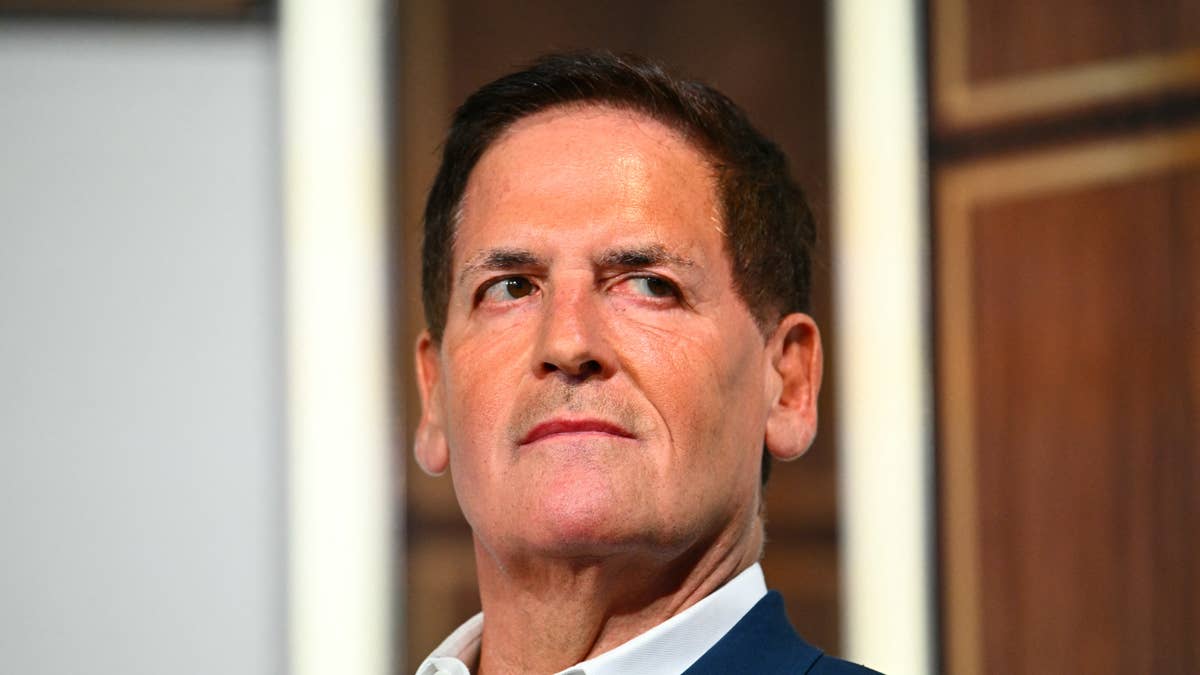
Most billionaires fight tax hikes. Mark Cuban keeps volunteering for them. He has said he paid $288 million to the IRS in a single year and was proud of it. Now he wants the people at the top of the income ladder, himself included, to hand over more.
His pitch landed in a Nov. 7 post on X, where he argued that slogans won’t fix the budget and wrote that “the math is the math.”
The post reads less like a party platform and more like a list a CFO might scribble on a whiteboard after a bad quarter, with something in it to annoy almost everyone.
What Mark Cuban wants from top earners
The headline ask is a 44% top rate on earned income. Right now, the top federal rate is 37%, and for 2026 it kicks in for single filers with taxable income above $640,600, according to the IRS.
Also read: Mark Cuban says your 401(k) is part of the healthcare problem
Cuban’s version would add 7 percentage points for the highest earners, though he has not specified exactly where his new bracket would begin. He would also extend the Social Security tax to earnings between $1 million and $5 million. Today, that tax stops at $184,500 of wages, and the cap rises to $192,300 in 2027, according to the Social Security Administration.
Everything above that line currently escapes the 6.2% levy, which is why high earners stop seeing it on their pay stubs partway through the year.
That change would sting at the very top. Someone earning $5 million could owe up to about $248,000 more a year in additional Social Security tax on their own, with employers on the hook for another $248,000 to match it, bringing the combined hit to roughly $496,000, as reported by Barchart. For the vast majority of workers, who never earn anywhere near $1 million, nothing would change.
Cuban draws a hard line at taxing wealth itself, though. He fought California’s proposed billionaire tax this summer, arguing that a founder with a company worth billions on paper may not have the cash to pay the levy. His focus is income, not net worth, and that distinction shapes the whole plan.
Corporate America and Washington get a bill too
Companies wouldn’t get off easy. Cuban wants higher top corporate income tax rates plus a corporate alternative minimum tax, and a $20 minimum wage for businesses above a set level of sales or EBITDA. He didn’t say where that threshold should sit, which leaves plenty of detail for lawmakers to fill in.
The buyback piece is where he ties taxes to paychecks. Public companies that don’t pay workers at least $25 an hour would face a 4% tax on stock buybacks, up from 1% today. In other words, firms that underpay their lowest earners would pay more to reward shareholders.
That idea fits a theme Cuban has pushed for months. In July, he proposed allowing companies to keep the standard 21% corporate rate only if every employee receives equity at the same percentage of cash pay as the CEO, according to TheStreet. For Cuban, the tax code is a lever on how companies share their gains with the people who actually do the work.
Then there’s spending. Cuban wants every federal agency to cut its budget 1% a year for five years. Not everyone bought the pitch from a billionaire, and when one X User called it gaslighting, Cuban shot back, “What makes me an oligarch?”
Most billionaires fight tax hikes. Mark Cuban keeps volunteering for them.Kimberly White / Getty Images
Why the deficit math is so tough
The scale of the problem is hard to overstate. The federal deficit came in at $2.0 trillion for fiscal 2026, which ended in September, according to the Congressional Budget Office. That’s the yearly gap Cuban is trying to address, and it’s why he pairs new taxes with spending cuts.
The total debt is even more daunting. U.S. national debt climbed to about $40.5 trillion in October 2026. The CBO puts debt held by the public at 100% of GDP for fiscal 2026. Every new deficit gets stacked on top of that pile.
Not every billionaire thinks taxing the rich can actually move the needle. Elon Musk argued back in 2021 that even a 100% tax on every American billionaire would barely dent the national debt. Cuban’s plan leans on taxing income and corporate behavior rather than fortunes, which sidesteps part of that critique.
More Mark Cuban:
Mark Cuban warns investors to brace for an eventual market turn
Mark Cuban says your 401(k) is part of the healthcare problem
Mark Cuban tells workers stuck in a 9-to-5 with $1,000 saved how to get ahead in life
Musk is just as skeptical of cuts. After leading DOGE, he said Washington won’t fix the debt by trimming costs alone. Cuban’s answer is to pair a modest 1% annual squeeze with new revenue rather than relying on cuts alone.
What comes next for the plan
Social Security gives the debate a deadline. The program’s primary trust fund is projected to run dry by 2032, which would mean reduced benefits unless Congress acts. Cuban’s payroll tax idea is aimed squarely at that gap. And it would hit only the top slice of earners.
Healthcare is the other piece of his pitch. Cuban has spent weeks pushing the bipartisan Break Up Big Medicine Act by Sens. Elizabeth Warren and Josh Hawley, which would bar companies from owning both providers and insurers or pharmacy benefit managers. He has called it a no-brainer and urged the public to push Congress to pass it.
Whether lawmakers listen or take any action on any of this is another matter. For now, his plan reads as a challenge to Congress rather than a bill anyone in Washington is ready to vote on.
Related: Michael Burry just made a surprising call on the Nasdaq 100