

The money moving into artificial intelligence infrastructure over the past two years has been extraordinary. Data centers, chips, power systems, and cloud hardware have absorbed hundreds of billions in capital. The companies behind that spending made a bet: that demand would match what they built, and roughly on the same timeline.
Elon Musk is not convinced it will. In a post on X, he agreed with investor Chamath Palihapitiya’s prediction that 2027 would be a turbulent year for AI infrastructure, citing “a lot of partially stranded compute and compute sitting in inventory.”
Musk said he expects “a lot of stranded compute in partially complete data centers,” and that more than 200 neocloud companies will see “guppy-level death and consolidation.” He added: “Some will make it through, but not many.”
The concern here is not whether AI technology works. It is whether the market funded too many infrastructure providers too quickly, and what that means for investors with exposure to the most crowded parts of the market. Those are different questions, and the gap between them is where the risk sits heading into next year.
Why Musk thinks the AI buildout ends badly for most operators
Neoclouds are companies built specifically to handle AI computing workloads. They operate data centers packed with high-performance hardware and expanded quickly as demand for AI processing grew. The assumption behind that expansion was that revenue would arrive on the same schedule as the capital going in. Musk’s argument is that this will not hold for most of them.
Also read: Elon Musk sends incredible news to Micron stock investors
Debt markets have already started responding. Musk wrote that financing has largely shut off for neocloud companies that cannot show substantial revenue from sources outside of AI data centers. That matters because many of these operators borrowed heavily against projected AI demand. If demand arrives more slowly than expected, or if revenue does not reach the levels needed to service debt, some of these projects are left holding expensive underused hardware with no clear path forward.
Palihapitiya put it as “partially stranded compute.” Supply got built. Customers did not arrive on the schedule investors modeled. The gap that creates is a financing problem. Whether the underlying technology works is a separate question entirely.
Nothing Musk said suggests AI development stops. His concern is about the infrastructure layer specifically: too much of it got funded before demand was proven, in too compressed a timeline. Some operators will get through the tighter financing environment ahead. His expectation, stated plainly, is that most will not.
Why your index fund already has this problem
Most investors have more AI exposure than they think. In October, 10 major companies with varying levels of AI exposure represented roughly 40% of the S&P 500, according to Morningstar. A standard index fund carries that by default. You do not need to own a single AI stock to have meaningful exposure when it shows up that heavily in the index.
Early pressure from AI spending concerns has already shown up in earnings. Disappointing results from Alphabet (GOOGL), Intel (INTC) and Amazon (AMZN) contributed to a broader market pullback in October. Reuters reported that losses on the Nasdaq 100 were tracking toward nearly $2 trillion for the month.
Those declines were not limited to companies directly inside the AI infrastructure business.
The investment question underneath all of this is not whether AI is important. It is whether the enormous capital flowing into data centers, chips, power, and cloud capacity will generate returns fast enough to justify the funding. The market has largely been answering the first question. The second one remains open, and 2027 may force a more direct reckoning with it.
A large company pulling revenue from multiple sources sits in a different position than a neocloud built entirely against AI demand projections. If utilization misses what those operators modeled and credit stays tight, the numbers stop working. That distinction matters when looking across AI-linked names in a portfolio.
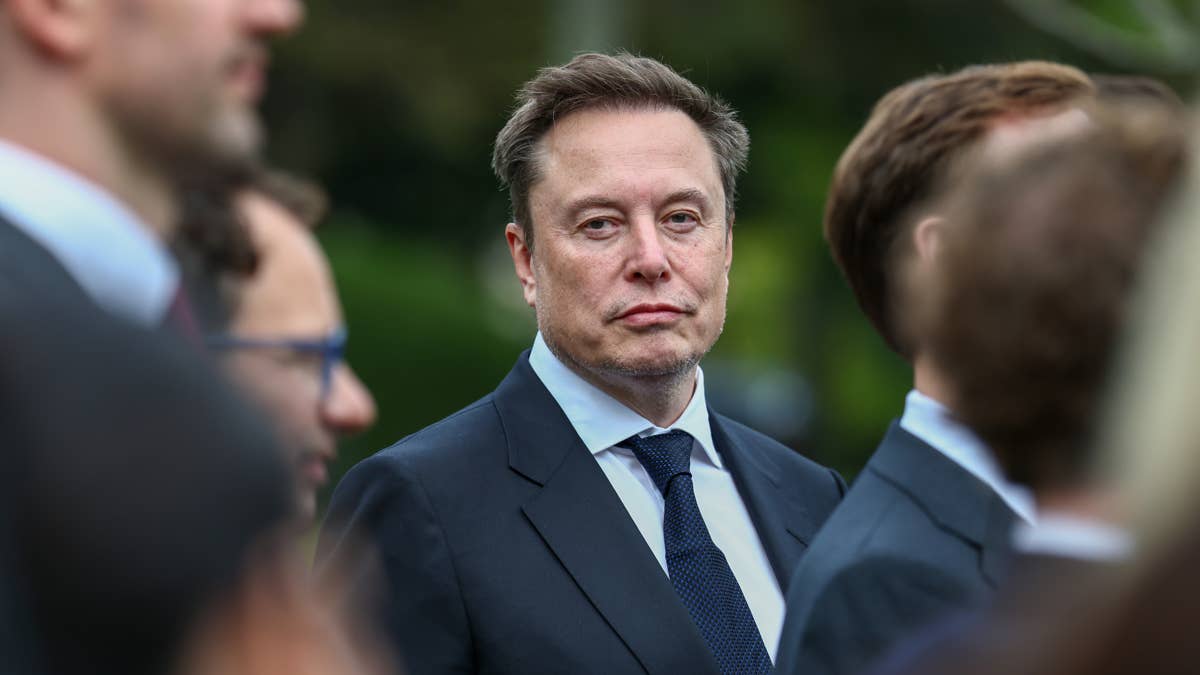
Musk wrote that financing has largely shut off for neocloud companies that cannot show substantial revenue from sources outside of AI data centers.Bloomberg / Getty Images
What to check in your portfolio before 2027
Selling out of AI entirely misses the point. The issue is how concentrated the exposure already is. Heavy weighting toward the largest technology and AI-linked companies means a slowdown does not hit a portfolio evenly. It goes hardest to the most crowded positions, and those are the ones most investors hold.
Several signals will show how this plays out in the months ahead. AI capital spending from major cloud and technology companies will indicate whether the buildout is continuing at its current pace or starting to slow.
Data center utilization and pricing trends will show whether demand is actually meeting supply in practice. Revenue growth among chip suppliers and neocloud operators will reveal whether the customer base is broadening or starting to stall at scale.
More Elon Musk:
SpaceX CEO Elon Musk has 7 words for Delta Airlines after snub
Elon Musk just handed Nvidia investors another big win
Billionaire investor makes stunning $15 trillion Musk call
What you are watching for is whether the gap between what was funded and what customers are actually paying for is narrowing or widening. That is what determines how much pressure builds on the most crowded parts of the market before 2027.
How to reduce the exposure Musk is describing before 2027
Spreading exposure across sectors and geographies cuts the concentration risk directly. Having enough cash or short-term bonds on hand means you are not forced to sell into a decline.
Investors close to retirement face a tighter version of this. A sharp decline in the first few years of withdrawals can permanently damage retirement assets, and later recoveries do not fully make up for what was drawn down at the bottom. That is sequence-of-returns risk, and it is worth understanding before 2027.
Musk’s warning is not a prediction that the market collapses in 2027. It identifies a financing and valuation risk that the most crowded parts of the market have not fully priced in yet.
The question heading into next year is not whether AI keeps developing. It is whether the specific companies and sectors you own are positioned to survive the consolidation that may be coming.
Related: Elon Musk sends a strong memo to SpaceX and Tesla stock investors