

[[{“value”:”Cheese is an incredibly common—and beloved—shopping list staple. Aesthetically pleasing charcuterie boards have become a hosting essential, and what’s wine night or a ham sandwich without some cheese? And don’t even get us started on pairing a warm bowl of tomato bisque with a skillet-grilled cheese—it’s an absolute must.
There’s so much to love about cheese. For one, it’s a satisfying snack since it’s chock-full of protein. It’s also versatile; you can’t go wrong savoring cheese all by itself or adding it to so many meals and recipes.
But before we get too ahead of ourselves, let’s back up a bit, because not all cheeses are created equal. We spoke with Giana DiMaria, RD, Instructor of Medicine at New York Medical College, and learned one cheese you may want to think twice about adding to your shopping cart.
The Unhealthiest Cheese at the Grocery Store, According to a Dietitian
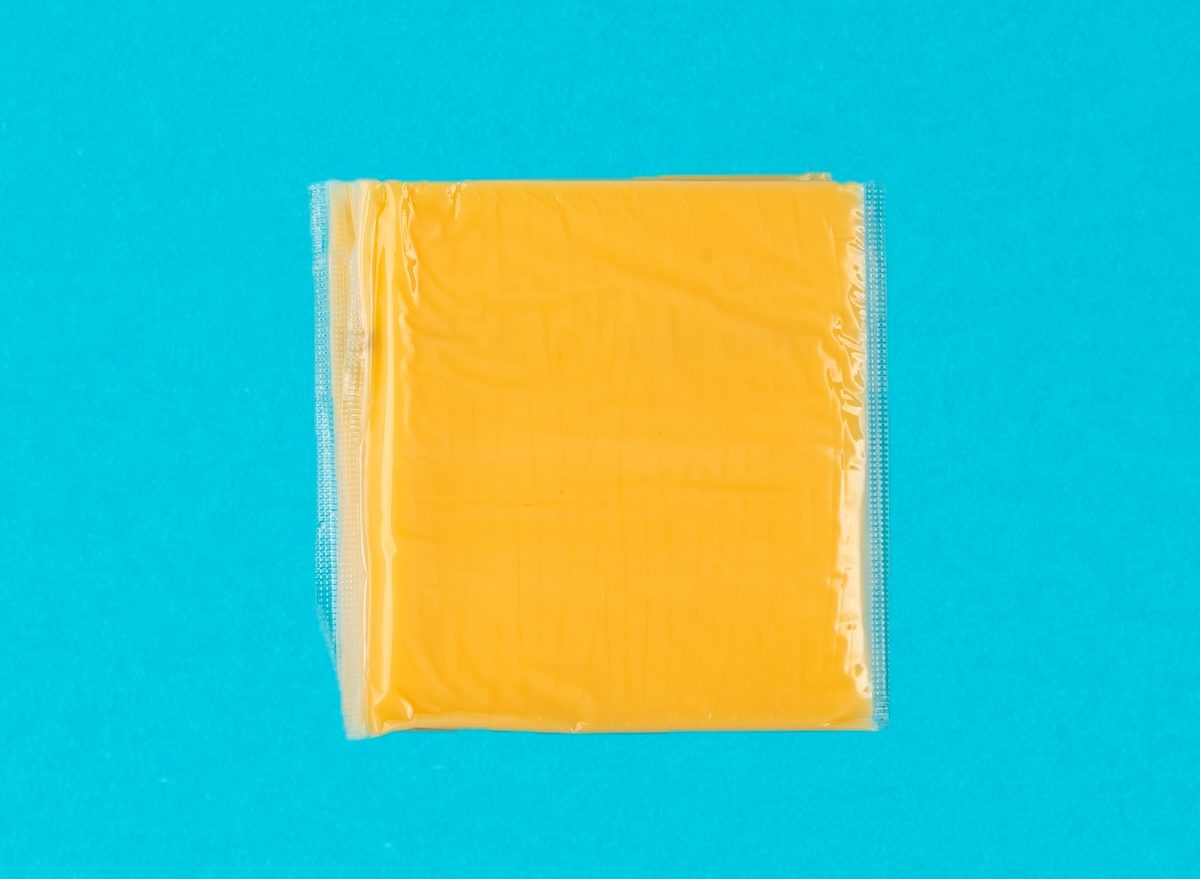
Many of us grew up with American Cheese Singles in our grilled cheese sandwiches and melted into a casserole dish of homemade mac and cheese. However, DiMaria considers American Cheese Singles the #1 unhealthiest cheese you can purchase at the grocery store.
American Cheese Singles come in different formulations. According to DiMaria, some varieties are made with:
Cheeses like Cheddar or Colby
Dairy ingredients like whey and milk
Emulsifying salts
Colorings and preservatives.
How to Spot Processed Cheese on the Label
Federal regulations place processed cheeses into various categories, such as “pasteurized process cheese food” and “pasteurized process cheese.”
By comparison, Kraft Singles (one 12-ounce package) are labeled as “Kraft Singles American Pasteurized Prepared Cheese Product,” according to the manufacturer’s product information. Some of the product’s ingredients include:
Cheddar cheese
Skim milk
Whey
Milk protein concentrate
Calcium phosphate
Sodium phosphate.
Why the Phosphate Additives Matter
It’s important to know what you’re putting into your body—and be especially mindful when it comes to processed foods. For instance, a small study published in The Journal of Nutrition suggests that a diet high in foods containing phosphate additives may be linked to gastrointestinal (GI) symptoms.
DiMaria also notes, “Emulsifying salts such as sodium phosphate can alter microbiome composition which may influence osmotic fluid shifts, drawing water into the bowel causing abdominal cramping and a mild laxative effect. [In addition,] while natural phosphorus is a vital mineral, inorganic phosphate additives are highly bioavailable and easily overloaded in the digestive tract.”
Note that these sources did not specifically reference branded American Cheese Singles products, and the NIH notes that high phosphorus intakes rarely produce adverse effects in healthy people.
RELATED: The 60 Unhealthiest Grocery Store Foods in America
Better Pick: Ricotta or Blended Cottage Cheese
Best for: A creamy spread or dip.
Why: Whole or part-skim ricotta or plain cottage cheese (blended) provides satiating protein and minimal saturated fat per ounce, DiMaria says, and ricotta is especially low in sodium.
Watch for: Regular cottage cheese can be considerably higher in sodium, so look for a low-sodium or no-salt-added version.
Better Pick: Aged Cheddar or Swiss
Best for: Those who crave a sharp, tangy flavor.
Pick: Aged real cheddar or Swiss.
Better Pick: Part-Skim Mozzarella or Provolone
Best for: Smooth melting slices.
Pick: Part-skim low-moisture mozzarella or provolone, DiMaria suggests.
RELATED: The #1 Unhealthiest Order at 30 Major Fast-Food Chains
If You Have High Cholesterol
DiMaria recommends swapping full-fat varieties for:
Part-skim mozzarella
Part-skim ricotta
Low-fat cottage cheese
Doing so can help reduce saturated fat intake while providing a solid amount of calcium and protein.
If You Have Hypertension
Opt for lower-sodium cheeses like Swiss instead of high-salt processed slices. In addition, limit cheese to one serving size.
Cheese will always be a favorite must-have for many. Consider the ingredients along with your own personal health and make wise choices. If you’re unsure, consult with a healthcare professional.
The post A Dietitian Names the Unhealthiest Cheese at the Grocery Store appeared first on Eat This Not That.”}]]