

[[{“value”:”A stubborn jar lid can quickly tell you when your grip isn’t what it used to be. The same goes for carrying a heavy bag or hanging onto something awkward around the house. After 65, keeping your hands and forearms strong makes everyday tasks easier and helps you maintain overall strength.
Grip also gives us a useful window into healthy aging. Researchers often use handgrip strength as a simple marker of physical function, and stronger grip has been associated with better health outcomes as people get older. It doesn’t mean grip training alone improves longevity, but losing strength in your hands can signal that muscle strength elsewhere deserves more attention.
The good news is that grip is very trainable. Some exercises build the forearms directly, while others challenge you to hold onto a heavier load for longer. I like combining both approaches because opening a jar takes more than finger strength. You need enough force through the hand and enough endurance to keep applying it.
For this routine, you’ll use two loaded carries along with focused hand and wrist work. The goal is simple: strengthen your grip, give your forearms more work, and make everyday tasks feel easier again.
RELATED: The 10-Minute Kitchen-Counter Routine That Builds More Strength Than an Hour at the Gym After 60
Suitcase Carry
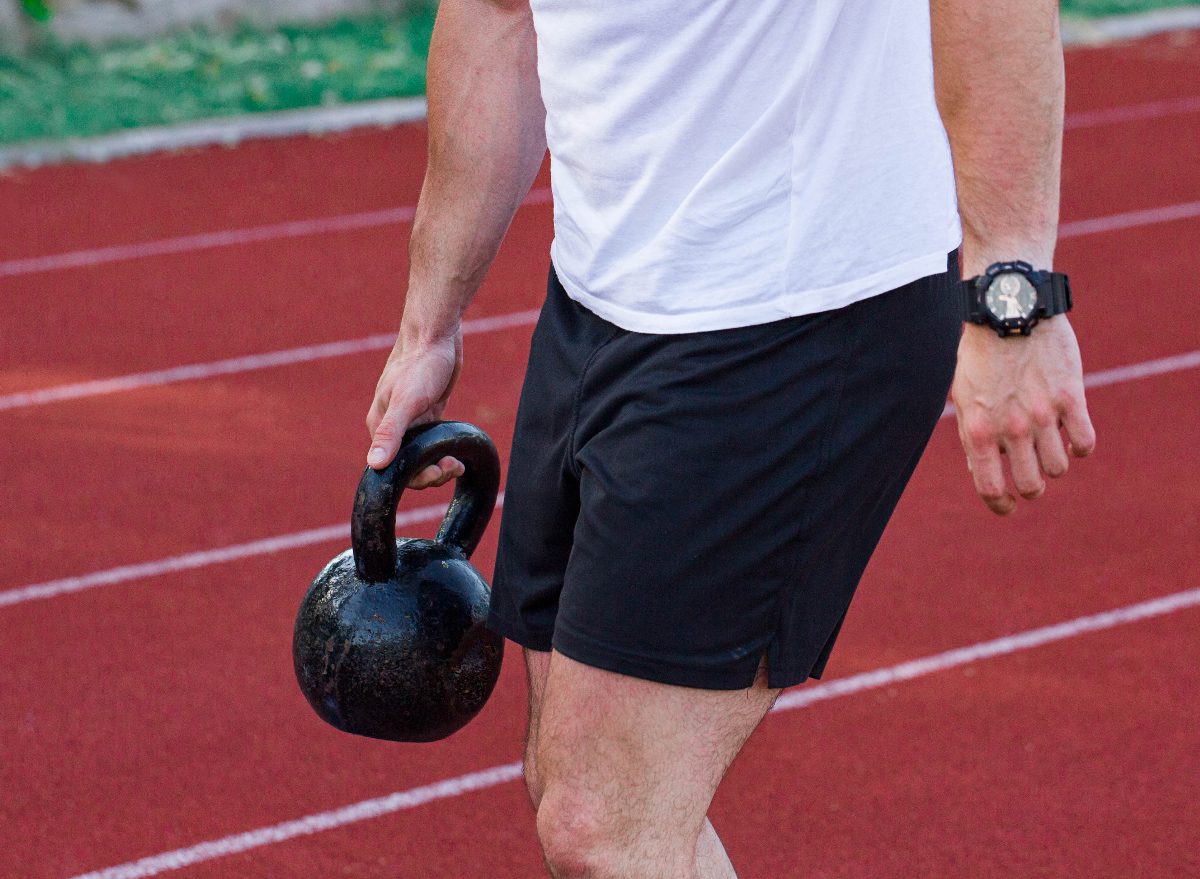
Hold a dumbbell in one hand, and keep your grip firm from the first step to the last. The suitcase carry builds endurance while your core works to keep you upright under an uneven load. It’s especially useful for everyday strength because carrying something heavy in one hand is a task you’re likely to run into outside the gym.
Muscles Trained: Forearms, grip, shoulders, obliques.
How to Do It
Hold a dumbbell in one hand at your side.
Stand tall with your feet about hip-width apart.
Brace your abs.
Walk forward at a comfortable pace.
Hold the dumbbell firmly.
Finish the interval, then switch hands.
Recommended Sets and Reps: Perform 2 to 3 carries of 20 to 40 seconds per side. Rest for 30 to 45 seconds.
Best Variations: Suitcase march, lighter suitcase carry, kettlebell suitcase carry.
Form Tip: Keep the dumbbell secure in your hand without leaning toward it.
Dumbbell Wrist Curl
If opening a lid feels harder than it used to, stronger forearms can help give your hand more force to work with. Wrist curls target those muscles directly and don’t require much weight to be effective. Keep the movement controlled and let your wrist do the work instead of moving the whole arm.
Muscles Trained: Forearms, wrist flexors, grip.
How to Do It
Sit on a chair or bench with a dumbbell in one hand.
Rest your forearm on your thigh with your palm facing up.
Let your wrist extend slightly over your knee.
Curl the dumbbell upward using your wrist.
Pause briefly at the top.
Lower slowly and repeat before switching hands.
Recommended Sets and Reps: Perform 2 to 3 sets of 10 to 15 reps per side. Rest for 30 seconds.
Best Variations: Two-hand wrist curl, lighter wrist curl, resistance-band wrist curl.
Form Tip: Keep your forearm supported while your wrist moves.
RELATED: 5 Standing Exercises That Stop You Getting Winded on Stairs in 21 Days After 60
Stress Ball Squeeze
This one is about as simple as grip training gets, which makes it easy to practice often. Squeezing a stress ball gives the muscles that close your hand direct work and lets you build endurance without needing a gym setup. Keep one near your desk or favorite chair, and it becomes easy to fit in a few sets during the day.
Muscles Trained: Hand muscles, finger flexors, forearms.
How to Do It
Hold a stress ball in one hand.
Wrap your fingers comfortably around it.
Squeeze the ball firmly.
Hold the squeeze for one to two seconds.
Release slowly.
Complete your reps, then switch hands.
Recommended Sets and Reps: Perform 2 to 3 sets of 12 to 20 squeezes per hand. Rest for 20 to 30 seconds.
Best Variations: Longer squeeze hold, softer stress ball, firmer grip ball.
Form Tip: Squeeze firmly without creating pain in your fingers or wrist.
Farmer’s Carry
Farmer’s carries let you challenge both hands at once with more total load. Your grip has to stay locked around the dumbbells as fatigue builds, which is exactly the endurance you need when you’re carrying heavier objects for more than a few seconds. Start with a weight you can control and let your hands tell you when it’s time to set the dumbbells down.
Muscles Trained: Forearms, grip, shoulders, core.
How to Do It
Hold a dumbbell in each hand.
Stand tall with your arms at your sides.
Brace your abs.
Walk forward at a steady pace.
Keep your hands firmly wrapped around the dumbbells.
Set the weights down under control when the interval ends.
Recommended Sets and Reps: Perform 2 to 3 carries of 20 to 40 seconds. Rest for 45 to 60 seconds.
Best Variations: Lighter farmer’s carry, farmer’s march, kettlebell farmer’s carry.
Form Tip: Keep your fingers wrapped securely around each handle for the full carry.
RELATED: 4 Wall Exercises That Flatten Belly Sag Faster Than Sit-Ups After 65
How to Build a Stronger Grip After 65
Grip responds well to regular practice, and you don’t need a long workout to improve it. Add a few sets to your existing strength routine or use the simpler exercises on days when you aren’t training.
Train grip two to four days per week: Give your hands regular work without making every session exhaustive.
Start with manageable weights: You should be able to finish carries without the dumbbells slipping from your hands.
Add time gradually: Extend your carries by five to 10 seconds as your endurance improves.
Keep some direct hand work nearby: A stress ball makes it easy to squeeze a few extra times during the day.
Progress the load slowly: Move to a heavier dumbbell once you can comfortably complete the full carry time.
Use both hands evenly: Complete the same work on each side during suitcase carries and wrist curls.
Test it in daily life: Notice whether jars, grocery bags, and other gripping tasks start feeling easier.
References
Bohannon, Richard W. “Grip Strength: An Indispensable Biomarker For Older Adults.” Clinical Interventions in Aging, vol. 14, 1681-1691. 1 Oct. 2019, doi:10.2147/CIA.S194543
Vaishya, Raju et al. “Hand grip strength as a proposed new vital sign of health: a narrative review of evidence.” Journal of Health, Population, and Nutrition vol. 43,1 7. 9 Jan. 2024, doi:10.1186/s41043-024-00500-y
The post 4 Grip Exercises That Make Opening Jars Easy Again After 65 appeared first on Eat This Not That.”}]]