

Nike has been struggling to figure out a business model for its sneakers that serves athletes, regular folks, and sneakerheads.
For years, the company pulled inventory from its distribution network and even dropped certain retail partners. That was part of an effort to become more of a direct-to-consumer (DTC) company, which cuts out the middleman at the expense of giving up the visibility that comes from being on retail shelves.
Three numbers stood out during the company’s first-quarter earnings call:
Nike Direct Revenue. $4.1 billion, a decrease of 9%. (Nike Direct is the company’s DTC division).
Jordan Brand Revenue: Fell be mid-teens, representing 13% of the global business as management deliberately reduced the frequency of Retro launches.
Dunk Franchise Revenue: Decreased by nearly 50% in the quarter, resulting in a $200 million headwind for the Sportswear segment.
Nike faces a challenging retail environment with increased competition from emerging brands. That’s something Dick’s Sporting Goods Chairman Edward Stack talked about during his company’s second-quarter earnings call.
“We have the hangover right now. We’re going through that with these legacy silhouettes. The new styles of shoes that are coming out from brands across the board, whether it be — whether it be Nike, whether it be Adidas, whether it be On, Hoka, we’re going through that reset right now,” he said.
It’s a changing retail market, and Nike CEO Elliott Hill explained how his company will be adjusting.
Nike wants to make Jordan special again
Hill believes that Nike damaged the Jordan brand by simply having too much of it.
“With Jordan Brand Footwear, we’re going to get back to leading the scarcity model that we created. Simply put, we’ve been oversupplying our iconic retro product, asking them to do too much,” he said.
That’s something the company has already begun correcting.
“And as we’ve done with the Air Jordan 1, we will deliberately reduce the volume and frequency of specific Jordan Retro launches. We’ve discussed it with our wholesale partners. Together, we will restore balance to the marketplace to create a foundation for more profitable and sustainable growth,” he said.
That decision will have significant near-term revenue impact, since in Q1, the Jordan Brand represented 13% of Nike’s global business, with revenue falling by mid-teens.
“Here’s why we’re doing this. When consumers see the Jumpman, it should feel special, it should feel earned. And every decision we’re making is designed to ensure the Jordan Brand remains as coveted a decade from now as it has been for the past several decades,” Hill added.
Nike has an inventory problem
When consumers don’t buy what’s on store shelves, it creates a problem where retailers need to discount to create space for new styles. When that happens, the newer product is then fighting against much cheaper options.
Nike, Hill said, has been working with its retail partners to address this problem.
“Some aged, higher volume, sportswear footwear sold through below expectations. Looking ahead, that has impacted our future order books as we proactively work with our wholesale partners to work through excess inventory to create a healthy marketplace,” he said.
More Bankruptcy:
Outdoors retailer closing 91 stores in Chapter 11 bankruptcy
97-year-old aerospace manufacturer files Chapter 11 bankruptcy
60-year-old dining chain franchisee files Chapter 11 bankruptcy
Hill blames some of that on the economy, and some on Nike itself.
“Overall, there’s a lack of energy in the lifestyle space right now, which is impacting traffic. Yes, the consumer is cautious. But as the leader in the industry, it’s on us to bring more creativity to sportswear,” he added.
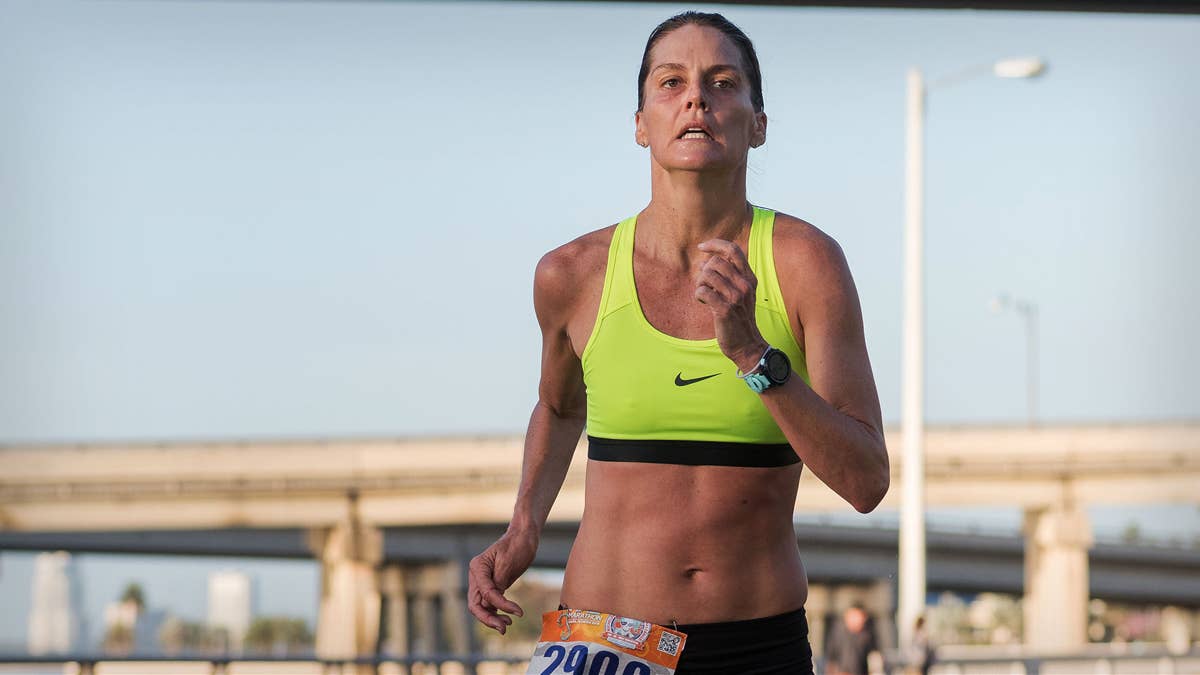
Nike has been focusing on serving athletes.Shutterstock
Nike wants to serve more athletes
Nike is both a lifestyle brand and a performance footwear company. Hill said the company has opportunities to grow its business with athletes.
“Training is one of Nike’s largest untapped performance opportunities because every athlete trains,” he said.
Focusing on those athletes, he shared, has already started to pay off.
“We’re seeing success across the portfolio. Nike Mind has quickly become one of our top-selling franchises. Nike Pro and Metcon, our industry icons, and we just introduced the Nike Hybrid Footwear System for both running and strength movements to serve the fast-growing world of hybrid training and racing,” he added.
Hill also sees more room for growth with women.
“In basketball, where we are the global leaders, one of our most powerful growth opportunities is the women’s game. Nike Basketball has grown our women’s signature business nearly 500% from FY ’22 to FY ’26,” he shared.
Nike faces a challenging road to recovery
RTM Nexus Dominick Miserandino thinks Nike needs to do more to connect with younger customers.
“Nike can come back. People buy sneakers partly for how they feel wearing them and what they say about them. Nike needs to give the next generation that feeling for themselves. Their parents loving the brand only gets them so far,” he told TheStreet.
As a lapsed Nike customer myself, the brand didn’t lose me to a trendy new rival like Hoka or On. I opted for the comfort of Skechers Slip-Ons for everyday and the size flexibility New Balance offers when I’m doing something athletic.
I may not be Nike’s core customer anymore, but the brand lost a lot of customers like me to niche brands that went after targeted audiences.
Nike faces a rising tide of brands looking to pick off pieces of its business.
Nike’s problem isn’t that consumers have stopped buying athletic shoes. It’s that they have more choices. On has grown into a multibillion-dollar global brand, while Hoka, New Balance, and other competitors have carved out specific consumer niches.
On’s recent signing of Kylian Mbappé is an especially notable example. The soccer star had worn Nike since he was 7 before signing a 10-year deal with On, ESPN reported.
“Where Nike could once dominate the market through innovation, athlete endorsements and cultural influence, consumers now have more meaningful alternatives, with propositions from On, Hoka, the Amer Sports portfolio (which includes Arc’teryx and Salomon), Vuori, Alo Yoga, Lululemon, and New Balance, which gave tennis player Coco Gauff her own shoe silhouette,” Vogue reported.
Nike has been slow to adapt, according to GlobalData Managing Director Neil Saunders.
“There is nothing inherently wrong with the (restructuring) plans, but they do suggest that Nike’s current model is not really fit for purpose, which in turn raises the question of why these changes were not made sooner,” he told Reuters.
Related: 60-year-old iconic furniture chain closes all stores, liquidates