

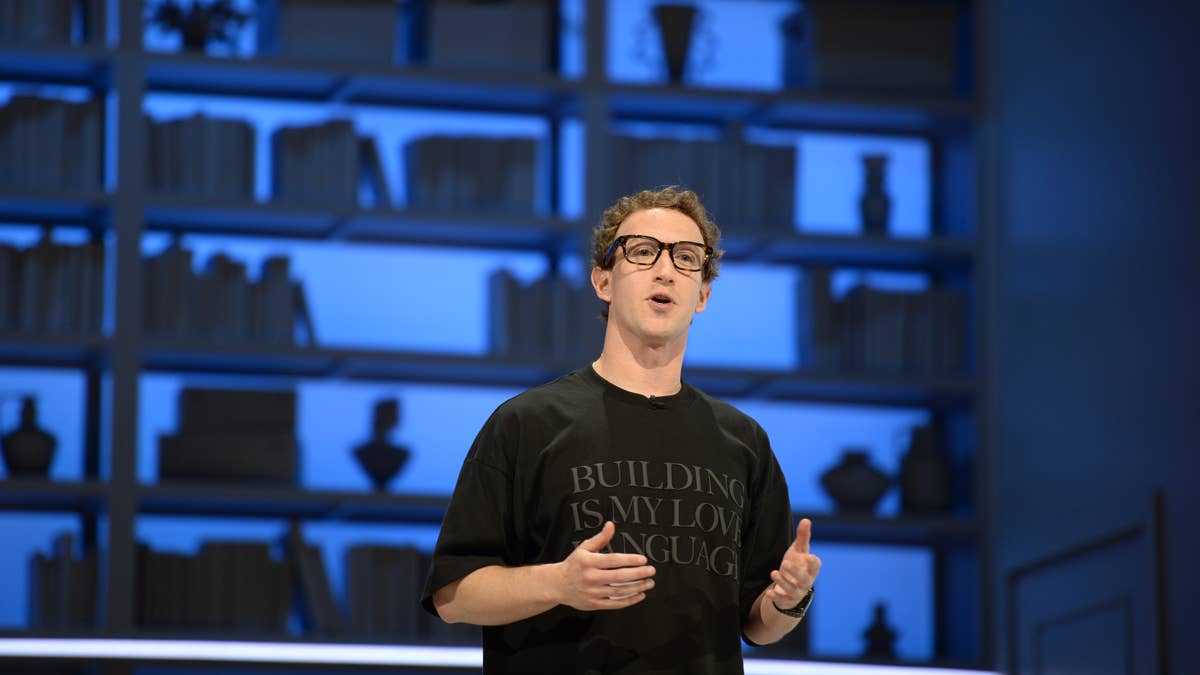
Mark Zuckerberg told Meta’s board he was considering leaving California over a potential Proposition 40 tax bill, according to Meta’s filing with the Securities and Exchange Commission (SEC).
The chief executive’s estimated tax liability exceeds $11 billion under the proposed billionaire wealth tax on the Nov. 3, 2026, ballot, Forbes reported.
Proposition 40 would impose a one-time 5% assessment, payable in annual installments over five years, on any California resident worth at least $1 billion as of January 2026, the Legislative Analyst’s Office showed.
Proponents led by the Service Employees International Union-United Healthcare Workers West (SEIU-UHW) project the measure could raise $100 billion. The initiative directs 90% of proceeds to healthcare programs, Fortune reported.
Zuckerberg struck a deal with Meta’s board to create nonvoting stock that covers his potential tax bill. That arrangement turned a routine corporate filing into a flashpoint for a campaign already changed by billionaire departures and record opposition spending.
Also read: J.P. Morgan flags gathering storm in U.S. wealth taxes
Meta’s new Class C stock gives Zuckerberg a financial workaround
Zuckerberg currently controls roughly 60.6% of Meta’s total voting power through his super-voting Class B shares. Selling enough of those shares to cover the liability could have dropped his voting stake to 53%, a governance risk, the SEC filing stated.
The workaround is a new class of nonvoting Class C common stock distributed to all shareholders as a dividend-structured stock split.
More Mark Zuckerberg:
How much META stock does Facebook founder & CEO Mark Zuckerberg own?
Mark Zuckerberg sends bold message to Meta investors after Muse
Mark Zuckerberg says Meta found a way to make more money
Zuckerberg can immediately sell up to 20% of the Class C shares he receives to cover any liability under Prop 40. That arrangement represents 10% of his overall economic stake in Meta without reducing his voting control.
In exchange for that financial cushion, Zuckerberg committed to remaining a California resident for eight full years, CBS News reported.
Zuckerberg would be “effectively paying to serve as the Company’s chief executive officer while residing in California,” the filing stated bluntly.
Stanford economists project Prop 40 could leave California $39 billion worse off
Researchers at Stanford University’s Hoover Institution estimate the proposed tax would collect less than the $100 billion proponents expect.
Benjamin Jaros and Joshua Rauh project the tax would yield roughly $30 billion, according to a National Bureau of Economic Research (NBER) paper.
The paper puts that estimate in the $28 billion to $36 billion range, depending on assumptions about how the state’s wealthiest residents leave.
Six billionaires publicly departed California before the Jan. 1, 2026, residency cutoff, removing $536 billion from the proposed tax base, the Hoover Institution reported.
Those exits included Google co-founders Larry Page and Sergey Brin and Palantir co-founder Peter Thiel, erasing nearly 30% of the taxable wealth base, Fortune reported.
Once future income tax losses from those departures are factored in, Prop 40 would leave California $38.9 billion worse off. In 100,000 simulations with different revenue assumptions, the NBER paper estimated that 85% of scenarios resulted in a net financial loss for the state.
In an NBER working paper series, economists Emmanuel Saez and Gabriel Zucman counter that departures would take 25 years to erode the projected windfall.
Stanford economists estimate California’s proposed Prop 40 billionaire tax could leave the state $39 billion worse off, despite projected revenue gains.JHVEPhoto / Getty Images
Billionaires and politicians split heading into the Nov. 3 vote
The wealth tax fight has split California’s political establishment and its billionaire class, with hundreds of millions flowing into the campaign. Tech billionaires have committed more than $340 million to defeat Prop 40, with Google co-founder Brin contributing more than $100 million, Fortune reported.
California Governor Gavin Newsom endorsed Proposition 42 on Oct. 9, a competing measure funded by Brin that would ban retroactive taxes on personal property, Cal Matters reported.
The California Democratic Party endorsed Prop 40 despite the governor’s opposition, exposing a rift within the state’s majority party over the tax, Bloomberg Tax reported.
A Berkeley-Politico poll found that support for Prop 40 dropped from 50% in February 2026 to 45%, while opposition rose from 28% to 43%, The Hill reported.
Nvidia CEO Jensen Huang took the opposite stance from the departing billionaires, telling Fortune he had no intention of leaving California over the tax.
<strong>The fact that I can afford to pay $8 billion in taxes over five years is a privilege</strong>.
At a Stanford event, Huang also urged executives to move to California, calling the state’s talent pool irreplaceable.
What California voters should weigh before casting their Nov. 3 ballot
The Nov. 3 ballot does not offer a simple yes-or-no choice on the wealth tax.
Propositions 41 and 42 are countermeasures designed to nullify Prop 40 if either receives more yes votes than the wealth tax. Prop 40 can be overridden if either Prop 41 or Prop 42 receives more yes votes, a dynamic that Fortune noted creates strategic complexity for wealth-tax supporters.
The nonpartisan Legislative Analyst’s Office (LAO) projects the tax would generate tens of billions in temporary revenue while reducing annual income tax collections by under $1 billion, a gap that underscores the trade-off between a large, one-time windfall and a smaller but permanent drag on recurring state revenue, Fortune reported.
That trade-off plays out against a widening national wealth gap. The wealthiest 1% of American households held a record 32.5% of total national net worth in early 2026, while the bottom half held just 2.3% during the same period, Federal Reserve Bank of St. Louis data shows.
Senator Bernie Sanders and Representative Ro Khanna, two of the measure’s most prominent backers, have both pointed to that divide in pushing voters to pass Prop 40, NBC News reported.
The Nov. 3 outcome will signal whether a state can tax concentrated wealth at scale without accelerating the capital flight that erodes the revenue it set out to capture.
Related: Billionaire Ray Dalio sees dangerous risk inside US wealth tax