


Every great power eventually learns the same lesson. The fortune is not in the cargo. It is in the road.For most of the last 40 years, the Strait of Hormuz worked like a public utility nobody ever billed you for. Tankers slipped through a 21-mile gap between Iran and Oman. The U.S. Navy sat nearby as an unpaid guarantor, and oil kept moving.The price of moving it stayed hidden inside the cost of everything you buy. You never saw the invoice. That was the whole point.Washington paid for the muscle, the world paid at the pump, and the arrangement survived two Gulf wars and a decade of Iranian threats. Nobody put a meter on it, because open water was assumed to be free.This week, that quiet arrangement got a price tag. And the bill is not headed to Tehran.President Donald Trump said the United States intends to control the waterway and charge other countries for the service, turning the planet’s most important oil channel into a toll road with Washington sitting at the booth.The U.S. will “keep the Strait” and “probably run it,” Trump said in a phone-in interview, adding that other nations should “reimburse” America for its guardianship, according to Time.What the White House is really demanding at HormuzStrip away the “guardian angel” language, and the ask is blunt. President Trump wants foreign governments and shippers to pay the United States for safe passage through a chokepoint it does not own.He paired that with force. The president said he was reinstating what he called the Iranian blockade, stopping Iran’s ships and customers from entering or leaving the Strait, according to CNBC.Everyone else gets pointed toward a narrow southern lane hugging the coast of Oman, according to NPR.That is the warning underneath the headline. The countries most exposed are not adversaries. They are customers and allies, the buyers in Asia and Europe who move their crude through Hormuz and now face a tollkeeper with a navy.Here is what actually rides on that stretch of water.Brent crude, the global benchmark, pushed above $82 a barrel after the blockade news, according to NPR.The national average for regular gasoline reached $3.87 a gallon, up about eight cents in a week, based on American Automobile Association figures reported by NPR.Stocks fell on the news, with the S&P 500 down 0.79% and the Nasdaq off 1.55%, according to CNBC.
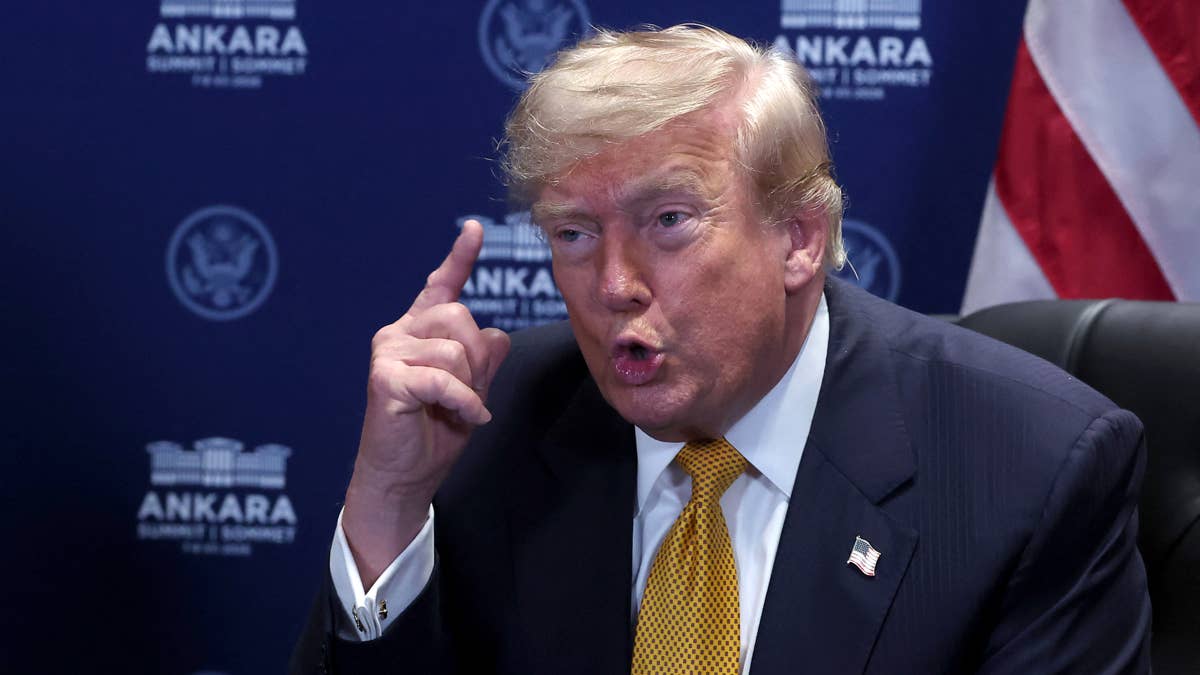
President Trump says America will “run” the Strait and be “reimbursed” by other nations.Anna Moneymaker / Getty Images
Why a Hormuz toll lands on your gas pumpThis is the part that stops being abstract. A toll on Hormuz works like a tax on the single most price-sensitive commodity in your life.I ran July 13’s Brent price against the Strait’s daily flow, and the number is hard to shake. About 21 million barrels move through that gap every day. At roughly $82 a barrel, that is close to $1.7 billion of crude squeezing through a channel narrower than the commute across many American cities, every single day.Put a contested tollbooth on that flow, and you do not get one clean fee. You get uncertainty, and uncertainty is what oil traders price as a war premium.More Oil & Gas:Battered oil major nabs Wolfe buy recommendationAs Middle East tensions explode, oil and gas prices resetThe war driving up gas prices isnt the one you thinkThat premium does not stay on a trading screen. It shows up as the extra eight dollars you paid this week to fill the tank. It shows up in airfare, in the diesel that moves your groceries, in the cost of anything that ships.It also reaches the Federal Reserve. Higher energy costs stall the fight against inflation, and the International Monetary Fund now expects oil to climb nearly 32% in 2026 and consumer prices to rise 4.7%, a forecast that landed as the fund trimmed its global outlook, as TheStreet covered. Stalled inflation means a Fed that keeps rates higher for longer, which is your mortgage, your car loan, and the yield your savings finally started earning.How energy stocks and airlines split on the Hormuz riskFor your portfolio, a tolled Strait draws a hard line down the middle of the market. One side wins when oil stays expensive. The other side pays for it.Producers sit on the winning side. Names including Exxon Mobil (XOM) and Chevron (CVX), along with the Energy Select Sector SPDR fund (XLE), tend to rally when a supply scare parks a premium in crude. Wall Street learned that rhythm the hard way this spring, when energy stocks whipsawed on every Hormuz headline.Fuel buyers sit on the losing side. Airlines such as Delta Air Lines (DAL), cruise operators, and consumer names watch margins thin as jet fuel and shipping costs climb.What struck me looking back through the last five months of price action is how quickly the market forgets. Every time a truce hint appeared, traders drained the war premium and piled back into airlines and consumer stocks. Every time the Strait flared, they scrambled the other way.A permanent U.S. tollbooth changes that reflex. It turns an episodic scare into a standing line item, and standing risks get repriced slowly, not in a single relief rally.What the Hormuz standoff signals for the rest of 2026The warning Washington just sent is bigger than one shipping lane. It is a signal that the era of free passage, quietly underwritten by American power, may be ending, and that the world is about to be asked to pay retail for something it long got wholesale.For Iran, the blockade is a provocation with a history of triggering attacks on tankers. For everyone else, the takeaway is simpler and closer to home. The Strait you never think about is now a political instrument, and its price gets attached to yours.Watch two things through the fall. Watch whether Brent settles into a new floor above $80 instead of spiking and fading. And watch whether the toll idea survives contact with allies who may decline to pay America for a road they thought was open.Because if that floor holds, the cheapest thing at the pump this summer will be the last cheap thing you see for a while.Related: U.S. blocks Strait of Hormuz: Here’s what’s next for oil prices