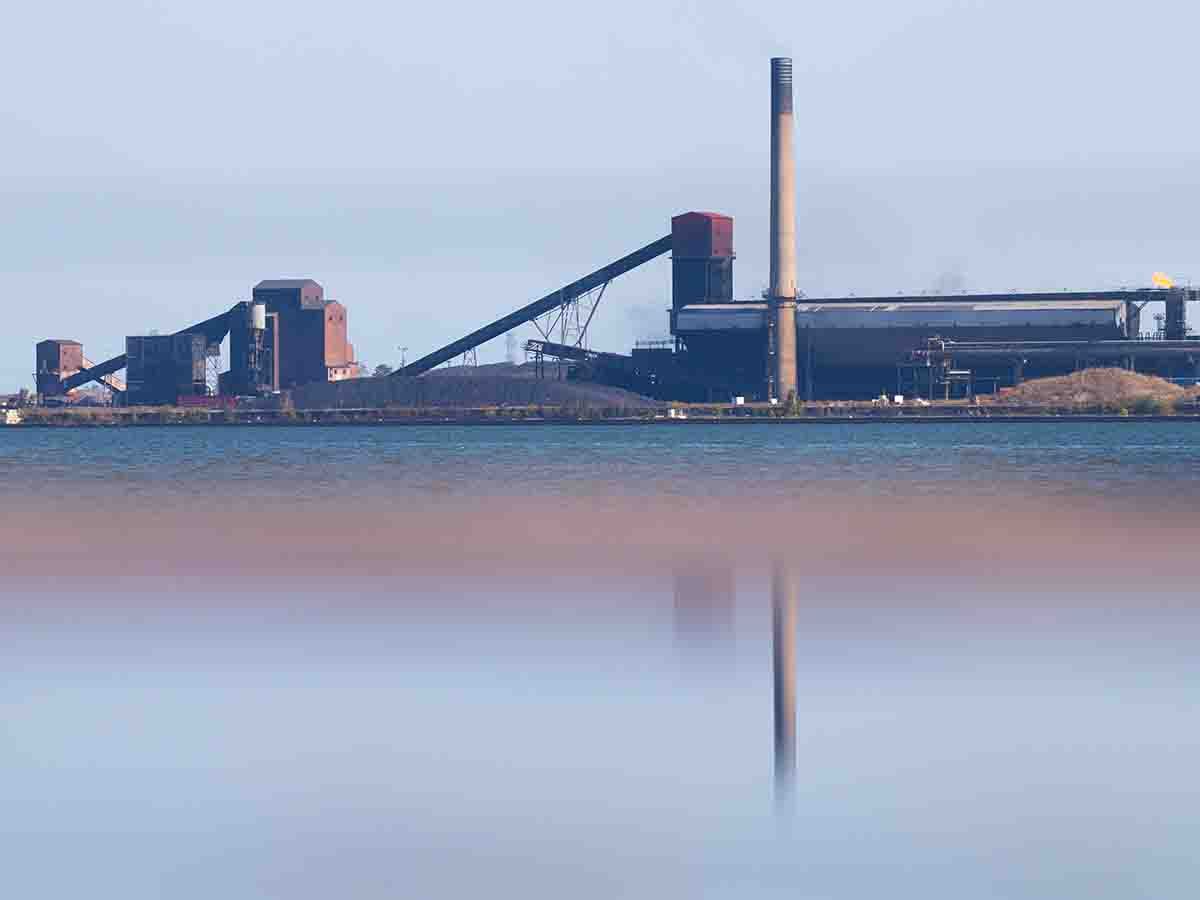
Hamilton-based Stelco Holdings Inc. sent shockwaves through an already embattled Canadian steel industry when U.S. parent company Cleveland-Cliffs Inc. announced on Sept. 28 it would indefinitely idle its Hamilton plant and lay off hundreds of workers. In response, Industry Minister Mélanie Joly has threatened legal action if Stelco does not preserve its Ontario jobs, citing commitments agreed upon under the Investment Canada Act when Cleveland-Cliffs first assumed ownership of the company. Joly’s moves are the latest development in the growing saga of Stelco, a company with a storied history that has become a flashpoint in the Canada-United States trade war. What is Stelco and how did it come to be? Stelco, the Canadian-based steelmaker that helped build Hamilton into “Steel City,” has been around for more than a century. It was originally incorporated in 1910 as the Steel Company of Canada, an amalgamation of five already-existing iron and steel companies: Hamilton Steel and Iron Co.; Montreal Rolling Mills Co.; Canada Screw Co.; Canada Bolt and Nut Co. and Dominion Wire Manufacturing Company. Hamilton was the ideal base for operations at the time since it was already home to limestone deposits (limestone being a key ingredient in steelmaking) while coal and iron ore could easily be transported by boat to the city’s port, said Marvin Ryder, associate professor at McMaster University’s DeGroote School of Business. During the 1920s, Stelco had grown to become the largest steelmaker in Canada. The company hit its peak in the 1970s and 1980s, when Stelco employed about 25,000 workers. Stelco’s management later began the shift toward automating more of its steel production and today, though the company still produces plenty of steel, it is no longer one of Hamilton’s biggest employers, Ryder said. “In a sense, Stelco in Hamilton was hollowed out more than a decade ago,” said Ryder, adding that Stelco stopped producing primary steel at its Hamilton Works facility in 2013. The facility receives its steel from the Lake Erie Works mill in Nanticoke, about 60 kilometres southwest of Hamilton, coats it in zinc to prevent rusting and rolls it into thin sheets for distribution to other industries, such as the automotive sector, said Ryder. The Hamilton facility also operates coke ovens, which bake coal into a carbon-rich material used to make steel. This coke is then transported to the Nanticoke mill for steel production. Ryder said the Hamilton workers who operate the coke ovens are not being affected by the layoffs. What challenges has Stelco faced? Stelco has faced several financial and labour-related challenges over the decades. Peter Warrian, a distinguished research fellow at the University of Toronto’s Munk School of Global Affairs & Public Policy, compared the Stelco of old to a Kresge variety store offering an assortment of steel products. However, by the 1970s demand for specialized steel was growing, and the automotive industry became the biggest buyer of steel, which heralded the beginning of Stelco’s troubles, Warrian said. In 1980 (the same year the Steel Company of Canada officially changed its name to Stelco, Inc.), Stelco completed construction of its new steel mill in Nanticoke, which cost the company about $870 million at the time. After accumulating so much debt, Stelco got into financial trouble in the 1990s, which is when steel companies began specializing in stronger, lighter steels and Stelco required more capital to finance the transition, Warrian said. Stelco sought bankruptcy protection in 2004 and completed restructuring in 2006, after selling a number of its businesses, repaying some of its debt, restructuring more than $1.4 billion of pension funding obligations while facing a dramatic uptick in steel prices. An equity sponsorship group rescued Stelco by providing $108 million in exchange for an approximate 70 per cent stake in the company. In 2007 Stelco was acquired by the United States Steel Corporation for US$1.1 billion, renaming Stelco to U.S. Steel Canada and marking the end of an era for a once independent Canadian operation. At the time, U.S. Steel agreed to certain commitments, including a three-year undertaking to maintain Canadian employment levels, and increase steel production in Canada by at least 10 per cent. But the 2008 financial crisis led the company to close most of its Canadian operations and lay off 1,500 employees. As a result, the attorney general of Canada filed a lawsuit against U.S. Steel in 2009, a battle that finally culminated in an out-of-court settlement in 2011. In 2014, U.S. Steel Canada filed for creditor protection and two years later Lindsay Goldberg, a New York-based private equity firm, took over the company, reviving the Stelco name when it was brought back to the Toronto Stock Exchange in 2017. Ryder said the company was able to turn Stelco around before it eventually flipped it to Ohio-based steel manufacturer Cleveland-Cliffs for $3.4 billion in 2024. Stelco has also dealt with a number of labour conflicts over the years, starting in 1946 with a historic strike over working hours, wages and the right to have a union. Why has it become a trade war flashpoint? The global trade war has hit the steel industry particularly hard, with U.S. President Donald Trump raising levies on imported steel to 25 per cent and then 50 per cent in 2025. Canada’s retaliatory tariffs on steel products from the United States, including semi-finished products, drove up import costs further for components travelling across the border multiple times. “A piece of steel can start as a slab in Hamilton and go across the border four or five times before it goes into an auto part in Oshawa or Detroit,” said Warrian. In September, Cleveland-Cliffs announced it would indefinitely halt production at Stelco’s manufacturing facility, Hamilton Works, starting Oct. 9, and lay off up to 500 workers across Hamilton and its Lake Erie Works mill in Nanticoke. The company cited a lack of orders to support galvanized and cold-rolled steel production and said most of the affected Hamilton workers would be offered work at the Nanticoke mill instead. But in early October federal Industry Minister Mélanie Joly sent a letter to Stelco president Paul Simon, expressing “extreme disappointment” over the company’s layoff plan and requesting a plan within five business days for Cleveland-Cliffs to comply with the undertakings made under the original acquisition in 2024. The Canadian government had approved the deal contingent on a package of five-year-long undertakings, including to continue to maintain the number of union jobs and the majority of non-union positions. Joly also told reporters that Cleveland-Cliffs chief executive Lourenco Goncalves has been supportive of U.S. tariffs on steel and thus cannot say his company’s plan to lay off workers due to the trade war was out of its control. But Simon said the company would continue with its plans to halt operations at the Hamilton plant, saying Canadian exports of cold-rolled and coated steel to the U.S. have plunged. “The undertakings do not stipulate a commitment to avoid layoffs , nor do they include a requirement that employment levels be above a certain amount on each day of the five years of the undertakings,” Simon wrote in a letter responding to Joly. Last week, Joly said Stelco could face financial penalties or even a forced sale of its assets in Canada if it moves ahead with layoffs. “We expect Stelco to follow the undertakings that they’ve committed to, to the Government of Canada, and right now, a business decision or even a change in market conditions cannot be used to not follow the commitment,” Joly told reporters on Oct. 14. “Everything is on the table.” What comes next? In the event of a takeover, Warrian suggested the possibility of creating a new entity involving the merging of Stelco with Sault Ste. Marie’s Algoma Steel Inc., Stelco’s top competitor, which has also been hurt in the trade war. But Ryder said the most likely scenario could be that the federal government takes Cleveland-Cliffs to court for violating the terms of their agreement under the Investment Canada Act to impose financial penalties. “An easier thing for Cleveland-Cliffs to do would be to rethink their strategy, delay the layoffs, apply for some funding, get their way through it,” he said, but added this could require the company’s chief executive to back down from his public support of Trump’s policies. Ryder also said it is possible that the 50 per cent U.S. tariffs on imported steel could be struck down in court, which could drive demand for Stelco steel higher again. The U.S. midterm elections are in about two weeks, he added. “By the end of January, this situation could change quite dramatically for Stelco, and orders that had been cancelled or delayed could suddenly start coming back. Thus, the workers on an indefinite layoff could quickly be called back if those orders reappear.” Cleveland-Cliffs’ Goncalves said on Oct. 8 that the workers facing layoffs would be recalled if a trade deal between Canada and the U.S. is reached. Steel plants are crying for steel even though Stelco has just laid off hundreds of workersCleveland-Cliffs CEO calls Canada’s Stelco threats ‘bullying’ • Email: slouis@postmedia.com
What is Stelco and why has it become a flashpoint in the Canada-U.S. trade war?