

Tesla is moving closer to becoming more than just an electric vehicle manufacturer.
Musk’s company wants to buy manufacturing assets from a German industrial equipment specialist whose technology could make humanoid robot parts.
The action provides further evidence of Tesla’s aspirations beyond electric vehicles, especially its work on creating the Optimus robot for commercial use.
Reuters reported on Nov. 27 that Tesla (TSLA) had submitted an acquisition proposal involving EMAG, a German manufacturing systems company headquartered near Stuttgart.
EMAG produces industrial production-related precision gear, including devices that can create the intricate drive systems needed by humanoid robots.
As it prepares to increase Optimus production, the proposed deal may help Tesla improve its manufacturing capacity.
However, there’s a crucial challenge. Instead of a full purchase of the company, the German regulatory document details an acquisition of assets. The specific assets involved and the financial arrangements have not been made public.
The announcement coincides with Tesla’s billion-dollar investments in robotics, artificial intelligence, and driverless cars, despite pressure on its current companies’ revenues.
The planned purchase poses a conundrum to investors that may influence Tesla’s future: Can the carmaker successfully transform its manufacturing know-how into a humanoid robotics company?
Tesla files surprising German acquisition plan
EMAG, a manufacturing systems firm situated in Salach, near Stuttgart, Germany, is part of Tesla’s most recent growth.
The document submitted to the Bundeskartellamt, Germany’s Federal Cartel Office, mentioned the potential deal.
The filing was submitted on Nov. 23 and publicly reported on Nov. 27.
According to the regulatory notice, the proposed deal carries case number B5-132/26 and is classified as an asset acquisition.
The listed product markets include manufacturing systems and precision machinery for metalworking, electrochemical processing, and laser-based manufacturing.
The filing does not prove that Tesla has finished the deal or taken over all of EMAG’s operations.
Many issues remain unanswered due to the absence of financial information, such as how much Tesla expects to spend and which buildings or production systems it intends to purchase.
Nonetheless, the deal seems in line with Tesla’s plan to develop more of its manufacturing technologies in-house.
Instead of depending solely on outside suppliers, the corporation has placed more emphasis on vertical integration, which gives it control over crucial parts and manufacturing procedures.
This strategy has already affected its aspirations for semiconductors, automobiles, and batteries.
The technique may be expanded into humanoid robots with the potential German purchase.
Because manufacturing robotic joints need very accurate mechanical components, EMAG’s technology is especially pertinent.
As it works to advance Optimus from research to larger-scale production, Tesla may be able to overcome some of those obstacles by purchasing specialized equipment or manufacturing know-how.
Tesla’s Optimus robots could benefit from EMAG’s technology
The manufacturing experience of EMAG contributes to the interest that the proposed purchase has garnered.
The firm specializes in sophisticated metal component manufacturing using precision machining technologies.
For humanoid robots, which need small, strong, and very precise drive systems to mimic human motions, such features are becoming more and more crucial.
EMAG explained in a Nov. 25 technical article that a humanoid robot can require as many as 120 drive systems, depending on its design.
Robots can move their arms, legs, hands, and fingers thanks to those systems’ actuators, motors, and gears.
Different robot designs have different numbers of actuators. The figure used in Tesla’s Optimus is not determined by EMAG’s assessment.
Compared to assembling traditional vehicle parts, manufacturing such components poses different obstacles.
Robot joints must exert a significant amount of force while still being small enough to fit within a human-like body.
Additionally, they must function consistently and smoothly without experiencing excessive wear or mechanical failure.
EMAG identifies several important gear technologies for humanoid manufacturing:
Planetary gears: Compact mechanical systems that transmit torque through multiple interconnected gears.
Strain wave gears: Precision transmission systems commonly used where robotic joints require high accuracy.
Linear actuators: Mechanisms that convert rotational movement into controlled linear motion.
Precision machining: Manufacturing processes that produce components within extremely tight tolerances.
The technologies could be important for Tesla as it works to commercialize Optimus.
In its September quarterly filing, Tesla described Optimus as a general-purpose autonomous humanoid robot and said it was preparing for large-scale manufacturing.
Creating a moving robot is not the only problem. Eventually, Tesla also has to provide many dependable devices at prices consumers can afford.
Although neither Tesla nor EMAG has made it clear how the planned deal will boost Optimus production, specialized manufacturing techniques could help address this issue.
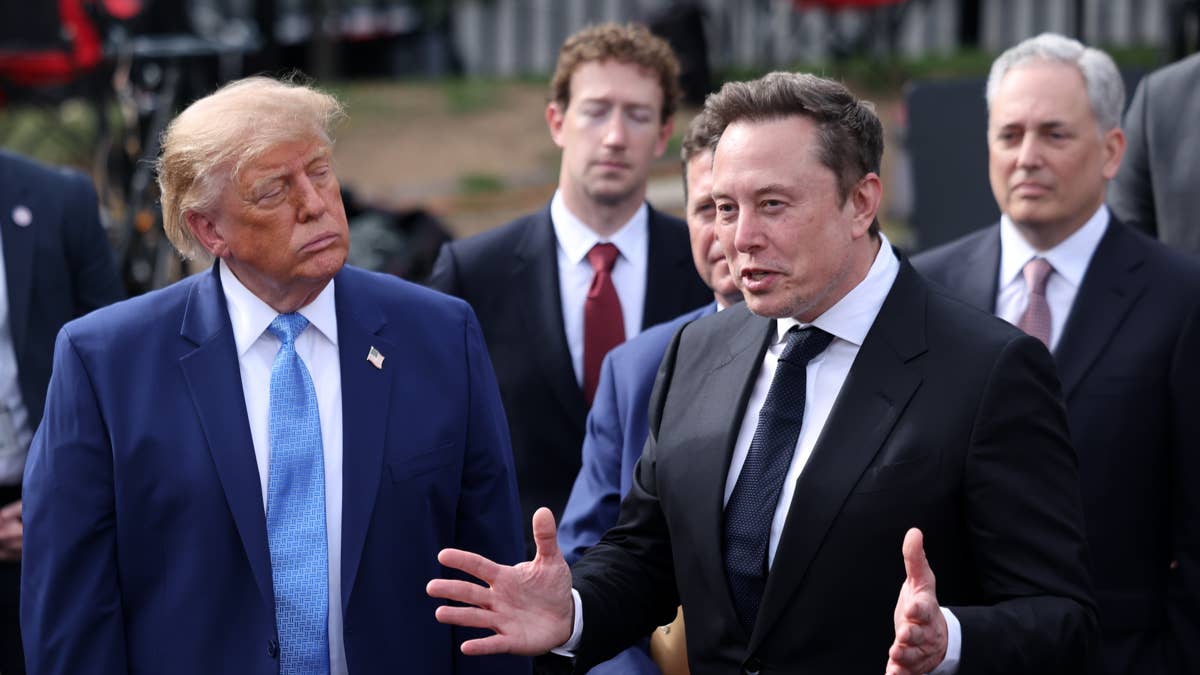
Elon Musk makes a bold move to solve Tesla’s robot problem.Bloomberg / Getty Images
Tesla’s robotics ambitions face a costly financial test
The potential purchase coincides with Tesla’s substantial financial investments in non-electric vehicle ventures.
Tesla reported third-quarter revenue of approximately $28.05 billion, nearly unchanged from the previous year. However, from $1.37 billion to $787 million, net income attributable to common shareholders decreased.
The findings highlight the financial strain the business is under as it grows and makes significant investments in new technologies.
Tesla’s September quarterly filing also showed substantial increases in capital expenditures. It spent more than $13.01 billion on capital expenditures in the first nine months of 2026, up from $6.13 billion in the same period in 2025.
That amounts to a roughly $6.88 billion rise.
In addition, Tesla said it anticipated spending more than $20 billion on capital projects for the whole year. The funding supports projects involving robots, driverless cars, industrial facilities, and artificial intelligence infrastructure.
Because Tesla had a financial buffer of approximately $45.45 billion in cash, cash equivalents, and short-term investments at the end of September, it has the capacity to keep creating new items.
Ensuring that investments generate long-term profits is the difficult part. Pricing, production efficiency, and customer demand all directly impact profitability in the competitive market where Tesla’s electric car business now operates.
More Tesla:
Tesla stock sellers should pump their brakes, 5-star analyst says
Bank of America resets Tesla forecast as Robotaxi miles double
Tesla wants to sell a car with no steering wheel this year
And the risks associated with humanoid robots vary. For the machines to be economically appealing, Optimus must demonstrate dependable performance, practical commercial uses, and affordable production.
Tesla still has to find solutions for the software, safety, and operational issues related to deploying autonomous robots, even if specialized gear increases manufacturing productivity. According to the EMAG plan, Tesla is working to establish the manufacturing base for that endeavor.
However, the financial advantages remain unknown because Tesla has not revealed the transaction’s cost, scope, and anticipated contribution.
Tesla’s German move reveals a bigger ambition
Tesla’s planned purchase of EMAG shows the company’s ongoing evolution outside its conventional automotive sector.
For many years, investors used the profitability of Tesla’s electric vehicles, production efficiency, and vehicle deliveries as the main factors to assess the company.
These steps are still crucial, but Musk is putting more emphasis on robots, self-driving cars, and artificial intelligence as potential areas for future development.
At the core of such approach is Optimus.
Tesla’s declared goal is creating a humanoid robot that can perform practical duties in settings intended for humans. If the business is successful, its manufacturing know-how may be useful in a market that goes beyond transportation.
But creating outstanding prototypes is not the only factor that determines success. Tesla must prove that robots are safe, dependable, and can be manufactured at a profit.
EMAG’s technology could be useful in that regard. A key component of humanoid robots is the production of precision gears, and the German business has a track record of manufacturing the equipment needed for these parts.
However, the proposed purchase alone does not determine either the date of Optimus’s large-scale manufacturing or the potential earnings of the robot company.
Tesla has not made the financial details of the sale public, and Germany’s antitrust authorities still need to finish the necessary regulatory procedure.
Related: Tesla’s $3.5 trillion merger talks have a surprising catch