

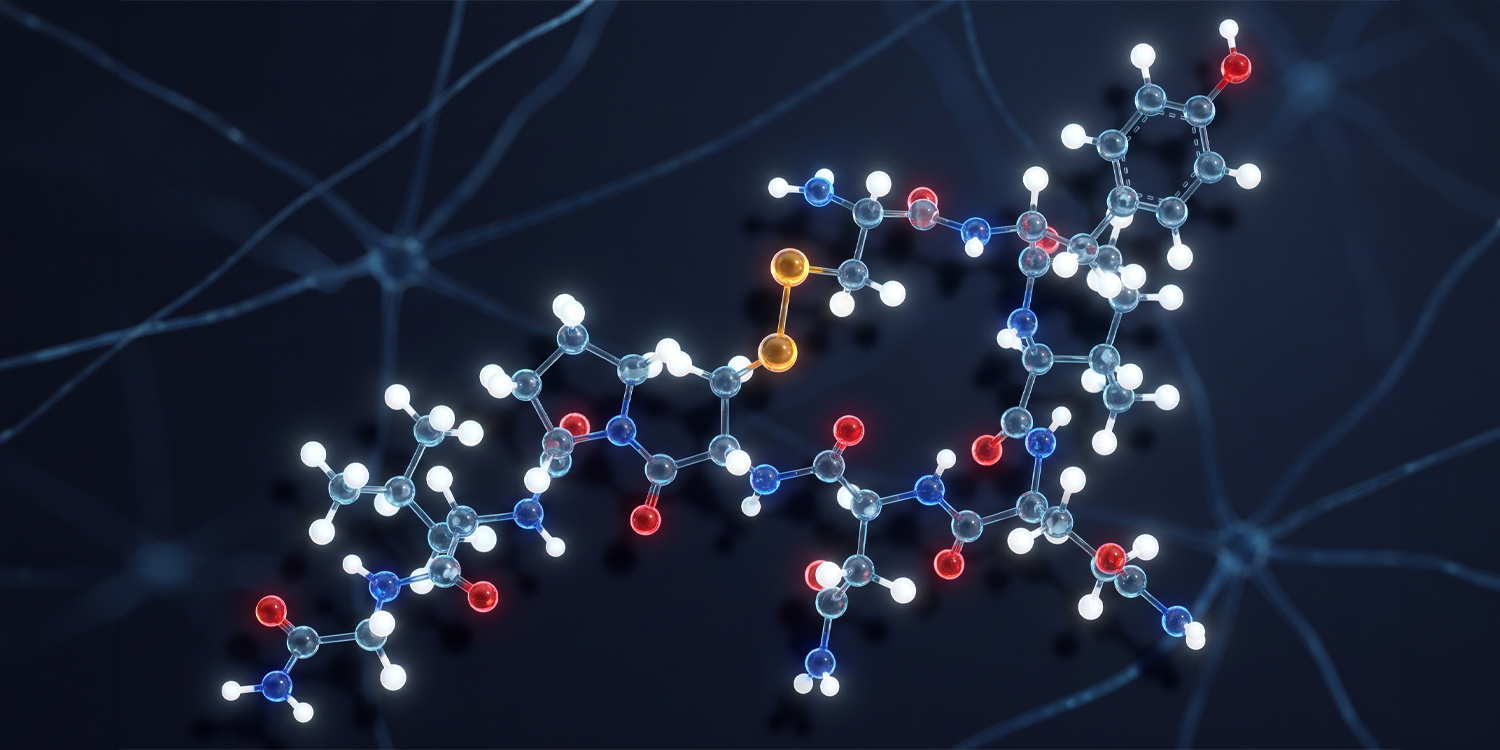
Oxytocin is often called the “love hormone,” but it can actually make childhood memories seem more negative for people who struggle with relationship anxiety. A new experiment demonstrates that oxytocin amplifies the emotional intensity of social cues rather than simply promoting warm feelings. The findings were published in the journal Emotion.
Human infants rely entirely on caregivers for survival, leading to an innate drive to form close bonds. These early childhood experiences shape a person’s attachment style, which acts as a mental blueprint for future relationships. Psychologists refer to these blueprints as internal working models. They represent a person’s core beliefs about whether other people will be available and responsive when needed.
Securely attached people generally expect others to be reliable and supportive. Anxiously attached people crave closeness but constantly fear abandonment, often hyper-focusing on relationship threats. Avoidantly attached people distance themselves from intimacy to prevent disappointment, shutting down their emotional needs when they feel vulnerable.
Researchers have long studied the biological systems that drive these social bonds. Oxytocin is a hormone and chemical messenger heavily involved in childbirth, nursing, and pair bonding. In studies of mice and sheep, oxytocin proved necessary for mothers to recognize their offspring and for adults to remember other members of their species.
Early human experiments suggested the hormone universally enhanced trust, cooperation, and empathy. This research helped popularize the idea that oxytocin is a simple prosocial booster.
More recent evidence suggests a nuanced view called the social salience hypothesis. This concept proposes that oxytocin acts as an emotional amplifier, highlighting social information regardless of whether that information is positive or negative. For instance, in animal models, oxytocin has been shown to enhance the fear response in mice after they experience a social defeat by a more aggressive cage-mate.
Researchers at McGill University, led by Melissa Shemirani and Jennifer A. Bartz, wanted to test this hypothesis by examining how oxytocin influences the emotional quality of attachment memories in humans. They sought to replicate and expand upon a previous experiment that only tested men. The research team recruited 77 male and female participants for a two-part study.
During one visit, participants received a dose of oxytocin via a nasal spray. On their other visit, they received a placebo spray. Neither the participants nor the experimenters knew which spray was administered on a given day. This crossover design allowed the researchers to compare how the same individual responded under both conditions.
After waiting for the hormone to take effect, participants were prompted with attachment-related words, such as “protect” or “upset.” They were asked to retrieve specific childhood memories involving their mothers based on these cues. The experimenters then selected one positive and one negative memory and asked the participants to elaborate on them verbally for a few minutes.
Independent human evaluators read transcripts of the recorded narratives and rated them for positive and negative emotional content. For participants with high attachment anxiety, oxytocin caused them to describe their mothers with more negative and less positive emotion compared to when they received the placebo. This suggests that the hormone amplified their underlying insecurities about relationships.
The researchers also analyzed the memory transcripts using two different computer programs designed to detect emotional tone in written text. One program counted the frequency of emotional words based on a vast dictionary, while the other evaluated grammatical context, such as whether a negative word was modified by another word. These automated tools matched the human evaluators in finding that attachment anxiety shaped how oxytocin affected negative emotional language. In the software analyses, however, the significant effect appeared among participants with low anxiety, for whom oxytocin reduced the negative emotional tone of their memories. The computer programs did not find any measurable differences in positive emotional language.
The research team also looked at participants with avoidant attachment styles, who typically suppress their desire for closeness. Oxytocin did not alter the emotional content of their maternal memories. Following the memory task, participants filled out a questionnaire about how much information they shared with the experimenter and how comfortable they felt doing so.
The results showed that avoidant individuals were generally less willing to reveal personal information. When given oxytocin, these participants became even more reluctant to open up emotionally. The hormone appeared to heighten their natural defensive tendency to distance themselves from intimate disclosures.
Readers should note that these results center entirely on recollections of mothers, who were historically viewed as primary caregivers in early psychology research. The study does not address whether oxytocin would alter memories of fathers or other childhood guardians in the same way. The participant group was also relatively young and predominantly White and Asian, meaning the patterns might look different in older adults or other racial groups.
The discrepancy between human evaluators and computer programs highlights the current limitations of automated text analysis. Software tools often struggle to interpret the mixed emotions typical of personal family histories. A memory about being comforted after a scary event contains negative words, but a human listener can easily recognize the overall positive meaning of the caregiver’s response. Spoken language is also full of tangents and structural quirks that confuse software designed for short written texts.
Finally, the findings indicate that oxytocin is not a universal treatment for relationship struggles or social difficulties. Because the hormone acts as a magnifier for pre-existing social fears, using it in therapeutic settings might require customized supervision. Administering oxytocin without proper guidance could inadvertently increase distress for those who already experience high anxiety in their personal connections.
The study, “Attachment, Oxytocin, and Maternal Recollections: Further Evidence for the Salience Hypothesis,” was authored by Melissa Shemirani, Willis Klein, Jonas P. Nitschke, Sonia A. Krol, Signy Sheldon, and Jennifer A. Bartz.