


I recently came across a French study that challenges something most people take for granted: that glass bottles are the safer, cleaner option for drinks.Glass bottles of cola, lemonade, iced tea, and beer contained around 100 microplastic particles per liter, sometimes up to 50 times more than plastic bottles and cans. The surprising culprit wasn’t the glass itself, but the bottle caps, according to France’s food safety agency Anses.It’s another reminder of how technology has reshaped the way we eat and consume, and that what we consider pure or natural in food and packaging often hides more complex facts.That shift isn’t limited to packaging. It’s moving into the molecular structure of food itself, where scientists are experimenting with lab-grown proteins and engineered ingredients designed to replicate familiar foods without traditional farming.In 2013, Dutch scientist Mark Post unveiled the first cultivated meat burger on live television. Ten years later, the U.S. approved the sale of lab-grown meat, according to UC Davis.Over the years, the industry has expanded beyond beef and chicken. Last year, I reported on the FDA’s first-ever approval of cultivated seafood (Wildtype’s lab-grown salmon).Now, that same technology is reaching one of the key ingredients in chocolate. Oreo maker Mondelēz has partnered with startup Celleste Bio, which produced the first cell-cultured cocoa butter. More recently, the partnership reached a major milestone. Mondelēz makes milk chocolate bars with lab-grown cocoa butter Mondelēz International made a dozen milk chocolate bars using cocoa butter produced in a lab by Celleste Bio, reported Food Dive. This milestone suggests that the company is preparing for larger-scale production in the next few years. Israel-based Celleste Bio developed proprietary cocoa technology that eliminates dependence on fragile rainforests. It says it can produce “100% natural cocoa ingredients at scale anywhere in the world,” though it’s unclear how “natural” is defined.The FDA defined the term “natural” as free from artificial or synthetic additives, but this description doesn’t address whether something is lab-grown or man-made.Celleste Bio CEO Michal Beressi Golomb said the bars offer proof that the technology works, and that the ingredients can soon be made available to chocolate manufacturers and other food companies, according to Food Dive. Mondelēz sources 100% of its cocoa through sustainability program Toblerone and Oreo maker Mondelēz also recently confirmed it has reached its goal of sourcing approximately 100% of the cocoa volume for its chocolate business through its Cocoa Life sustainability program. The goal behind the snacking giant’s global cocoa sustainability program is to make sure cocoa is grown in a way that protects the environment, supports the farmers who grow it, and ensures a steady supply of high-quality cocoa for the future. The company is investing $1 billion between 2012 and 2030 in the program, according to the official website. The program focuses on protecting against climate change and supply shortages by reducing end-to-end Co2e emissions, relying on smart technology to better predict how much cocoa will be harvested, and working with startups to explore lab-grown cocoa. “Focus, innovation, and impact at scale have always been at the heart of our sustainability work,” stated Christine Montenegro McGrath, SVP chief impact & sustainability officer.
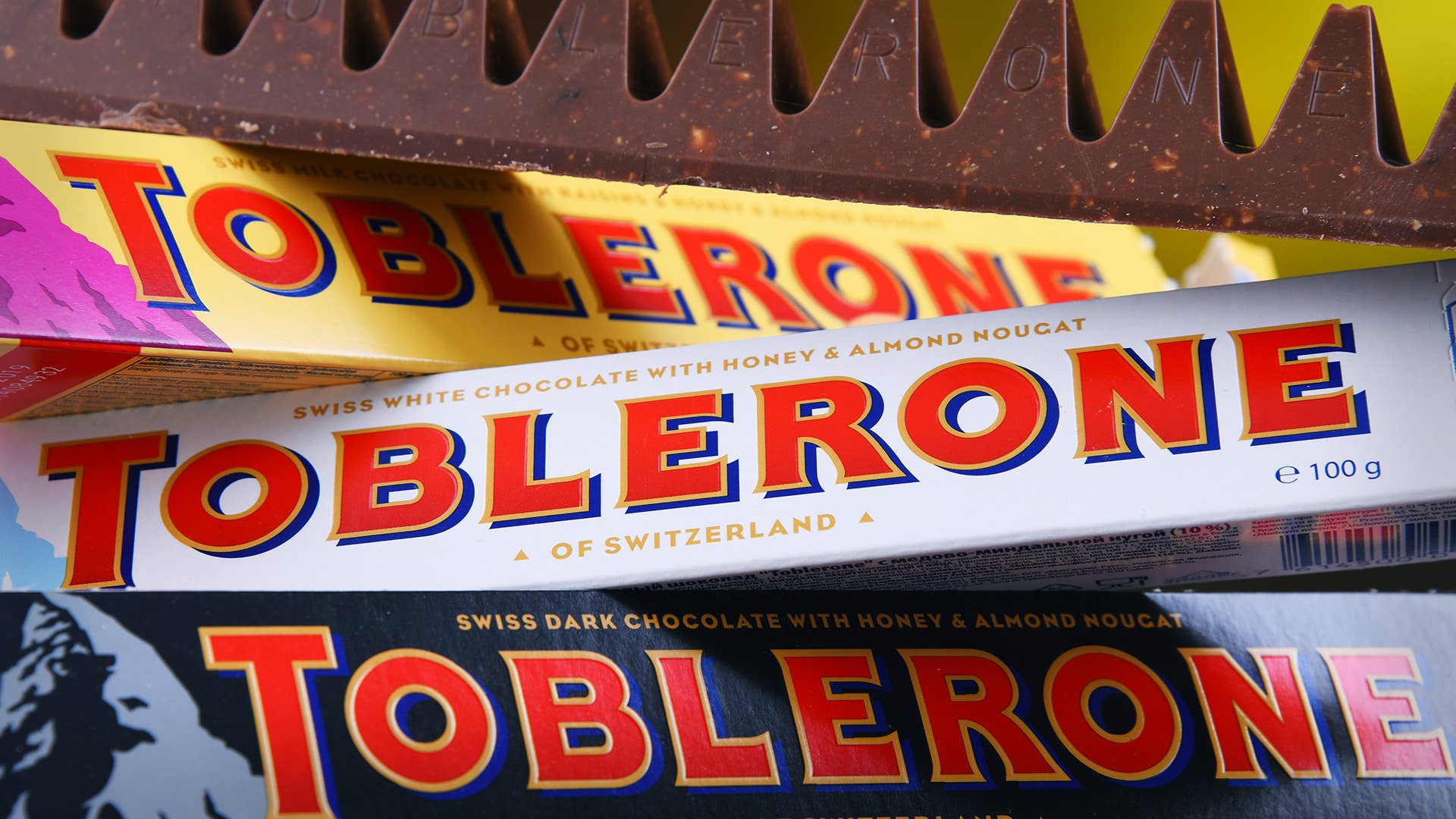
Mondelēz makes a dozen milk chocolate bars with lab-grown cocoa butter. Shutterstock
How is cocoa butter grown in a lab? Celleste Bio’s team of scientists use a proprietary combination of BioTech, AgTech, and AI to produce “100% natural cocoa ingredients of the highest quality,” according to the company’s official website. The biotechnology company says all it takes is just one or two beans, from which the cocoa cells are extracted and then grown in a controlled setting with water and nutrients. “This is a continuous cycle that repeats itself, without ever needing to crack open another pod. Our ability to create 1 ton of cocoa butter from a single cocoa pod — and do this anywhere around the world — will secure the future of cocoa production needed to fuel the growing $16B chocolate category,” the company’s website reads. Celleste Bio CEO Michal Beressi Golomb noted that the company made unprecedented progress. “We’ve validated our ingredients as drop-in replacements, created an operational R&D pilot facility to scale up our volumes and now proven our cocoa butter performs identically to conventional cocoa, clearing the next phase to commercial scale,” he stated. Other startups working on cell-cultured cocoa butter include:California Cultured (USA)Food Brewer (Switzerland) Kokomodo (Israel) Chocolate makers face high cocoa prices, other challenges Several reasons, including soaring cocoa prices, prompted the development of this technology to produce lab-grown cocoa. In December 2024, New York cocoa futures hit a record $12,565 per metric ton, according to Al Jazeera. By April, prices dropped to around $8,350, still well above historical levels. And while the cocoa market has fallen since 2024’s record high, prices are still elevated compared to a decade ago. In the beginning of 2026, prices began dropping. The market ended 2025 at $6.056 and fluctuated between $5,400 and $6,000 in January 2026 as weather conditions changed, reported AA. On April 15, 2026, New York cocoa futures settled at $3,576.00, Investing.com reported.Soaring cocoa prices over the last two years were driven by bad weather, aging trees, and crop diseases in West Africa, CNBC indicated. To manage cocoa expenses, giants including Hershey and Nestlé are raising their prices and finding creative ways to use less of the ingredient. Some companies are turning to wheat-based substitutes and waste-reducing techniques, while others have cut cocoa so much that their products must now be labeled “chocolate flavored” rather than real chocolate, according to prior reporting by TheStreet. In addition to combating rising cocoa prices, Celleste’s lab-grown cocoa aims to address environmental issues, since cocoa farming is often linked to deforestation and climate change. Related: Dollar General rolls out limited deals for value-driven shoppersImplications and sustainability of lab-grown food While federal regulators are approving lab-grown food products, several U.S. states are actively trying to block them to protect traditional agriculture. South Dakota just recently became the eighth state to ban cultivated meat, with a 5-year moratorium, according to Green Queen. Other states to enact bans include Texas, Indiana, Mississippi, Montana, Alabama, Florida, and Nebraska. While proponents of the lab-grown foods argue that cell-cultivation can drastically reduce land use, water consumption, greenhouse gas emission and the need for animal slaughter, other industry experts highlight challenges such as: Potential health risksEnvironmental impactNutritional qualitySocioeconomic consequences
Sources: Food and Agriculture Organization of the United Nations, Wageningen University
These experts seem to agree on one concern: Making these products at scale to feed a large population may not be economically feasible. Consumer sentiment on lab-grown foodConsumer attitudes toward cultivated (lab-grown) meat are mixed. Some people are very curious to try it, while others express deep skepticism regarding “naturalness” and price.“Top concerns consumers have about food produced by innovative technologies relate to food being produced in a way that is not natural (35%) and safety of the food (31%),” according to FSA Consumer Insights 2026. Moreover, when asked about their attitude towards cultivated meat, 21% of Americans find it appealing, and another 22% said they are unsure, according to the Good Food Institute (GFI) survey cited by Green Queen.The same survey revealed that 45% of consumers are likely to try these meats, and one in four (26%) say they might buy them, despite the uncertainty around their appeal. Currently, there are no publicly available surveys on consumer sentiment toward lab-grown cocoa. However, given Celleste Bio’s and Mondelēz’s recent milestone, we should expect some in the near future. Related: Lowe’s spends $250 million to fix massive problem for homeowners