

Subscribe to Updates

    Get the latest creative news from eReadIT about money, health, lifestyle and more.

    loader

    Email Address*

    Name

    Facebook X (Twitter) Instagram
    Trending
    • License-Plate Readers Are a New ICE Superpower
    • Military experts plead with Dems to end Trump’s war first
    • Morning Joe tells the GOP ‘it’s going to get worse’
    • Dems set a trap for Trump and the GOP with ‘Medicare for more’ plan
    • Historian unmasks Trump’s Nixon-style plot to keep Congress in the dark
    • ‘Ominous’ Supreme Court earthquake threatens millions in fired coach’s case
    • Boomer inheritances are tearing families apart as ugly legal wars loom
    • Texas conservatives furious with Ted Cruz after bloodbath
    EREADIT
    Write for Us
    • Write for Us
    • Local News
    • World
    • Politics
    • Money
    • Crypto
    • Technology
    • Sports
    • Entertainment
    • Game
    • Health
    • Lifestyle
    • Watch
    • Travel
    • Podcasts
    EREADIT
    Home»Politics»‘Ominous’ Supreme Court earthquake threatens millions in fired coach’s case
    Politics

    ‘Ominous’ Supreme Court earthquake threatens millions in fired coach’s case

    BY Alternet November 23, 2026No Comments0 Views
    Facebook Twitter Pinterest LinkedIn WhatsApp Reddit Tumblr Email
    Share
    Facebook Twitter LinkedIn Pinterest Email

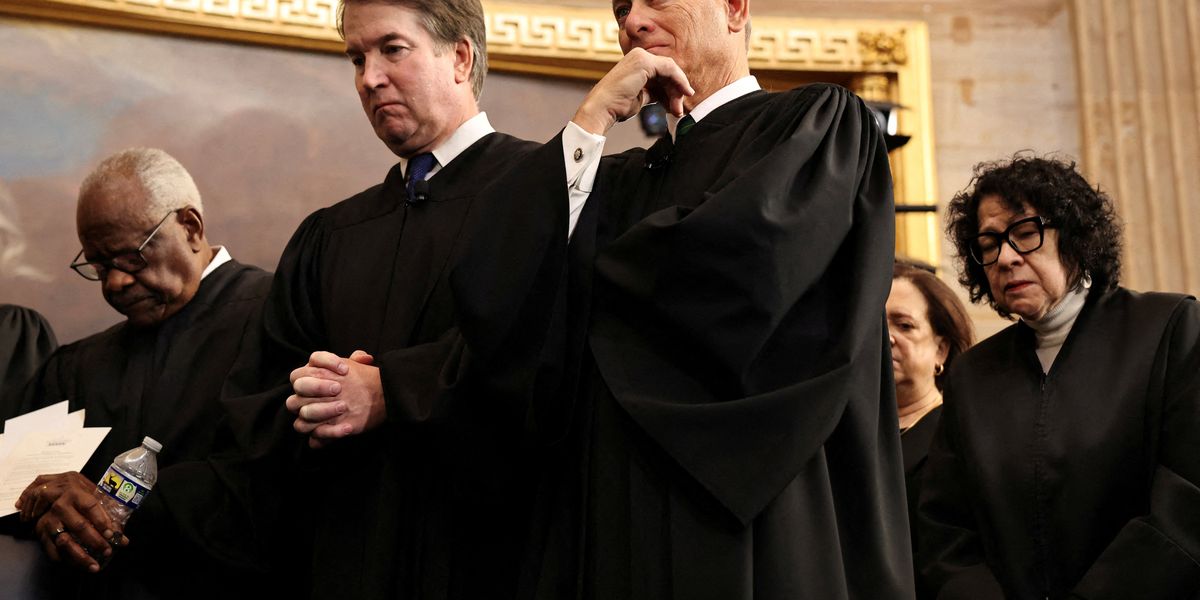
     ​ A former university basketball coach’s sex discrimination lawsuit is before the Supreme Court. But a legal expert says a ruling against her could do serious damage to federal laws that protect millions of Americans.

    The Supreme Court will hear Crowther v. Board of Regents of the University System of Georgia on Nov. 30. The plaintiffs, a former university basketball coach and an art teacher, both allege they were fired on account of their sex. According to Vox’s senior correspondent Ian Millhiser, the case is among the most straightforward the Supreme Court will decide this term. And yet it has “terrifyingly high stakes.”

    The case should be straightforward, Millhiser writes, because the Supreme Court already decided this issue almost 50 years ago. In Cannon v. University of Chicago (1979), the court held that individuals can file lawsuits against schools that violate Title IX, which prohibits sex discrimination in education. The court has reaffirmed that ruling at least four times. Millhiser writes that it is “an ominous sign for victims of sex discrimination” that the Supreme Court has decided to reconsider the issue now.

    The uncertainty stems from a ruling written by Justice Neil Gorsuch last year, in Medina v. Planned Parenthood. In that ruling, Gorsuch muddied the standards for when private citizens can sue to enforce federal laws that do not expressly grant them that right. In fact, Millhiser calls Gorsuch’s opinion “incompetently drafted,” saying it turned the standards for whether people can enforce such laws into “an unfathomable mess” in which even experienced civil rights attorneys don’t know whether certain laws will survive in court.

    In this case, the defendants, the Board of Regents of the University System of Georgia, argue that employees cannot sue under Title IX because they have a separate law that can be used to challenge sex discrimination in the workplace, namely, Title VII. Millhiser concedes that this won’t make schools immune from such lawsuits if the defendants win the case. However, Title VII claims frequently have a 180-day filing deadline.

    But, Millhiser argues, there is nothing in the text of Title IX that would limit the rights of employees. Title IX protects any “person in the United States,” he writes. “Both of the plaintiffs in Crowther are people,” he says.

    Even worse, in their brief, the defendants claim that Cannon was a “byproduct” of a legal approach the Supreme Court has since abandoned. If the Supreme Court agrees, Millhiser warns, Title IX “could become virtually meaningless,” along with other laws. Many important cases in this area involve Medicaid, which covers nearly 73 million people and includes protections such as a ban on nursing homes needlessly drugging residents.

    For that reason, Millhiser predicts that if the defendants win in this case, Crowther could be “one of the most consequential — and one of the cruelest” decisions of the term.

    He writes that the Supreme Court “should hold that Title IX is enforceable, full stop.” 

    Share. Facebook Twitter Pinterest LinkedIn Tumblr Telegram Email

    Related Posts

    License-Plate Readers Are a New ICE Superpower

    November 23, 2026

    Military experts plead with Dems to end Trump’s war first

    November 23, 2026

    Morning Joe tells the GOP ‘it’s going to get worse’

    November 23, 2026

    Comments are closed.

    Weather

    Trending

    7 Best Texas Roadhouse Orders for the Money

    November 17, 2026

    7 Old-School Steakhouse Dishes You Rarely See Anymore

    November 17, 2026

    Jensen Huang scandal fuels bipartisan push to block AI chip sales to China

    November 18, 2026

    Photos: People rally across France over living costs, public services

    November 22, 2026

    Subscribe to Updates

    Get the latest creative news from eReadIT about money, health, lifestyle and more.

    loader

    Email Address*

    Name

    eReadIT

    eReadIT enjoys delivering you valuable news that will educate, entertain, and enrich the lives of our readers from around the world and throughout your day. To stay up to date on the latest news check out our site.

    • Local News
    • World
    • Politics
    • Money
    • Crypto
    • Technology
    • Sports
    • Entertainment
    • Game
    • Health
    • Watch
    • Travel
    • Lifestyle
    • Podcasts
    • RSS
    • Contact
    • Privacy Policy
    • Terms & Conditions

    EREADIT LLC
    2400 Herodian Way SE, #220
    Smyrna, Georgia 30080
    Email Us : info@ereadit.com

    Copyright © 2026 EREADIT. All Rights Reserved.

    Type above and press Enter to search. Press Esc to cancel.