


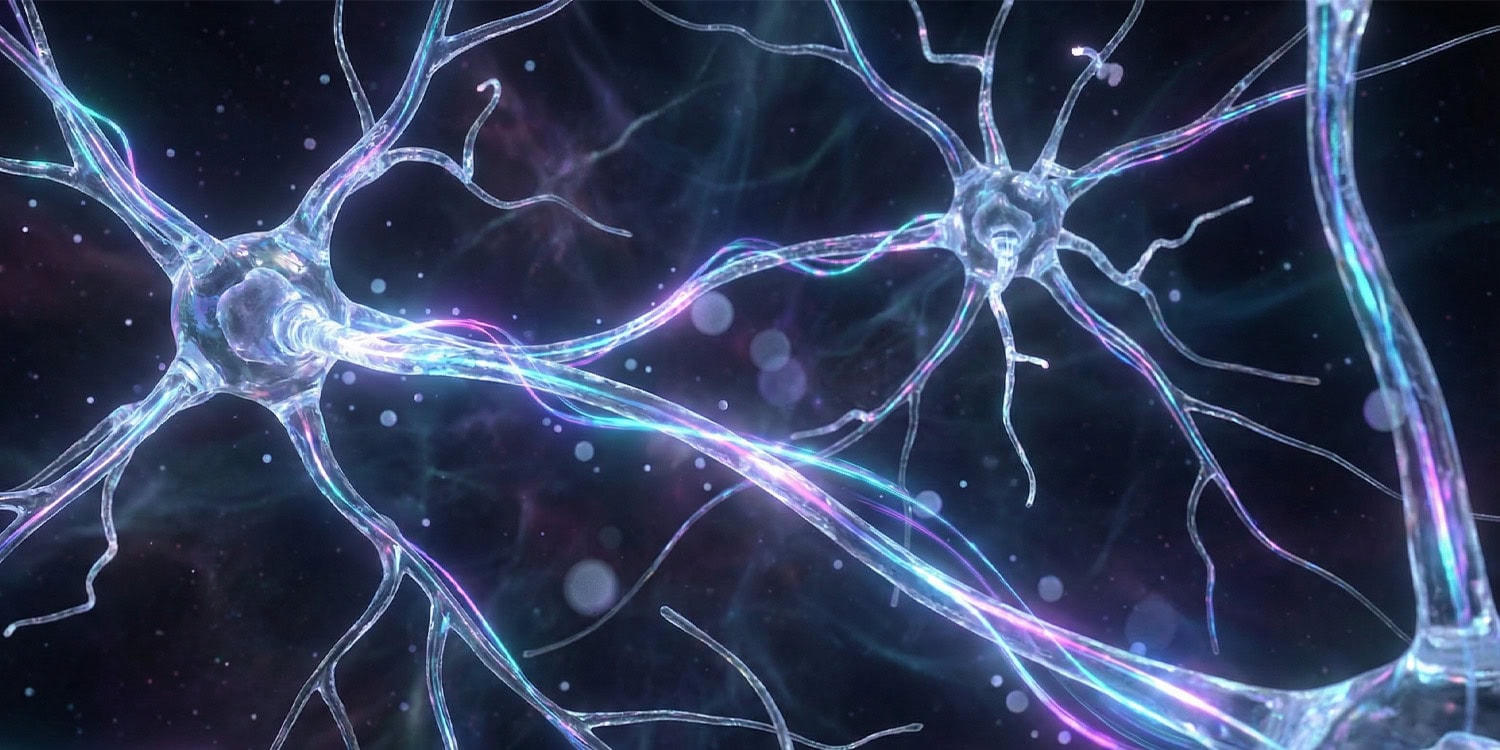
A study recently published in the journal Nature provides evidence that individual brain cells in the human cortex act as specialized building blocks to construct the complex architecture of spoken language. By recording electrical activity directly from the brains of people engaged in natural conversation, researchers found that specific groups of neurons are dedicated to handling different parts of speech, sentence structure, and meaning. These findings suggest a detailed cellular map of how we produce speech, offering insights that could eventually help develop advanced technologies to restore communication for individuals with speech disorders.
Language is a distinctly human ability that allows us to communicate an infinite variety of thoughts. “Language is one of the important features of being human, yet we have known surprisingly little about how individual brain cells make it possible,” said study author Jing Cai, a principal investigator at the Chinese Institute for Brain Research. At a broad level, brain imaging scans have shown that a network of regions across the frontotemporal cortex engages when we speak.
The frontotemporal cortex is an area located near the front and sides of the brain that plays a major role in language and cognition. While neuroimaging highlights general areas of brain activity, it does not reveal the microscopic cellular processes involved in natural speech. Brain scans show the big picture, but they cannot show how individual brain cells, known as neurons, encode grammatical categories or relationships between words.
“Human language is one of the most remarkable aspects of human cognition,” Cai said. “It is hierarchical, highly compositional, and allows us to communicate with each other easily. My background in machine learning and large language models naturally led me to wonder how individual neurons in the human brain process language, and whether the representations that emerge at the single-neuron level share any similarities with those found in LLMs.”
Large language models, or LLMs, are advanced artificial intelligence programs trained on vast amounts of text to recognize and predict human language patterns. Investigating brain activity at this microscopic level helps clarify how linguistic information is distributed across different brain regions. Scientists want to know whether single neurons recognize the overarching structure of sentences and how they encode different phrases.
To map these cellular processes, the authors recorded brain activity from eight human participants, including three women and five men with an average age of forty. These individuals were patients already scheduled to undergo surgical monitoring for severe epilepsy. As part of their medical care, they had small microelectrode arrays temporarily implanted in their brains. These tiny devices contain grids of sensors that can detect the electrical signals, or action potentials, of individual neurons.
Over fourteen separate sessions, the scientists isolated and tracked the activity of 579 individual neurons. During the recordings, the participants engaged in unscripted natural conversations. They answered various questions and prompts, discussing topics ranging from personal feelings and spatial locations to health and opinions. In total, the participants produced 10,460 words across 1,895 uniquely constructed sentences.
The scientists synchronized the audio recordings of these conversations with the electrical activity recorded from the neurons. They used natural language processing models to analyze the spoken sentences. These programs act like automated grammar teachers, labeling each word based on its part of speech, its grammatical role, and its position within the broader structure of the sentence.
Two different types of text analysis were used to classify the words. Constituency parsing breaks sentences down into nested structural units, such as noun phrases and verb phrases. Dependency parsing maps the direct grammatical links between specific words, such as an adjective modifying a noun. The researchers looked for connections between these mathematical descriptions and the firing patterns of the cells.
The data revealed a highly specialized division of labor among the neurons. About nine percent of the recorded cells responded preferentially to specific parts of speech. These neurons increased their electrical firing just before the participant uttered a specific type of word, like a noun or a verb.
“We were surprised by how much information individual neurons carried,” Cai told PsyPost. “Some neurons encoded detailed grammatical relationships, while others tracked higher-order sentence structure or meaning.”
For instance, roughly sixteen percent of the neurons monitored the hierarchical depth of a word, meaning they tracked how deeply embedded a word was within the grammatical branches of the sentence. Another ten percent of the cells tracked dependency relationships, changing their activity based on whether a planned word would act as a direct object or a subject.
The researchers also discovered that individual neurons tend to separate meaning from grammar. Most of the language-responsive cells specialized in encoding either the structural rules of the sentence or the definitions of the words, but rarely both. Only about two percent of the recorded cells encoded both syntactic and semantic information at the same time.
“With the help of LLMs, our findings show that single neurons don’t simply respond to individual words, but rather they work together to represent grammar, meaning, and sentence structure in a flexible, combinatorial way,” Cai noted. As a group, the cells accurately captured the combined grammatical and semantic features of the speech. This suggests that the brain uses a distributed network of specialized cells to build a complete representation of language.
To explore how these cells handle the broader context of a conversation, the scientists used large language models to map out how the meaning of a word changes based on the words that come before it. The authors found that the neurons dynamically adjusted their firing patterns based on the context of the sentence, successfully incorporating information from up to five preceding words.
“Even more striking, these neurons dynamically adapted their responses depending on the sentence context, suggesting that single cells participate in highly flexible representations of language,” Cai said. This predictive brain activity peaked about one second before the participant actually spoke the word.
To ensure the neurons were truly responding to linguistic context, the researchers ran control tests using randomly swapped sentences or meaningless substitute words. When the models processed these scrambled inputs, they could no longer predict the firing patterns of the neurons. This indicates that the brain cells were actively tracking the genuine meaning and flow of the conversation.
The distribution of these specialized neurons also provided new insights into brain organization. Language-responsive cells were found scattered widely across the frontal and temporal lobes. Yet, the strength of their responses was not equal everywhere. Neurons located in the left hemisphere of the brain showed significantly stronger reactions to linguistic features than those in the right hemisphere.
This aligns with the general medical understanding that the left hemisphere tends to dominate language tasks in most people. The authors also compared the activity of individual neurons to the general background electricity in the surrounding brain tissue, known as local field potentials. Local field potentials measure the synchronized activity of thousands of nearby cells.
The researchers found that individual neurons were much more precise and specialized in their linguistic tuning than the broader brain waves measured at the exact same location. While a specific microscopic site might show a general electrical response to a part of speech, the individual neuron sitting at that exact site was often tuned to a completely different linguistic feature. Individual cells appear to act as highly specialized filters, even when their immediate neighbors are engaged with other tasks.
While the study offers a detailed look at the cellular basis of language, it does have limitations. “This is an initial map of how individual neurons encode language, not the complete picture,” Cai explained. “Future work will need to record from more brain regions, study other forms of communication like language comprehension and writing, and test whether these findings generalize across different contexts and populations.”
The current analysis also did not address how neurons might encode expressive elements of speech, such as tone of voice, pitch, and emotional inflection. Because the study relied on participants with epilepsy, it is also possible that underlying neurological conditions could influence some aspects of brain activity. However, the researchers specifically selected brain areas with intact language function to minimize this risk.
As researchers continue to map these cellular building blocks, the findings could support the development of new medical technologies. “This brings us closer to understanding how the brain generates language and provides a foundation for developing future brain-computer interfaces that could restore communication for people who have lost the ability to speak,” Cai said.
The study, “Mapping the neuronal building blocks of human language with language models,” was authored by Jing Cai, Yoav Kfir, Mohsen Jamali, Hesen Huang, Young Joon Kim, Sydney S. Cash, and Ziv M. Williams.