


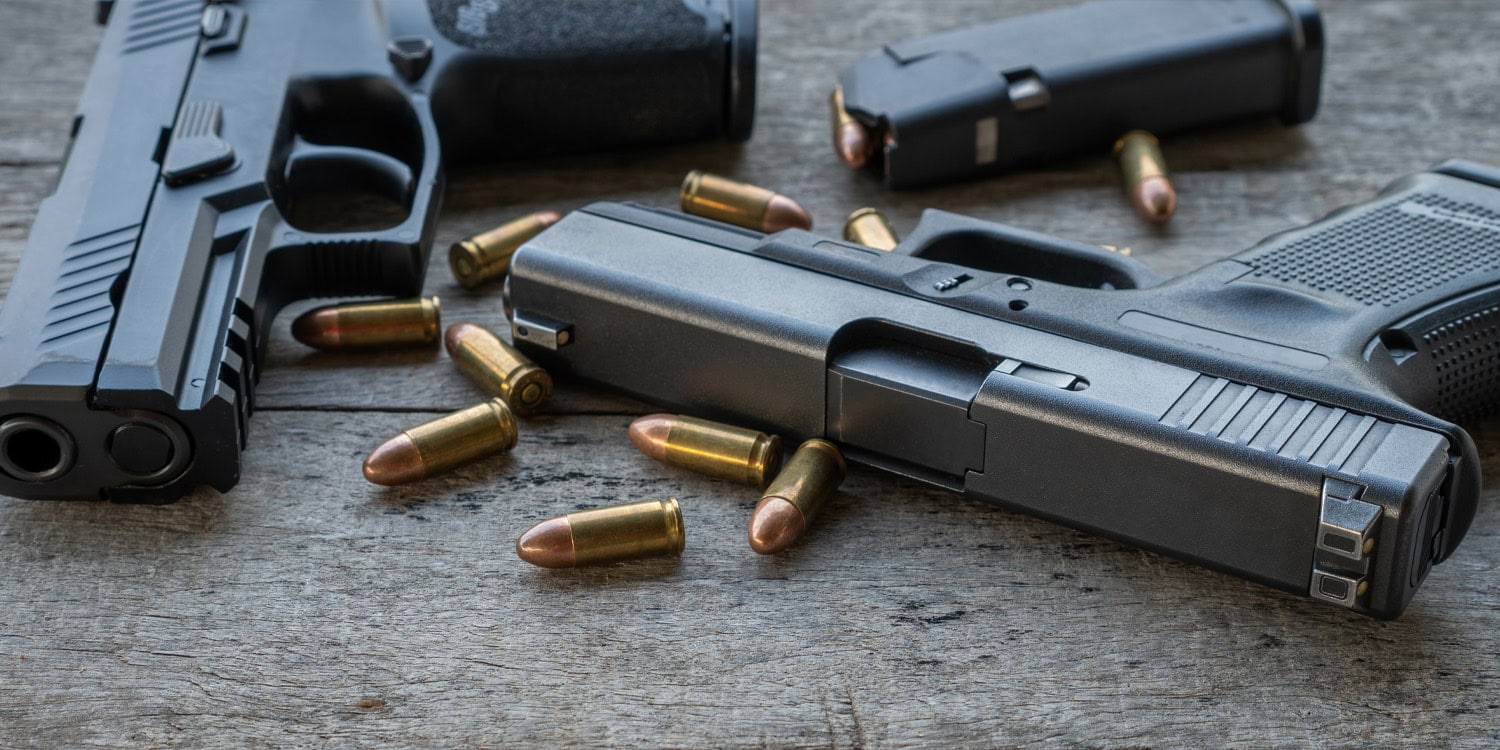
About one in four American gun owners leaves a firearm unattended in a vehicle at least occasionally, according to new research published in Injury Epidemiology. The study suggests that concerns about personal safety, everyday convenience, and laws prohibiting guns inside public establishments frequently prompt owners to leave weapons in cars. Most of these firearms are handguns placed in easily accessible spots like center consoles and glove compartments rather than locked vehicle safes.
Over the past decade, carrying firearms outside the home has grown increasingly common across the United States. For instance, a 2022 study estimated that about 16 million American adults carried a loaded handgun on a monthly basis, roughly doubling estimates from just a few years earlier.
At the same time, personal safety concerns often guide how individuals transport and store their weapons. Evidence from a 2023 study across five states indicated that people who felt heightened personal threat or viewed their neighborhoods as unsafe carried firearms more often and were more prone to keeping them in accessible, unsecure places.
This widespread carrying has coincided with parked cars becoming a leading source of stolen weapons nationwide. Stolen firearms present substantial public safety risks; a study covered by PsyPost in 2024 showed that stolen guns are nearly nine times more likely than legally retained weapons to later be recovered by law enforcement at crime scenes. Despite these risks, nationwide information about how often gun owners leave weapons in empty vehicles, where they place them, and why they do so has remained limited.
“In 2023, I was selected as a research partner for the Project Safe Neighborhoods program, collaborating with the San Antonio Police Department and federal partners, including the Bureau of Alcohol, Tobacco, Firearms, and Explosives and the US Attorney’s Office for the Western District of Texas, on violent crime reduction initiatives,” said lead author Alexander Testa, an associate professor and holder of the Blair Justice, Ph.D. Professorship in Mind Body Medicine and Public Health at the University of Texas Health Science Center at Houston School of Public Health.
“During one of our first meetings, we discussed the most pressing violence-related problems in San Antonio. Firearm theft from vehicles emerged as a major concern,” Testa told PsyPost. “The statistics from that year suggested that nearly 3,000 guns had been reported from vehicles in San Antonio that year alone. This was the first time I had heard about the scope of this issue, but I recognized it as a serious cause for concern, and we made it a priority area for collaboration.”
To investigate the issue nationally, the researchers examined data from an online survey of 1,856 firearm-owning adults in the United States administered by YouGov in February and March 2026. The sample used demographic weighting to ensure it mirrored the broader population of American gun owners.
Participants answered questions regarding how frequently they left a firearm inside a vehicle when no adult was present. Those who acknowledged leaving a firearm unattended answered follow-up questions about the types of weapons involved, the specific places inside the vehicle where they kept them, and their top reasons for doing so.
The authors also recorded details about each participant’s background, including age, biological sex, race, education, household income, past experiences with violent crime, and whether they had ever experienced a firearm theft. The survey also evaluated political viewpoints, community type, and state gun law strength based on national scorecard ratings. To evaluate safety perceptions, researchers used composite scales measuring fear of being shot and intentions to use a gun in self-defense.
The survey indicated that 73.2% of gun owners never leave a firearm unattended in a vehicle. However, 14.7% reported doing so rarely, 5.7% reported doing so sometimes, and 6.4% reported doing so either most of the time or always. Based on national firearm ownership estimates, the authors calculated that approximately 21.8 million American adults leave a gun in an empty vehicle at least occasionally, with about 4.8 million doing so regularly.
“Each year, tens of thousands of firearms are stolen from vehicles in the United States, and those firearms can enter illicit markets and be used in violent crimes,” Testa explained. “But before a gun can be stolen from a vehicle, an owner must first leave it there unattended. Our study was the first to estimate how often this happens.”
Several demographic and personal factors were tied to higher odds of leaving firearms in cars. Men were roughly 48% more likely than women to leave weapons unattended in vehicles, and non-Hispanic Black gun owners had about double the odds compared to non-Hispanic White owners. Younger adults were also more prone to leaving weapons in cars, whereas adults aged 76 and older were 84% less likely to do so than adults under 36.
Past victimization also played a role. Gun owners who had previously experienced a firearm theft from any location were more than two and a half times more likely to leave a gun in an unattended car compared to those who had never had a firearm stolen.
Personal perceptions of danger were linked to vehicle storage habits. Higher scores on the fear of being shot index and a greater perceived likelihood of using a gun for self-defense were both associated with leaving firearms in vehicles more frequently. Political views also showed an association, with respondents identifying as conservative having about three times higher odds of leaving guns in vehicles compared to those identifying as very liberal.
Geographic patterns emerged as well. Gun owners living in rural areas had more than double the odds of leaving firearms unattended in cars compared to those living in large metropolitan areas. Living in a state with the most restrictive firearm regulations, represented by an “A” grade on the policy scorecard, was associated with 32% lower odds of frequent vehicle storage compared to living in states with failing policy grades.
Among the 468 participants who reported leaving a firearm in a vehicle, handguns were the most common weapon, reported by 74.5% of respondents. Long guns alone accounted for 11.2%, while 14.3% reported leaving both handguns and long guns.
When describing where they kept the firearm, nearly a quarter of respondents cited the center console, and 16.7% reported using the glove compartment. Another 12.9% placed firearms under a seat or floor mat, and 9.2% kept them in the trunk. Only 19.7% reported using a dedicated lockbox or console safe designed for firearm storage.
“Two findings stood out to me,” Testa noted. “First, about 27% of firearm owners leave a firearm unattended in their vehicle. That figure represents an alarming number of firearms nationwide that are highly vulnerable to theft. Second, these firearms are often stored in locations like a center console or glove box, which offer little resistance to theft. Someone who breaks into a vehicle can get into even a locked center console or glove box very quickly. So storing firearms this way carries a high risk of theft.”
When asked about their reasons, the most common primary motivation was encountering legal rules that prohibited carrying firearms into specific places, such as workplaces, schools, government buildings, or businesses that serve alcohol. Other leading reasons included wanting immediate access to a firearm for personal protection, having a designated storage spot in the vehicle, and everyday convenience.
“I’d emphasize that this is not about assigning blame to firearm owners,” Testa told PsyPost. “Many people who leave firearms in vehicles are doing so because they cannot bring them into workplaces or other gun-free locations. Only recently have safes and other devices designed to securely store a firearm in a vehicle become available for sale, and it is still not the norm to install these in your vehicle.”
“That’s exactly why practical solutions matter,” Testa added. “We still need to figure out best practices for how to reduce firearm thefts from vehicles, and doing so is a violence prevention strategy that firearm owners, law enforcement, and public health researchers can all agree on.”
The findings come with some limitations. Because the study relies on self-reported survey answers, some participants may have underreported leaving firearms in vehicles due to social desirability or privacy concerns. The data are also cross-sectional, capturing a single snapshot in time, which means the results show associations rather than proven cause-and-effect relationships.
“This is a single survey and the only estimate of this behavior to date,” Testa said of the caveats. “I would like to see the study replicated with alternative samples to determine whether these findings hold up.”
Data collection took place exclusively in late winter and early spring, meaning the findings might not capture seasonal shifts in firearm transportation, such as during hunting seasons or summer road trips. The survey also did not distinguish between leaving a firearm for a few minutes during a quick errand versus leaving it overnight on a public street, nor could the broad state policy scores capture local municipal ordinances or private property bans.
“The long-term goals are to identify messaging techniques that (a) reduce the storage of firearms in vehicles and (b) increase the uptake of locking devices, such as vehicle safes, that make firearm theft from vehicles more difficult,” Testa explained. “Figuring out how to increase that number could meaningfully reduce the number of firearms stolen from vehicles.”
The study, “Prevalence, correlates, and patterns of leaving firearms unattended in vehicles among US firearm owners,” was authored by Alexander Testa, Jennifer Thompson, Chelsea Carriker, Dylan Jackson, Daniel Semenza, and Jack Tsai.