


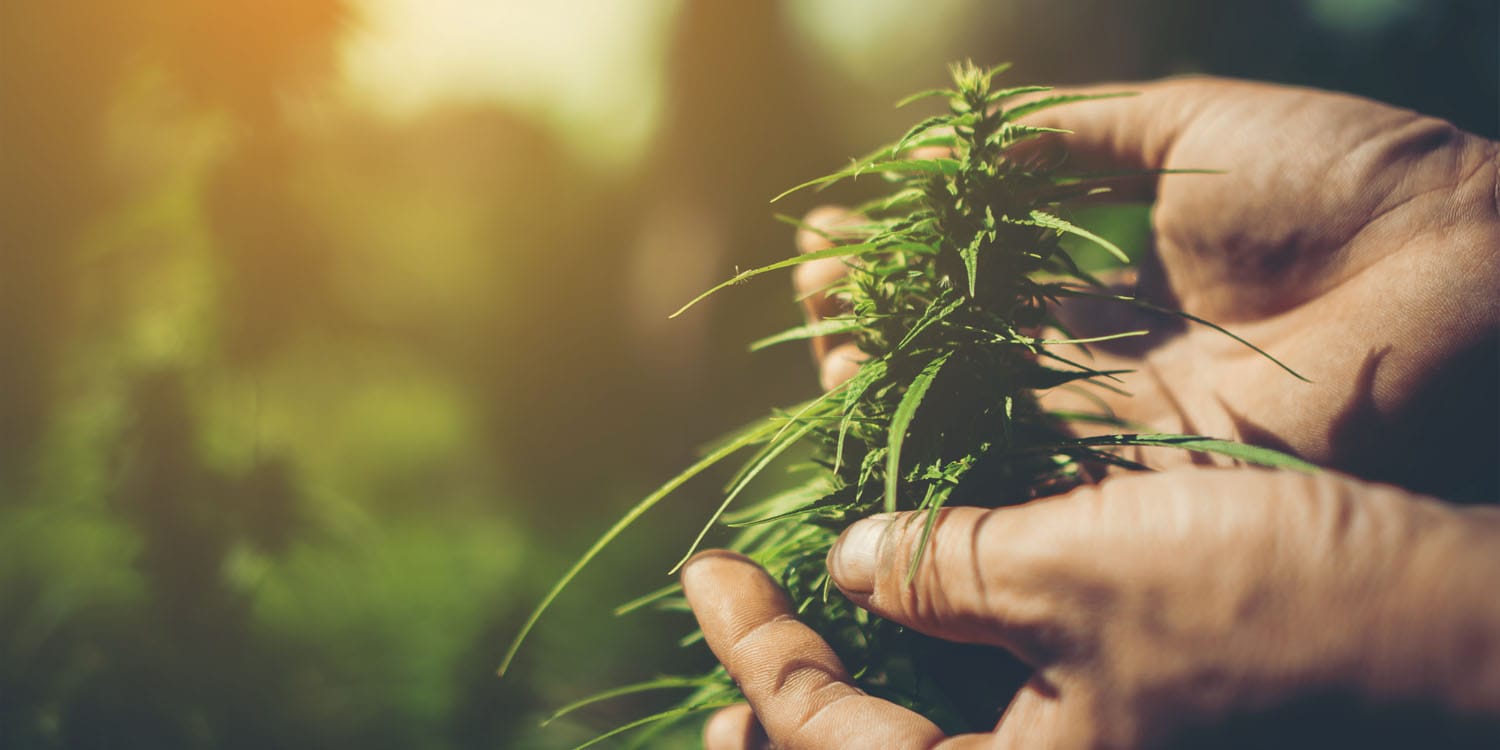
A study conducted on male Wistar rats found that administering phytocannabinoids once daily reduced voluntary alcohol consumption. They tested three different compounds—cannabinol, tetrahydrocannabivarin, and cannabidiol—and found that they differed in their effectiveness and side effects, but that they all reduced alcohol intake. The paper was published in Alcohol and Alcoholism.
Phytocannabinoids are naturally occurring chemical compounds found in the cannabis plant that can interact with the body’s endocannabinoid system and other biological systems. They are called “phyto” cannabinoids because “phyto” means plant-derived. The best-known phytocannabinoids include tetrahydrocannabinol (THC), cannabidiol (CBD), cannabinol (CBN), and tetrahydrocannabivarin (THCV), but the cannabis plant contains many others in smaller amounts.
Cannabinol, or CBN, is usually formed when THC breaks down with age, heat, or exposure to oxygen, so older cannabis material may contain more CBN. CBN is usually described as mildly psychoactive but much weaker than THC. It is being studied for possible effects on sleep, pain, and inflammation. Tetrahydrocannabivarin, or THCV, is chemically related to THC but can have different effects depending on the dose and context. THCV is being studied for possible roles in appetite regulation, metabolism, blood sugar control, and neurological effects, although strong clinical conclusions are still limited.
Cannabidiol, or CBD, is a non-intoxicating phytocannabinoid, meaning it does not usually produce the “high” associated with THC. CBD is used in medications for certain rare seizure disorders, and it is also widely marketed for anxiety, sleep, pain, and inflammation, although evidence varies by condition and product quality.
Study author Ieva Poceviciute and her colleagues note that the endocannabinoid system plays a significant role in the development of alcohol use disorder. Studies indicate that synthetic substances that block or reduce the activity of CB1 receptors (a type of cannabinoid receptor) show promise as novel treatments for alcohol use disorders, but previous clinical trials of these drugs failed due to severe psychiatric side effects. The authors sought to test if naturally occurring, non-psychoactive phytocannabinoids might offer a safer alternative.
The endocannabinoid system is a body-wide signaling system made of cannabinoid-like molecules, receptors, and enzymes that helps regulate functions such as mood, pain, appetite, sleep, memory, stress response, and inflammation. CB1 receptors are one of the main receptor types in this system, acting as specialized molecules that detect specific types of signals and trigger responses in the cell.
The study was conducted on male Wistar rats. All rats were group-housed throughout their adolescence and into adulthood. They had free access to standard laboratory rat food and tap water.
For examining the effects of phytocannabinoids, CBN and THCV were dissolved in Tween 80 (a substance used to help mix oils and water in foods and pharmaceuticals) and then diluted with 0.9% saline to a final Tween concentration of 4% and 5%, respectively. They were then injected into the peritoneum of rats at a volume of 2 ml/kg. CBD was suspended in 0.9% saline containing 0.5% methylcellulose and injected at a volume of 3 ml/kg.
For the study of the effects of phytocannabinoids on voluntary alcohol consumption, rats had free access to water and a 5% ethanol solution for one week. After this week, the alcohol concentration was increased to 8% for one more week, and finally to 10% for the remainder of the experiment (lasting several months). The study authors measured alcohol intake and water consumption either weekly or daily.
The study authors excluded rats that did not drink much alcohol. The pharmacological intervention proceeded only on rats that voluntarily drank higher amounts (at least 2 g/kg/day of ethanol). These rats were then randomly assigned to receive injections of different doses of CBN, THCV, CBD, or a placebo (an injection of a solution without phytocannabinoids) for three consecutive days.
During this time, the study authors measured how much alcohol the rats drank and various other parameters, such as body weight. In one subgroup, they tracked how much the rats moved during a 24-hour period using motion sensors. The person handling the rats did not know which group of rats was receiving which treatment.
In a separate part of the study, the study authors tested the effects of these phytocannabinoids on a separate group of rats that were not being given alcohol to see whether the compounds produced emotional-like responses, measured through the rats’ ultrasonic vocalizations. They treated higher-frequency (50 kHz) calls as signs of positive emotional states, while lower-frequency calls (22 kHz) were taken to signal negative emotional states like distress.
Results showed that all three phytocannabinoids reduced voluntary alcohol consumption. However, they differed in their effectiveness and side effects. Treatment with CBN and THCV significantly reduced alcohol intake and alcohol preference, with the effects of CBN lasting for three days after the final injection. Both compounds had a mild sedative effect, and the highest doses caused a slight loss of body weight.
Surprisingly, CBD had only a minor effect on alcohol consumption and did not affect alcohol preference. It also made the rats move significantly less and lowered their positive emotional states (fewer 50 kHz vocalizations). None of the compounds caused discomfort or distress (no 22 kHz vocalizations).
“We conclude that CBN and THCV may have potential in treating AUD [alcohol use disorder],” the study authors concluded.
The study contributes to the scientific knowledge about the potential utility of phytocannabinoids for treating alcohol use disorder. However, it is important to emphasize that this study was done on rats, not on humans. While rats and humans share many physiological similarities, they are still very different species. Because of that, the effect on humans might not be identical.
The paper, “Effect of cannabinol, tetrahydrocannabivarin and cannabidiol on voluntary alcohol consumption,” was authored by Ieva Poceviciute, Martynas Arbaciauskas, Rokas Buisas, Osvaldas Ruksenas, and Valentina Vengeliene.