


Walmart, Target, and Costco generally enjoy pricing advantages over traditional grocers. They can all sell at lower markups because they don’t need to make their money on food and other household basics.That’s good news for consumers avidly looking for the lowest prices, according to Consumer Reports.”One effective strategy is simply shopping at the right stores. Most Americans buy food from at least two retailers each week. But which ones you choose can have a big impact on your overall spending, according to research we commissioned from the Strategic Resource Group (SRG), a retail- and grocery-industry market research company in New York,” the consumer watchdog reported.The study, which used Walmart as its baseline, found that Kroger’s prices on the cart full of basic items purchased at all the chains came in at 14.8% higher than Walmart’s. Target was 5.9% higher, while Costco customers saved 21.4% on the same basket.That’s a problem new Kroger CEO Greg Foran needs to address, but it’s not what he sees as the company’s biggest problem.Kroger’s CEO calls out his chain’s biggest problemForan shared that he spent much of his first 100 days in the top job out in the field visiting stores and distribution centers. He also spent time visiting competitors.He didn’t love everything he saw.”First, our operating costs have been growing faster than our sales. That’s not sustainable. And frankly, it’s not acceptable,” he said during Kroger’s first-quarter earnings call.That, he noted, has to change. “Taking costs out of this business is not optional. It’s the starting point for everything else we want to do. Second, the way we operate behind the stores needs to improve. We need to move faster, make decisions more quickly and get more out of the assets and the talent we already have,” he said. Kroger needs to be cheaper, not the cheapestForan also made it clear that Kroger needs to improve its pricing and value proposition. “We have opportunities to sharpen our pricing and make value simpler for customers. Over time, our promotions have gotten too complicated and our price position has not kept pace where it needed to,” he said.He acknowledged that the chain won’t be able to close the gap with retailers like Costco.”Let me be clear on what this means. We do not need to be the lowest-priced retailer. We need to be more competitive, more consistent and easier for customers to understand. When a customer is deciding where to shop, we want more of them choosing Kroger more often because the value is clear, the experience is great and the trust is there,” he said. More Retail:Struggling women’s clothing retailer shutters 171 storesRetail giant launches first new home brand in 5 yearsDiscount retail giant wins as shoppers change how they spendFixing that, he made clear, will take commitment from the company. “To do this, we do not need a onetime reset. Every dollar we invest in customer value we earn through cost savings and efficiency. That’s the standard we’re holding ourselves to. Over time, we’ll move towards simpler, more consistent everyday value. We will still be promotional, that is part of who we are, but sharper and easier for customers to understand,” Foran added.RTMNexus CEO Dominick Miserandino thinks Foran is the right man for the job.”There is a massive reason to be incredibly hopeful about Kroger’s future under Foran. Unlike Costco or Walmart, Kroger already owns the best neighborhood real estate in the country. Foran’s true genius is taking that local advantage and ramping it up. If he can simplify the shopping experience and leverage Kroger’s massive digital data, they can offer something the big giants can’t — personalized value right at your local corner store,” he told TheStreet.
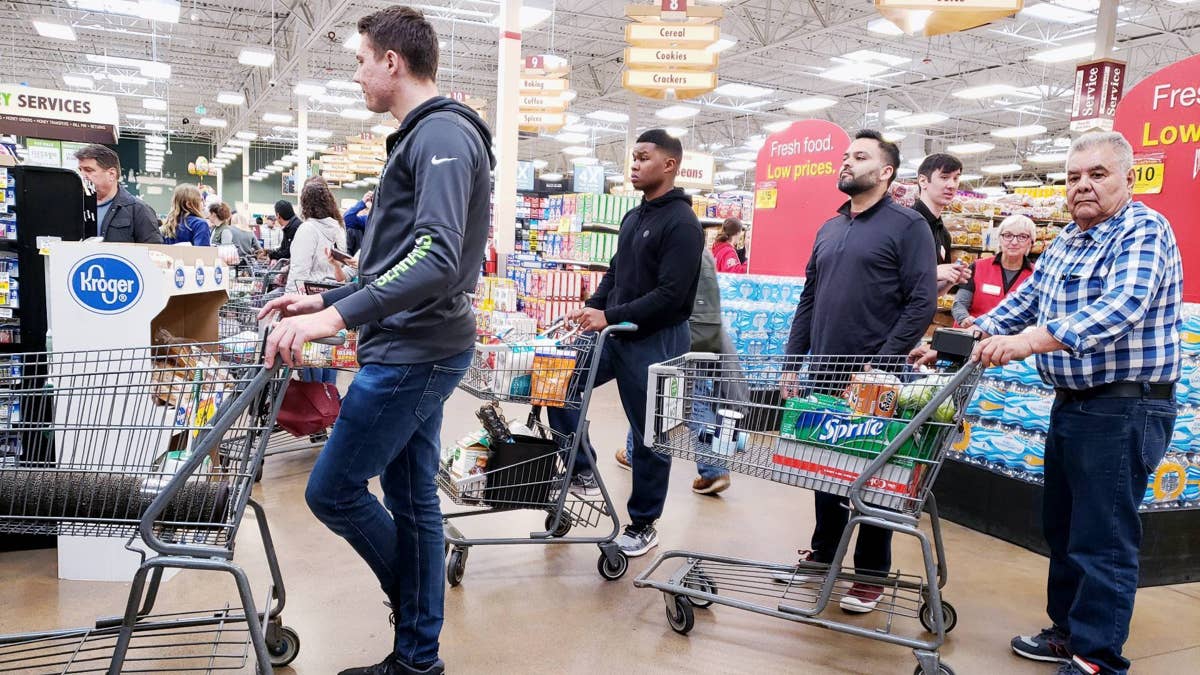
One of Kroger’s biggest advantages is its store count and locations.Shutterstock
Foran took over a challenged companyForan took over Kroger after more than a year after the company’s failed $24.6 billion merger with Albertsons. He inherited a company that was struggling to find a path forward, according to analysts.“The golden age of Kroger was before Rodney [McMullen] took over,” R5 Capital CEO Scott Mushkin told Grocery Dive. Mushkin was referring to Kroger’s approach to the grocery industry under CEO David Dillon, McMullen’s immediate predecessor. “If you just look at the business… I would say they’re kind of bumping along, kind of hanging on a little bit rather than thriving.”Kroger does, however, have something that should give it the ability to recover.“Grocery is a low-margin business. The only viable way to deliver consistently low prices is through scale. Whether people like it or not, that’s an economic fact,” wrote Global Data Managing Director Neil Saunders on RetailWire.Scale is something Foran also plans to address. “We have not been opening new stores. Competitors have continued to grow their footprint while we stepped back. Our existing footprint is one of our strongest assets, but standing still in store growth means standing still in market share,” he said. “The good news is we have started to ramp our pipeline, thoughtfully focused on the markets and formats that can generate the strongest returns.”Related: Walmart’s new CEO shares vision for the retail giant