

I remember buying a new laptop back in 2020, and it was more or less a predictable and straightforward exercise.
You picked a brand, decided how much storage you need, and, for me, hoped the machine would last long enough to justify the price tag.
Lately, though, from what I’m hearing from my friends, that calculation has become frustrating. Memory has become remarkably expensive due to the AI boom, and some affordable configurations are harder to find; upgrading to a model with enough RAM for everyday multitasking can stretch an already tight budget.
What’s happening at Intel (INTC) helps explain why.
During its Oct. 29 earnings call, CEO Lip-Bu Tan warned of an “unprecedented memory crunch” that’s weighing on PC demand.
The irony is hard to miss.
Demand for chips powering the AI boom is soaring, while the cost of building ordinary computers is making buyers hesitate. Wall Street noticed. Goldman Sachs cut its Intel price target post-earnings by 33.3% after the company delivered disappointing guidance.
The question now isn’t just what happens to Intel stock. It’s what Americans will pay for their next PC.
Intel CEO sees a prolonged problem for PC buyers
Lip-Bu Tan says the company’s PC customers are pulling back, not because computers have become less useful, but because building them has become a lot more expensive.
“In recent weeks, our customers began signaling a PC slowdown based on the memory prices and availability,” Tan told analysts on Oct. 29.
He added that rising system prices were putting further pressure on already limited corporate IT budgets.
The weakness has gathered speed.
“The pace of this PC correction has accelerated over the last two months as our OEM partners are aggressively managing inventory to match the softer sell-through,” Tan said.
When fewer PCs sell, manufacturers might reduce chip orders even faster as they clear existing inventories. Intel’s client computing sales fell 9% from the preceding quarter to $8.1 billion.
The company expects the worldwide PC market to shrink about 12% in units in 2026, with the second half down more than 20%. Management is planning for another 10% contraction in 2027, instead of a quick rebound.
CFO Dave Zinsner told analysts the inventory correction could run through early next year. More troubling, he said, Intel does not expect memory supply conditions to improve during 2027, leaving 2028 as a possible turning point.
The squeeze is reaching shoppers, too. IDC’s June research, as reported by TechRepublic, projected a 17% increase in average PC selling prices in 2026, making it harder for families and businesses already watching their budgets to justify replacing computers.
For Intel, the frustration is that demand remains strong elsewhere, especially for server processors. But its traditional PC customers are facing a problem that better chips alone cannot fix.
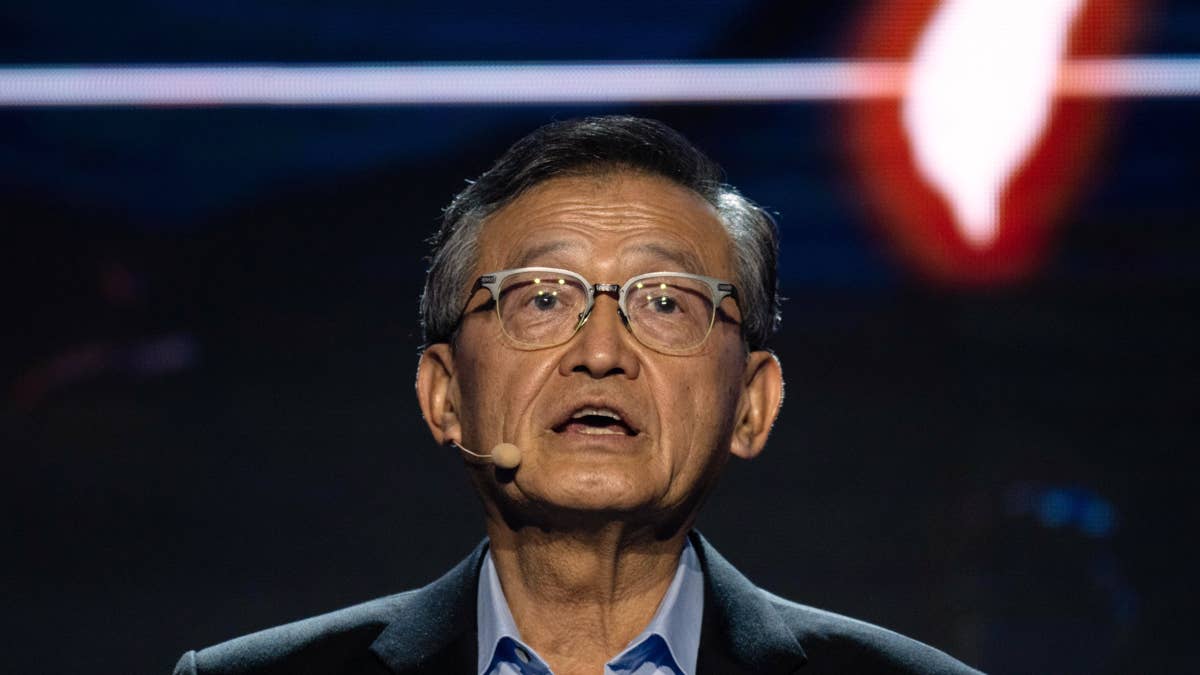
Intel CEO Lip-Bu Tan cites costly PC memory as Goldman cuts its target.Bloomberg / Getty Images
AI spending creates an unexpected PC affordability problem
The shortage squeezing PC buyers starts far from the laptop aisle, in the data centers being built to power AI.
Memory makers have been directing more production capacity toward higher-margin server chips, particularly the high-bandwidth memory used alongside AI processors. That leaves less room for the conventional memory and storage components used in everyday computers, even as consumers become more price-sensitive.
More Intel:
Top analyst sets outrageous Intel stock target ahead of earnings
Intel stock jumps as SK Hynix weighs U.S. memory-chip deal
Intel stock surges 9% as surprising turnaround takes shape
In fact, on Micron’s Sept. 30 earnings call, CEO Sanjay Mehrotra said that “HBM continues to grow faster than conventional DRAM through 2028.”
In addition, at the KeyBanc Technology Leadership Forum in August, Sumit Sadana, Micron’s executive vice president and chief business officer, explained how producing AI memory reduces the capacity available for conventional memory.
“To produce 100 bits of HBM, we have to reduce 300 bits of DDR supply.”
TrendForce expects conventional DRAM contract prices to rise another 10% to 15% in Q4, with NAND flash prices climbing 15% to 20%.
Even though those are wholesale component forecasts, manufacturers must still absorb the costs, pass them to buyers, or change what goes into their machines.
That could mean more expensive upgrades, fewer configurations with generous amounts of RAM, or fewer choices at lower price points.
Intel’s own sales offer a revealing contrast. CFO Dave Zinsner said shipments of its cost-optimized Wildcat Lake processors increased about 70% from the previous quarter, and that the product was sold out.
That’s the conundrum facing investors: AI can accelerate one part of Intel’s business while making the computers that power its longstanding PC franchise harder for customers to afford.
Goldman Sachs slashes Intel target after weak outlook
Intel’s latest results give investors two different pictures of the company.
Q3 sales jumped to $16.5 billion, adjusted earnings reached $0.52 a share, and Data Center and AI sales surged 78%. Yet its client computing and physical AI business shrank 5%, showing how the PC slump is offsetting AI momentum.
The problem became harder to dismiss when Intel projected $15 billion to $16 billion in fourth-quarter revenue, against Wall Street’s expectation of roughly $17.1 billion.
Goldman Sachs responded on Oct. 30 by cutting its Intel price target from $150 to $100, while maintaining a Neutral rating. Analyst James Schneider expects PC manufacturers’ inventory reductions to continue into the first half of 2027, potentially prompting Wall Street to lower earnings estimates, even as AI server demand remains strong.
Jefferies also cut its target to $85, while Bank of America downgraded Intel to Neutral.
For Intel stockholders, the question is whether that growth can offset weak PC orders and higher capital spending until memory supply improves and Intel’s turnaround generates sustainable cash flow.
Related: BofA sees 80% upside for Seagate stock, but Micron shares look cheaper