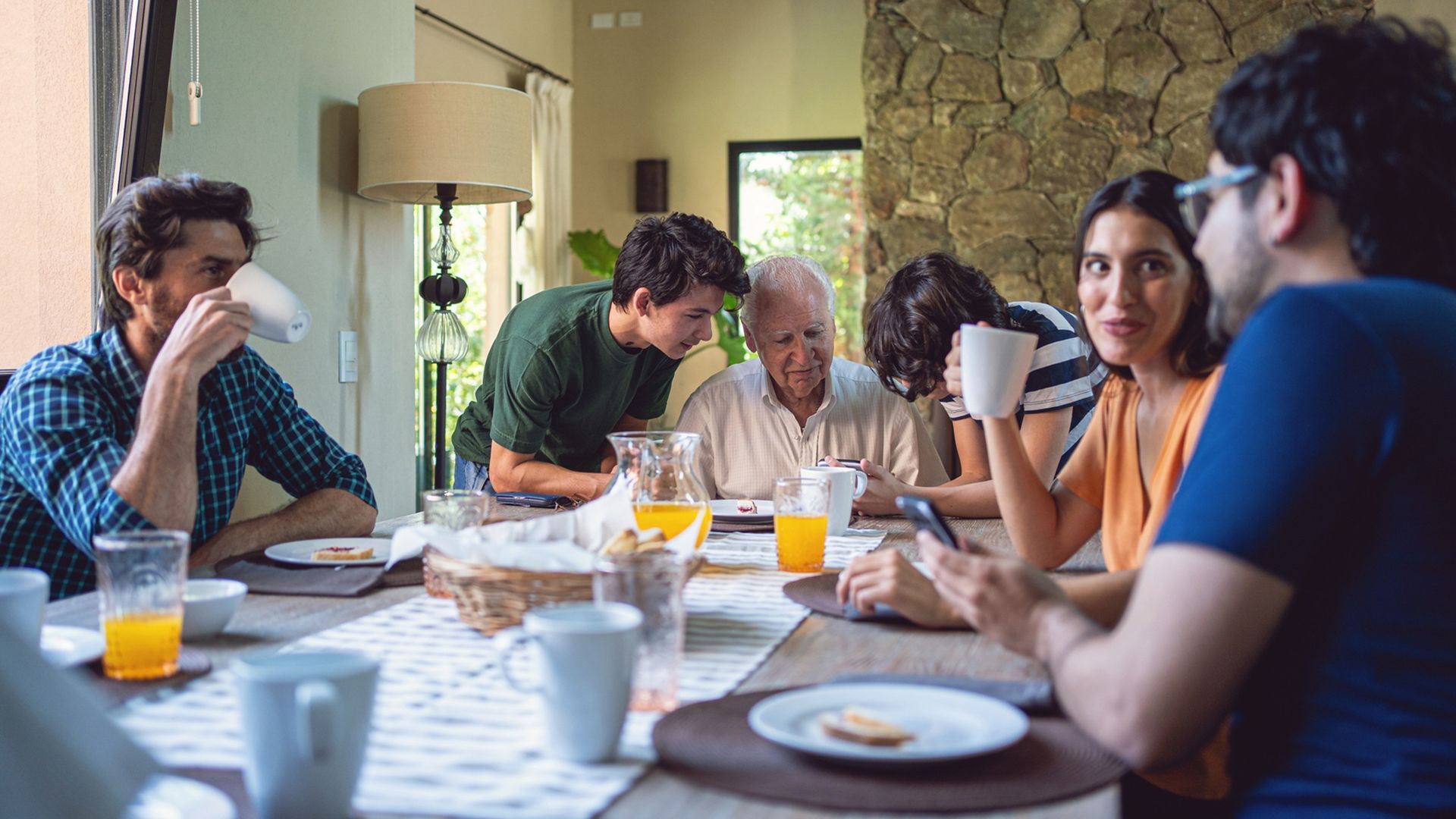
Ron and Marilyn spent two days preparing for Thanksgiving last year. Marilyn made her mother’s cornbread stuffing and three kinds of pie. Ron pulled the table leaf from storage so all 11 of them could sit at one table.The family arrived a little after noon. Within an hour, Ron noticed his 15-year-old granddaughter, Abi, scrolling on her phone under the table. “Can you put that down for one day?” he said, loud enough for everyone to hear. “Your grandmother and I won’t be around forever.”Abi put the phone away. She also said very little for the rest of the afternoon. By 4 o’clock, coats were coming off the hooks.That night, Marilyn said what both of them were feeling: “We did everything for them, and they couldn’t wait to leave.”Ron and Marilyn are generous, loving people. They also made a mistake that is common among grandparents, and it is easy to miss because it looks like love. They expected to receive attention during Thanksgiving instead of giving it. Their family could feel it.Gratitude flows outwardThanksgiving is the one holiday built around gratitude, and most of us think of gratitude as something we feel. It is better understood as something we do, and it has a direction.Psychologist Sara Algoe’s research on what she calls the “find, remind and bind” function of gratitude offers a useful lens. Gratitude helps us find the people worth investing in, reminds us of the relationships we already have and binds us more closely to them. About Adviser IntelThe author of this article is a participant in Kiplinger’s Adviser Intel program, a curated network of trusted financial professionals who share expert insights on wealth building and preservation. Contributors, including fiduciary financial planners, wealth managers, CEOs and attorneys, provide actionable advice about retirement planning, estate planning, tax strategies and more. Experts are invited to contribute and do not pay to be included, so you can trust their advice is honest and valuable.The binding depends on gratitude being expressed toward another person and expressed freely. Gratitude extracted under pressure binds no one.Ron’s comment at the table was a demand disguised as a reminder. “We won’t be around forever” is a true statement. It is also a bill presented for payment.I’m currently writing a book titled Living In Principle in which I define entitlement as the belief that reality owes you specific outcomes. When those outcomes do not arrive, entitlement breeds resentment, hurt or self-pity. Most grandparents would never describe themselves as entitled, and Ron and Marilyn certainly would not. Yet they had a clear expectation of how much of their grandchildren’s attention they had earned, and when that expectation went unmet, they felt wounded.Frustration is a function of unmet expectations. The holiday did not fail. The expectation did.InteresTED vs interesTINGThere are two ways to show up at a family gathering. You can be interesting: Telling stories, recalling the good old days and explaining how things used to be done. Or you can be interested: Asking about the game Abi plays on her phone, the class she cannot stand and the friend she is worried about.Most of us default to being a “Ting” rather than a “Ted,” especially with the people we love most, because we have decades of material and we want them to know us. The trouble is that being a “Ting” puts the speaker at the center, and young people can tell within a sentence or two whether the conversation is about them or about you.When grandchildren pull away, it is rarely for lack of love. More often, they have been cast as the audience in a conversation they hoped to be part of.Irene timeI learned this from my grandmother.Her birth name was Irene, though she did not care for it and went by Pat. When I was 10 or 11 and found out, my brother and I started calling her Irene, and she enjoyed it from her two grandsons — but from no one else.In her later years, she read constantly and wanted to talk about what she read. What made her unusual was that she also wanted to know what I was reading. Every year, she asked about Education Week, the five days of classes I attended in Provo, Utah, and what I had brought home in my notebook.Then one afternoon, in the middle of a conversation about a book, she asked a question I had heard before: “Why don’t you visit more often?”That question is almost never a request for information. It is a bid for connection, delivered with guilt, and in the short term, guilt works. It also erodes the very trust it is borrowing against, because visits secured that way are owed rather than wanted.I told her the truth. I visited as often as time and distance allowed; our time together mattered to me, and if I felt pressured, I would come less rather than more. I said it as a description of how I am built, not as a threat. Then I offered something in return: A standing appointment for the two of us on every trip, to talk about whatever she was working through.She loved it. From then on, she booked time with me up to a year in advance, and the whole family knew that block belonged to Irene. Other relatives often joined us because the conversations were good ones.The last five years of her life were the most memorable I had with her. Nothing about our relationship changed except its terms. Frequency was never the problem. Obligation was.A different ThanksgivingRon and Marilyn are planning this year’s dinner differently.Abi’s phone is welcome at the table. Before the meal, G-pa (Ron) plans to ask her to show him the game she plays, and he has promised himself he will lose gracefully. Marilyn has asked her 12-year-old grandson to help with the stuffing, which means it will probably turn out a little different this year. She has decided that is the point.Neither Marilyn nor Ron will mention how long they have left.Looking for expert tips to grow and preserve your wealth? Sign up for Adviser Intel, our free, twice-weekly newsletter.If you are hosting this year, or traveling to someone else’s table, consider a simple assignment. Before you tell a single story of your own, ask each grandchild three questions about their life and listen to the answers without correcting, advising or comparing them to your own childhood. Then, sometime before the pie, tell each of your children and grandchildren one specific thing you appreciate about who they are. Make it about them, not about what they do for you.Leave out every sentence that begins with “you never” or “we won’t be around.”The bottom lineThe paradox of attention is that the harder we pull for it, the less of it we receive, and the more freely we give it, the more often it comes back. Our children and grandchildren owe us a great deal less than we sometimes believe. What they offer when nothing is owed is worth far more.This Thanksgiving, gratitude for the people at your table may sound less like a toast and more like a question. Then a pause long enough to hear the answer.To learn more about designing a fulfilling retirement, pick up my book, Your Encore Years: The Psychology of Retirement.Related Content9 Habits for a Happy RetirementI’m a Retirement Psychologist: This Is Why a Supportive Marriage May Matter More Than Money in RetirementCombating Loneliness in Retirement: Why Strengthening Your Connections Could Lengthen Your LifeDoing Everything Right in Retirement Is Not the Same as Doing the Right Things: Why Your Hobbies Aren’t EnoughWhy Exercise Can Pay Better Dividends Than Your Portfolio (and How to Improve Your Fitness in Retirement)This article was written by and presents the views of our contributing adviser, not the Kiplinger editorial staff. You can check adviser records with the SEC or with FINRA.
How to Give Your Grandkids Your Attention This Thanksgiving