

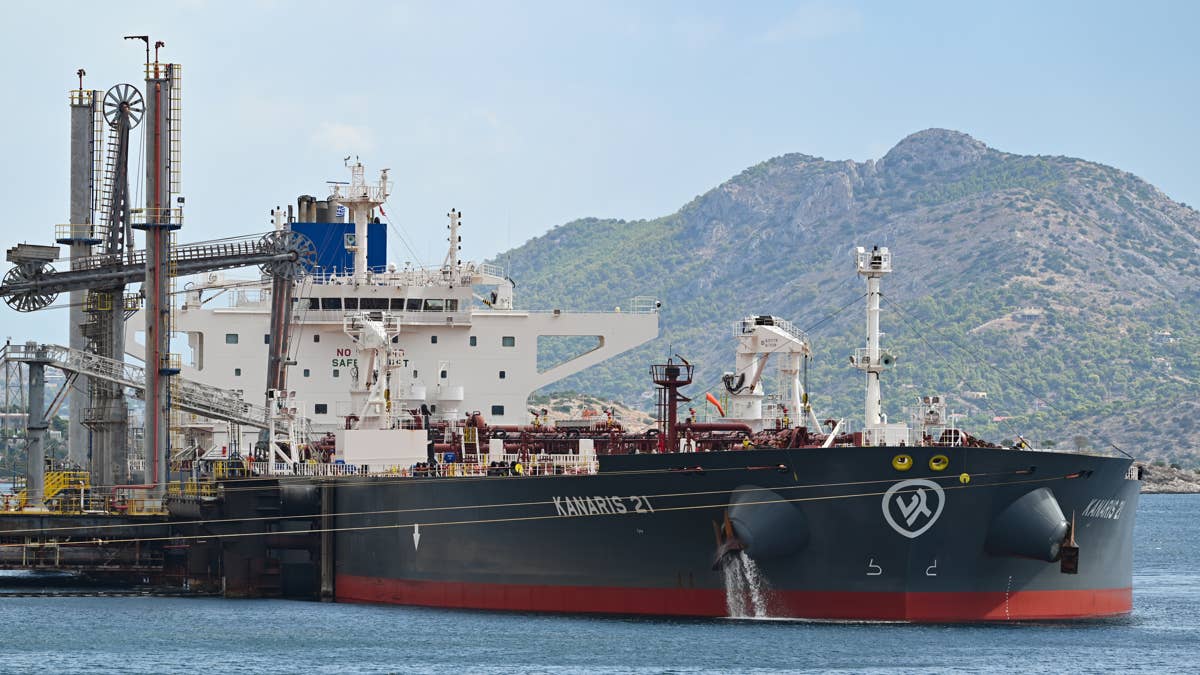
Oil traders have spent weeks bracing for a fresh shock out of the Middle East, and Goldman Sachs now thinks that fear is here to stay for a while.
The bank lifted its crude price forecasts, saying big downside risks to Middle East supply will keep a large risk premium in prices, even as output in the region recovers as expected.
The move comes after a wild month for crude. Brent futures settled at $113.25 a barrel on Oct. 30, ending October up about 15.5%, as traders weighed the chance of fresh U.S. military action against Iran.
Diplomacy has also stalled, with Tehran reportedly rejecting a proposed settlement.
Goldman lifts its oil price targets as Iran risk keeps traders on edge
Strategists led by Daan Struyven raised their December 2026 Brent forecast to $105 a barrel from $90, and their West Texas Intermediate forecast to $94 from $81. They also pushed up their 2027 averages to $88 for Brent and $78 for WTI, as reported by Investing.com.
That marks a sizable step up from the bank’s previous targets.
Also read: Scott Bessent sets startling oil price target
The bank says fear, not tight supply, drove most of October’s rally. A risk premium of around $27 a barrel “now explains most of October’s crude price rally,” the strategists said, while Brent’s fair value stayed in the $90s because global inventories were roughly flat.
Put simply, the physical market barely changed, but worry about what comes next grew a lot.
The latest change marks another turn in a year of revisions. Back in April, Goldman expected Brent to average $90 in the fourth quarter, assuming Gulf exports through the Strait of Hormuz would return to normal by late June.
The bank warned at the time that each week without a peace deal would push that recovery later.
That assumption has been tested again and again. In March, Goldman called the effective closure of the Strait of Hormuz the largest supply shock in the history of the crude market, as reported by TheStreet.
The bank has been chasing a moving target ever since.
The midterm elections raise the stakes
Goldman says markets are giving more weight to escalation after the Nov. 3 U.S. midterms.
Polymarket odds suggest the chance that the U.S.-Iran ceasefire ends in escalation rises from 10% before the vote to about 50% by Nov. 15 and about 75% by year-end, according to Investing.com. That is a big shift in a short window.
There are signs Washington is preparing for that possibility. The Wall Street Journal reported that the U.S. warned Persian Gulf nations to get ready for a short, intense military campaign, even as Vice President JD Vance reached out to an Iranian hardliner to revive peace talks.
Brent rose to $115.32 a barrel on Oct. 28 and is up about 89% this year.
Traders are focused on three possible U.S. or Israeli moves against Iran. They include strikes on underground nuclear facilities, strikes on missile sites near the Strait of Hormuz, and broader strikes on Iran’s energy infrastructure, with the last one carrying the highest risk of Iran and its allies hitting Gulf oil sites.
The current premium already prices in a lot of trouble. Goldman says it fits a market expecting Middle East output to drop by 5 million barrels a day for six months. Rising prices for Brent futures in late 2027 and 2028 also suggest traders see a risk of lasting weakness in regional exports.
Oil traders have spent weeks bracing for a fresh shock out of the Middle East, and Goldman Sachs now thinks that fear is here to stay for a while.Brandon Bell / Getty Images
Drivers and the Fed feel the squeeze
Consumers are already paying for the uncertainty. AAA put the national average for gasoline at about $4.25 a gallon in late October, up roughly 50% this year, while diesel averaged $6.35, just below its all-time high. Truckers, farmers, airlines, and cruise operators have all felt the pain.
Those costs are spilling into monetary policy. The Federal Reserve held rates steady on Oct. 28 in a split vote. One analyst called it “a hawkish hold with an eye towards a December hike,” pointing to a “diesel shock” that core inflation data did not yet show.
Traders now see about a 78% chance of a hike at the Dec. 8-9 meeting, as reported by TheStreet.
More Oil & Gas:
Chevron CEO issues stark warning on depleting oil reserves
World’s biggest oil CEO shares stark oil price warning as pressure builds and supplies run dry
Bank of America resets its oil price target with strong warning
Not everyone is losing out. Exxon Mobil and Chevron posted huge third-quarter profit jumps, helped by higher oil prices from the Iran war and soaring diesel prices. The CEOs also acknowledged that recovering from the war’s havoc will take time once the fighting ends.
The numbers were striking. Exxon’s adjusted profit more than doubled to $17.51 billion, and Chevron’s nearly tripled to $10.36 billion, driven by higher refining margins tied to conflicts in the Middle East and between Russia and Ukraine.
A wide range of outcomes
Goldman is also building in more room for surprises. It added a 1 million barrel-a-day global supply disruption allowance for 2027, citing the Middle East, the Russia-Ukraine conflict and broader geopolitical fragmentation.
“The timing and location of disruptions” is nearly impossible to predict, he said.
Its base case still sees prices drifting below current futures, as long as the risk premium cools and Persian Gulf output keeps recovering. The strategists said risks are now “more symmetric” but still lean to the upside, Investing.com reported.
The gap between the best and worst cases is huge. Brent could hit $140 and average about $130 in 2027 if Gulf output remains 3.5 million barrels a day below its 2025 average.
Yet it could slide into the $60s if output rises 2.5 million barrels a day above 2025 levels and no disruption occurs. For drivers and investors alike, the next few weeks could decide which path oil takes.
Related: Shell’s CEO delivers a strong verdict on the oil market