


Stock market investors are heading into CPI week with a familiar playbook.The hope is that inflation cools off further and the Fed stays on hold, with robust earnings taking over as the next driver of the S&P 500.For perspective, the S&P 500 recently traded near 7,575, up about 10.7% year to date, according to Yahoo Finance, indicating the market has held up despite a remarkably choppy period.Earnings, in particular, have moved the needle, helping the market remain resilient amid the AI boom. However, according to a Goldman Sachs note cited by Seeking Alpha, strategist Ben Snider argues that stocks could face near-term pressure if interest rate hikes return to the conversation, even as corporate profits remain the bigger long-term force behind the market.Markets still see only a limited chance of a hike this month, but the path beyond that is less settled.That leaves a ton of tension for investors, even though the rally still has earnings support; one hawkish shift from the Fed might test how much of the risk market could absorb.The Fed risk hiding inside the S&P 500 rally The S&P 500 has held up as investors have relied on a familiar clean story, but that only holds if rate expectations are contained. On top of that, earnings have continued to impress, with Q2 expectations jumping following a superb Q1 showing.More AI:The new Chinese AI model rattling U.S. tech investorsAnthropic restores access to Mythos 5 for select organizationsSoftBank CEO offers stinging critique of Musk’s AI betIn fact, FactSet says analysts and companies were “more optimistic than normal” heading into Q2 earnings season, and that estimated S&P 500 Q2 earnings were higher than at the start of the quarter.It also says Q2 earnings growth is expected to be above 20% for the second straight quarter. Nevertheless, if interest rates rise, earnings alone may not be enough to justify further gains in the market. Today’s market is much more exposed to financing costs, as AI investments have been the primary drivers of earnings and stock market valuations.History explains why the gap matters. Goldman found that the S&P 500 has fallen about 2% on average in the three months after the start of the past seven Fed hiking cycles. In 1997, even a single quarter-point hike coincided with a roughly 10% drop before stocks recovered.However, markets see only about a one-third chance of a rate bump at the Fed’s next meeting, even as futures already imply a half-point of hikes through mid-2027.Goldman economists are a lot less hawkish, though, expecting the Fed to stay on hold this year and assign only a 25% probability to more tightening.
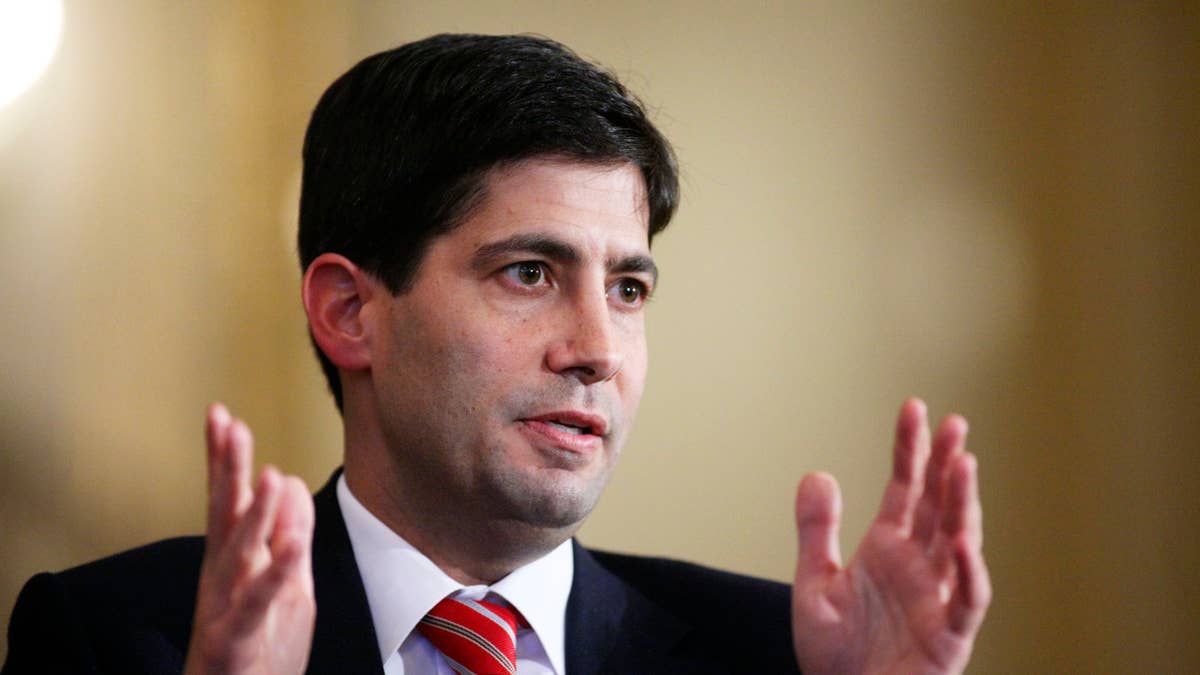
Goldman Sachs warns interest rate hikes could pressure the S&P 500 rally.Andrew Harnik/Getty Images
Key numbers behind Goldman’s S&P 500 warningMarkets see only about a one-third chance of a Fed hike this month, but there’s plenty of debate on the next major policy surprise being tighter, not looser.Futures imply nearly 50 basis points (half a percentage point) of hikes through mid-2027, as a more hawkish rate path would pressure valuations and financing-sensitive growth stocks.Goldman economists assign only a 25% probability to more tightening, creating room for a relief rally if inflation data supports the bank’s less hawkish view.The S&P 500 has fallen about 2% on average in the three months after past Fed hiking cycles began, showing why even a modest rate reset could hit stocks in the near term.AI-related companies represent 42% of S&P 500 market cap and 38% of the expected 2026 EPS, which means that higher borrowing costs are a bigger threat to the market’s dominant growth trade.
Source: Goldman Sachs note cited by Seeking Alpha
What has to go right for the rally to keep climbing For the S&P 500 to keep grinding higher, the next inflation print needs to keep the Fed-hike debate from gaining momentum.That puts a ton of weight on June CPI. Goldman economists expect core inflation to rise just 0.17% month over month, while headline CPI is forecast to fall 0.11% as energy prices ease. So, if we see a print that’s near or behind those levels, it would support the idea that the Fed can stay on hold and let earnings drive the market’s next move.Fed Chair Kevin Warsh recently doubled down on that during a European Central Bank panel in Sintra, Portugal, according to Reuters. He stressed that the Fed would stick firmly to its 2% inflation target and that “we’re going to deliver price stability in the U.S.” The second test is earnings season. Investors need companies, especially the biggest in the tech space, to continue showing that demand is holding up, margins haven’t cracked, and that AI-related spending is still translating into meaningful bottom-line expansion.That’s important because Bank of America recently raised concerns about rising valuations, largely driven by AI, setting the stage for a potentially volatile summer trading season. For the most part, Goldman’s own outlook is still constructive. The firm expects S&P 500 earnings per share to reach $340 in 2026 and has an 8,000 year-end target, implying single-digit upside from current levels.Wall Street price targets for the S&P 500Citi set an 8,100 year-end target, banking on stronger earnings and resilient AI-led momentum.Goldman Sachs raised its target to 8,000, citing earnings growth as the market’s main support.Morgan Stanley lifted its target to 8,000, favoring industrials, hyperscalers, financials, and discretionary stocks.JPMorgan raised its target to 7,800, citing AI capex and resilient economic conditions.Bank of America stayed at 7,100, warning valuations and speculative growth expectations look stretched.
Sources: Reuters, Goldman Sachs, Morgan Stanley, Investing.com, and Yahoo Finance
Related: Goldman Sachs says Americans may pay for the AI boom