

Just days after Dollar General agreed to a $1.9 million settlement with New York over allegations that it charged shoppers more than advertised, it is facing a much larger legal challenge.
The discount retailer’s pricing troubles don’t appear to be ending anytime soon, as the allegations this time extend nationwide.
The Federal Trade Commission (FTC), joined by 20 states, has sued Dollar General, accusing the retailer of repeatedly overcharging customers at checkout despite knowing about the pricing discrepancies for years.
The lawsuit, filed on October 26, alleges that customers were routinely charged more than the prices displayed on shelves, on product tags, in weekly advertisements, and in digital promotions.
According to the FTC’s original complaint, the company received at least 29,265 complaints involving advertised prices not being honored between January 2023 and March 2026, spanning all 48 states where Dollar General operates.
The latest lawsuit has put renewed scrutiny on the retailer’s low-price promise to millions of Americans who depend on discount stores for everyday essentials.
FTC and 20 states sue Dollar General over widespread pricing problems
The lawsuit was filed in the U.S. District Court for the Middle District of Tennessee and includes the 20 participating states, including California, Florida, Illinois, Michigan, New Jersey, North Carolina, Ohio, and Tennessee, among others.
Federal and state regulators allege that Dollar General generated millions of dollars through repeated overcharges at thousands of stores while failing to implement adequate safeguards to correct the problem.
More Retail:
Kroger cuts discounts, promises pricing changes
Walmart gets aggressive when it comes to holiday sales
Costco copies a popular Trader Joe’s collectible
The complaint also cites investigations in which FTC employees made undercover purchases at Dollar General stores in Ohio, Missouri, Pennsylvania, and Maryland between January and April 2026.
According to the complaint, every undercover purchase resulted in multiple products ringing up at higher-than-advertised prices.
At a Cleveland, Ohio, store, investigators found eight overcharged items among 58 purchases, along with five items priced below their advertised amounts. The errors resulted in a net overcharge of $3.25.
At another store in Springfield, Missouri, six of 59 products had incorrect prices, resulting in a net overcharge of $4.07.
The findings were not limited to shelf labels.
Related: Wawa, Sheetz, 7-Eleven face new challenge keeping shoppers coming back
The lawsuit also cites customers who complained that advertised discounts, buy-one-get-one-free offers, and digital promotions were not applied correctly at checkout.
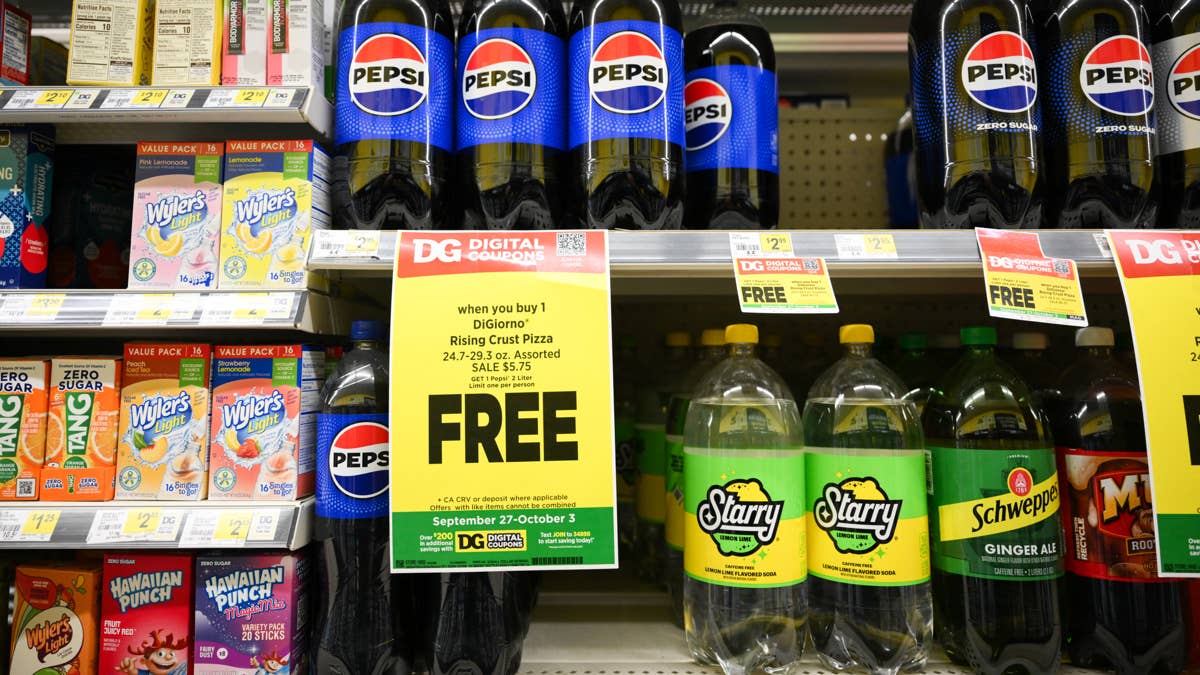
In one example, a Pennsylvania shopper complained that a promotion advertising five two-liter soda bottles for $5 was not honored, with the bottles instead ringing up at $2.95 each.
The complaint alleges that inadequate staffing and failures to replace outdated shelf labels contributed to recurring pricing discrepancies.
Dollar General pushes back against FTC allegations
Dollar General has disputed the allegations and said it intends to defend itself in court.
In an October 26 statement, the company maintained that accurate pricing remains a priority. “Our goal is 100% accuracy between shelf and register prices in every store,” Dollar General said.
The retailer said about the suggestions in the lawsuit, “Nothing could be further from the truth.”
The retailer acknowledged that occasional pricing discrepancies can occur but said employees are instructed to correct them when customers raise concerns.
Dollar General also disputed the FTC’s calculation of potential consumer compensation, arguing that the proposed amount was significantly higher than what could reasonably be attributed to pricing errors.
The company said it cooperated with investigators, providing more than 200,000 documents and 350 gigabytes of data.
It also said it had attempted to negotiate a settlement before the FTC filed the lawsuit.
The agency and participating states are seeking a permanent injunction to prevent future violations, as well as monetary relief and civil penalties.
No settlement amount or consumer refund program has been established in the new federal case.
The allegations have not been decided by a court.
Dollar General recently settled another overcharging investigation
The federal lawsuit comes less than two weeks after Dollar General reached a separate agreement with New York Attorney General Letitia James.
I previously reported that an investigation found that Dollar General repeatedly charged New York customers higher prices than advertised.
Investigators reviewed 913 price-accuracy inspections across 287 locations and found that 43% failed to meet the state’s pricing-accuracy requirements.
In a separate undercover investigation, officials were overcharged on approximately 14% of the items purchased.
Dollar General agreed to a $1.875 million settlement, payable through donations of food and personal-care products to nonprofit Foodlink, along with changes to pricing practices and customer receipts.
The agreement does not provide direct refunds to affected shoppers. Dollar General neither admitted nor denied the state’s findings.
New York is not among the 20 states participating in the new federal lawsuit.
According to the latest FTC complaint, Dollar General has entered into seven settlements with six state enforcement agencies over inaccurate pricing since 2019, paying more than $6 million in penalties.
Related: Dollar General accused of overcharging shoppers, settles for $1.9 million
The company also previously settled a nationwide consumer class-action lawsuit valued at $15 million.
The escalating legal challenges come as Dollar General continues emphasizing its affordability to Americans struggling with everyday expenses.
According to the FTC complaint, households earning $35,000 or less account for approximately 60% of Dollar General’s revenue. The company also offers around 2,000 products priced at $1 or less.
The latest lawsuit could result in additional pricing reforms and financial relief for consumers if regulators prevail, although no compensation is guaranteed.
For now, shoppers may want to compare shelf prices, weekly promotions, and digital coupons against their checkout receipts.
Latest Retail NewsT-Mobile introduces phone plans with new rules for customer perksPopular brand for moms files Chapter 11 bankruptcyTarget reinvents its $3 billion home brandPlanet Fitness appears to have a new customer problem