

Buying a used car online can mean moving between vehicle listings, loan offers, and trade-in quotes before the shopper even starts negotiating.
Meta’s Muse is designed to do more of that work itself. The AI agent can browse websites, fill out forms, and negotiate on a user’s behalf. Meta even lists selling a car for more as one task Muse can handle. It asks for user approval before completing a purchase.
Morgan Stanley thinks that kind of technology could have an unusually large impact on auto retail because cars are expensive, bought infrequently, and difficult to compare.
In a Sept. 28 report shared with TheStreet, analysts led by Daniela Haigian said Carvana (CVNA) screens as the best-positioned auto retailer in their framework, with franchise dealers facing more pressure if AI agents take a larger role in vehicle shopping.
An AI agent can find and compare vehicles. It cannot inspect a used car, recondition it, transport it, or deliver it to the buyer.
Morgan Stanley says those physical parts of the transaction could make Carvana’s inventory, logistics, and reconditioning network more valuable.
Morgan Stanley’s current Carvana price target is $90. The Sept. 28 report did not announce a new target.
AI agents could compare more than a car’s sticker price
Online marketplaces such as CarGurus, Autotrader, and Kelley Blue Book already let shoppers search thousands of vehicles and compare listed prices.
But a listed price is only one part of a car deal.
A shopper may still need to compare dealer fees, financing terms, and trade-in offers across several sellers. Used vehicles also differ in mileage, condition, and features, making direct comparisons harder than shopping for identical consumer products.
Morgan Stanley says an AI agent could search across marketplaces and retailer websites, standardize those offers, and eventually help negotiate the transaction on the buyer’s behalf.
Related: Costco confirms major food court change
That could make it harder for a retailer to win a sale simply because the shopper recognizes its name, sees its advertisement first, or begins the search on its website.
The bank expects price, available inventory, and the ability to complete the transaction efficiently to become more important if agents take over more of the initial search and comparison work.
Morgan Stanley says Carvana already owns the physical pieces
Carvana combines a national inventory with inspection and reconditioning centers, vehicle logistics, and a digital system that handles financing, trade-ins, and purchases. Morgan Stanley says that those operations give an AI agent a more complete transaction to work with after it identifies a vehicle.
The analysts also point to the economics behind the vehicles.
More Retail:
Home Depot is making a big bet on cautious consumers
Another state just banned a controversial retail pricing practice
JPMorgan just flagged a slow-build food crisis
Morgan Stanley estimates that CarMax’s gross profit per retail unit will be about $740 lower than Carvana’s in 2026. Its estimate for franchise dealers is about $1,106 below Carvana on the same measure.
Those figures show the per-unit profitability difference that Morgan Stanley expects between the businesses. The analysts argue that a retailer with stronger unit economics has more flexibility to compete on consumer price.
Carvana’s latest results show that it is adding volume without giving up profitability so far.
The company sold 197,325 retail vehicles in Q2, up 38% from a year earlier, and reported a 10.4% adjusted EBITDA margin.
Carvana is also adding more capacity to prepare and move those vehicles.
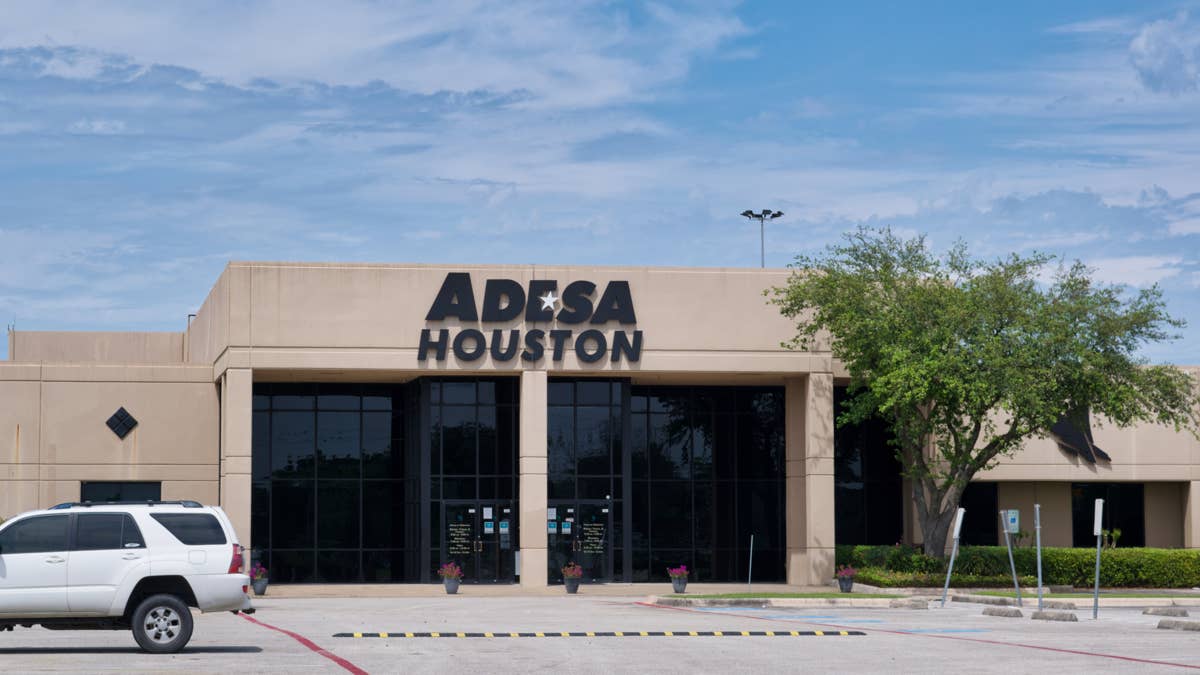
On Sept. 15, the company announced plans to add inspection and reconditioning operations to its existing ADESA Charlotte auction site. Carvana said the expansion would add inventory to its national network and help speed deliveries to North Carolina buyers.
Brett_Hondow / Getty Images
CarMax already puts more than 45,000 cars inside ChatGPT
CarMax (KMX) has moved faster on the most visible part of AI-assisted car shopping.
In February, it became the first U.S. auto retailer with a car-shopping app in the ChatGPT app store. Customers can use natural-language prompts to search more than 45,000 vehicles and access information about selling their current car.
Morgan Stanley says the current integration primarily helps customers discover vehicles and then sends them back to CarMax to complete the transaction.
The analysts said the app can improve the shopping experience and generate leads, but it does not, by itself, erase the difference they see in CarMax’s underlying economics versus Carvana.
CarMax is already adjusting one of those economics: vehicle pricing.
Its latest quarterly results showed gross profit per retail used vehicle fell $111 to $2,105 as the company continued pricing actions intended to improve sales trends. Retail used-unit sales rose 13.8% in the quarter.
Related: T-Mobile raises another fee customers pay each month
That trade-off becomes more important if an AI agent can show a shopper several similar vehicles and calculate the total economics of each deal within seconds.
CarMax said digital capabilities already supported 81% of its retail unit sales last quarter, so the company is hardly starting from scratch online.
The company plans to give investors a broader strategy update on Nov. 3.
AI agents still have to prove shoppers will trust them with a car
Muse launched only in September, and there is no evidence yet that large numbers of consumers are allowing AI agents to complete vehicle purchases.
A shopper may be comfortable asking an agent to compare cars but may hesitate to share financing information, negotiate a trade-in, or authorize a transaction worth tens of thousands of dollars.
Retailers may also keep control of the final purchase.
Morgan Stanley’s broader Muse analysis says one emerging model allows an external agent to help the customer discover products before handing the transaction back to the retailer, which retains customer data, checkout, and fulfillment.
Car prices are also becoming easier to compare for reasons unrelated to AI.
The Federal Trade Commission’s September guidance says a dealer’s advertised price must be the actual price any consumer can pay, apart from government-required charges. Dealer-required fees must be included in the advertised figure.
That rule can narrow the gap between an advertised price and the amount a shopper ultimately faces before an AI agent ever enters the transaction.
Morgan Stanley also lists the U.S. auto and credit cycle, margin sustainability, potential capital raises, and competition among the downside risks to its Carvana valuation.
CarMax already lets customers begin a vehicle search inside ChatGPT. Carvana is adding the physical capacity needed to inspect, recondition, and deliver more cars.
The next test is whether AI agents begin directing shoppers toward the lowest all-in offers, and whether Carvana can maintain strong per-unit economics as more customers arrive through those new shopping tools.
Related: Kroger isn’t done pulling brands after Red Bull and Boar’s Head