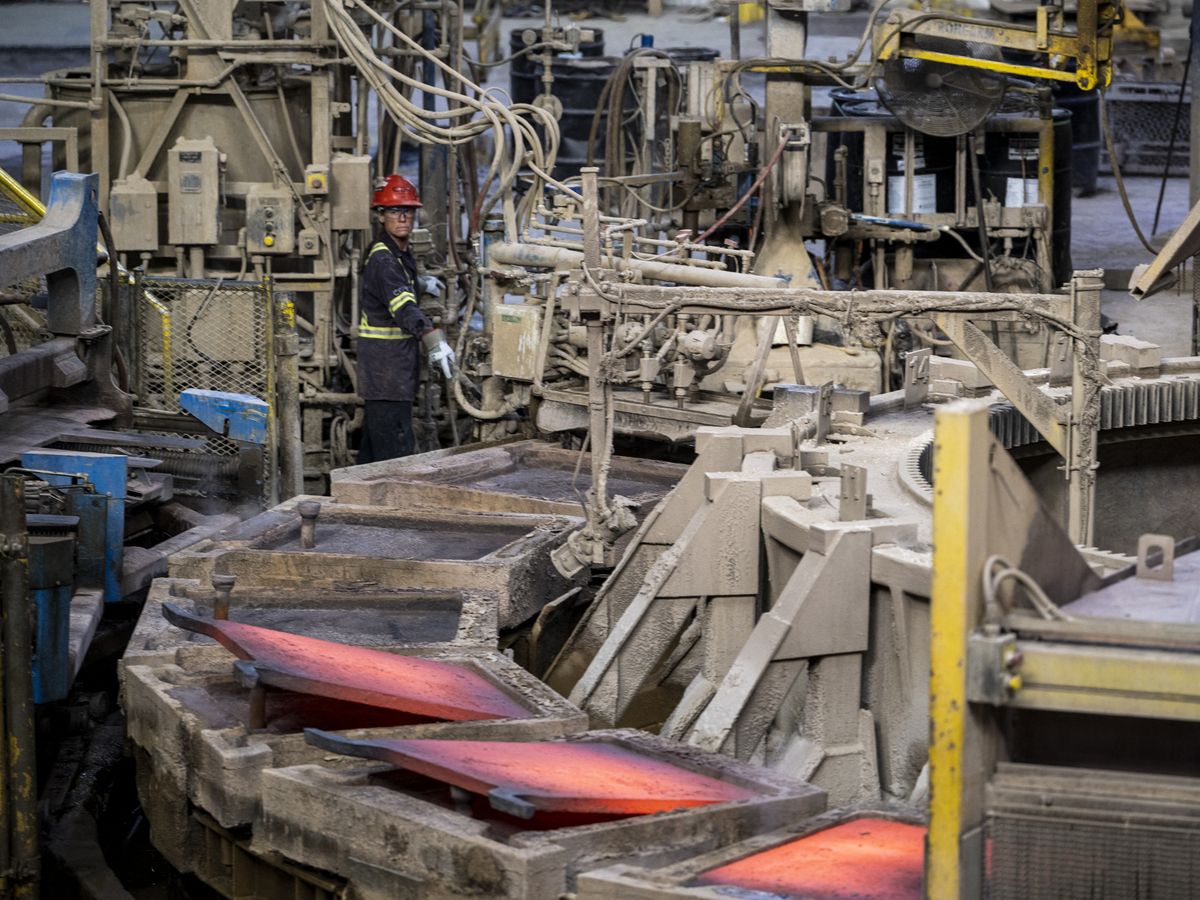
Manufacturing sales in Canada climbed in August while wholesale trade dipped, but the effects from the new 50 per cent United Statestariffs were not reflected in the data. The figures, published on Thursday, showed manufacturing sales rose by 1.5 per cent to $79.9 billion in August following a 0.3 per cent dip in July. The gains were broad-based, with 12 out of 21 subsectors reporting gains between July and August. The primary metal and chemical subsectors — which rose by 14 per cent and 4.4 per cent, respectively — led the gains, which were partially offset by a 2.6 per cent decline in transportation equipment sales. Excluding motor vehicles and parts, manufacturing sales were up by 2.1 per cent month over month. On a year-over-year basis, total manufacturing sales were up 14.2 per cent in August. Total manufacturing inventories edged up by 0.2 per cent to $127.7 billion, driven by increased inventories of fabricated metals and machinery. Meanwhile, total wholesale trade dipped by 1.6 per cent to $91.6 billion in August, with sales decreasing in five out of seven subsectors. The largest decreases were seen in sales of motor vehicles and motor vehicle parts and accessories, which dipped by 3.8 per cent, and agricultural supplies, which dipped by 12.4 per cent. Wholesale trade fell by 1.8 per cent in August in volume terms, which excludes petroleum, petroleum products and other hydrocarbons as well as oil seed and grain. On a year-over-year basis, wholesale trade was 7.2 per cent higher in August. Wholesale inventories were unchanged from July to August at $141 billion. Decreases were reported in three out of seven subsectors, with the largest declines seen in the motor vehicle and motor vehicle parts and accessories subsector, followed by the food, beverage and tobacco subsector. Increases in the personal and household goods subsector partially offset the decreases, along with pharmaceuticals and pharmacy supplies. Thursday’s manufacturing sales and wholesale trade data reflects a time period before the full implementation of new 50 per cent tariffs, which were announced in July and came into effect on Aug. 22. Those will be reflected in the September data, which will be released by Statistics Canada in mid-November. Economists largely expect that the Canadian economy grew at a slower pace in the third quarter of 2026 after it grew at an annualized rate of 3.3 per cent in the second quarter, largely due to heightened uncertainty from the ongoing trade tensions and threats of additional tariffs from the U.S. The Bank of Canada projected third-quarter economic growth at an annualized rate of 1.5 per cent in its July Monetary Policy Report, but governor Tiff Macklem previously warned that the outlook has changed because global oil prices remain elevated from the conflict in the Middle East and trade tensions with the U.S. have intensified. The central bank’s next Monetary Policy Report will be published on Oct. 28, along with an interest rate announcement. Canadian manufacturing sales surged to record level in second quarter, despite tariffs’The impacts are massive’: U.S. tariff change pushes Canadian manufacturers to the brink • Email: ptran@postmedia.com
Canadian manufacturing sales climbed in August, led by metal and chemical sectors