

Individuals with attention deficit hyperactivity disorder and those with autism spectrum disorder both experience atypical responses to rewards, but their brain activity patterns differ in opposite ways. A new analysis reveals that while the two conditions involve the same deeper brain structures, they feature distinct patterns of heightened or reduced activity that could help explain their differing symptoms. The findings were published in the journal Molecular Psychiatry.
Processing rewards is a basic function that drives learning and survival. When a person receives a reward, specific brain networks evaluate its value and influence future motivation. Atypical responses within these systems are common in several neurodevelopmental conditions.
People with attention deficit hyperactivity disorder, or ADHD, often show a high sensitivity to immediate rewards. This sensitivity is associated with impulsive behavior. When an individual with ADHD receives a reward, their brain may over-register the immediate gratification, making it difficult to wait for delayed outcomes.
In contrast, individuals with autism spectrum disorder, or ASD, frequently exhibit a reduced drive for specific rewards. This includes a lower sensitivity to social rewards, which can affect social engagement and interaction. They may not experience the same internal reinforcement from a smile or verbal praise that a neurotypical person does.
Because ADHD and ASD often occur together and share overlapping symptoms, researchers wanted to know if their reward-processing differences stem from the same underlying brain mechanisms. A research team led by Chunhong Zhu, Ting Xu, and Tingyong Feng at Southwest University in China conducted a systematic review to map these patterns. They sought to identify exactly how brain activity diverges when individuals with either condition experience a reward.
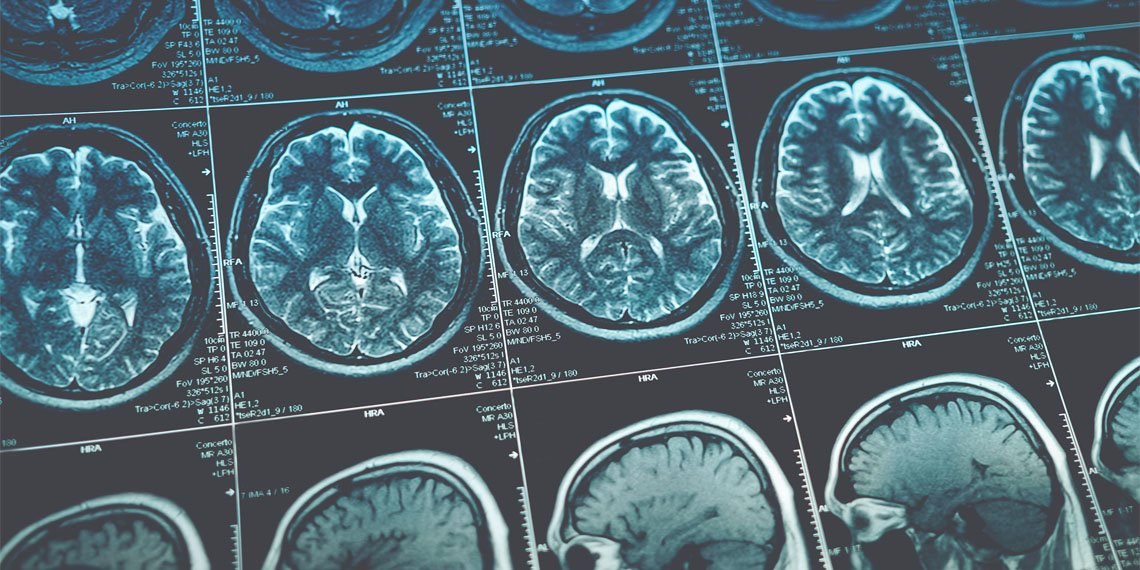
The researchers first performed a meta-analysis of 29 existing brain imaging studies. This combined dataset included 468 patients with ADHD, 424 patients with ASD, and 1,027 control participants. Each original study used functional magnetic resonance imaging to scan participants’ brains while they received either a monetary or social reward.
The team used specialized software to map areas of the brain that consistently showed abnormal activity across the studies. They found that both conditions involve altered activity in the amygdala and the putamen. These are deep subcortical brain regions that help process emotions and motivation.
The amygdala is generally responsible for recognizing motivationally important stimuli. The putamen helps the brain gauge sensitivity to a received reward. However, the nature of the alterations went in entirely opposite directions for each diagnosis.
In individuals with ADHD, these subcortical areas showed abnormally high activity during reward delivery. In individuals with ASD, the same regions exhibited unusually low activity compared to healthy controls. The two conditions also featured entirely distinct changes in the outer layers of the brain, known as the cortex.
Participants with ADHD displayed reduced activity in the prefrontal cortex and other areas responsible for impulse control and decision making. Participants with ASD showed heightened activity in medial prefrontal regions that assign subjective value to specific interests. To better understand these biological differences, the researchers conducted a second level of analysis using an independent database of healthy brain scans.
They looked at how the altered amygdala and putamen regions functionally connect with the rest of the brain. The brain regions that are hyperactive in ADHD were heavily linked to circuits that drive motivation and emotional responses. The regions that are hypoactive in ASD were more strongly wired to social and cognitive networks.
The team also used a large database called Neurosynth to match the abnormal brain maps with specific cognitive functions. Neurosynth contains data from thousands of published studies, allowing the researchers to see which psychological terms frequently overlap with certain brain areas. The hyperactive regions in ADHD matched with terms related to intense emotions.
The hypoactive regions in ADHD aligned with attention and executive control. For ASD, hyperactive regions were linked to social and value-related terms. The hypoactive regions in ASD matched with novelty and basic affective processing.
These patterns suggest that reward responses in ADHD are tied to emotional regulation challenges. In ASD, the responses point toward difficulties in integrating social and affective signals. Finally, the researchers compared their brain activity maps with known distributions of chemical messengers in the human brain.
They examined positron emission tomography scans showing where receptors for dopamine and serotonin are most densely located. Dopamine helps drive immediate reward-seeking behavior. Serotonin helps manage long-term goals and impulse inhibition.
The team found that the hyperactive regions in ADHD overlap with areas heavily populated by both dopamine and serotonin receptors. This chemical overlap in hyperactive emotion centers, combined with underactive impulse control centers, provides a physical map for impulsive behavior. The imbalance between a highly sensitive reward center and a weakened prefrontal control system makes delayed gratification difficult.
In ASD, the overactive value-processing regions sat in areas with very low serotonin transporter density. This might reflect a compensatory mechanism where the brain over-processes certain social or restricted reward signals. The underactive subcortical regions in ASD mapped onto areas rich in both dopamine and serotonin receptors, pointing to a general biological desensitization to rewards.
These findings provide a biological framework for understanding divergent behaviors in ADHD and ASD. However, the research does face a few limitations. The initial meta-analysis included a moderate number of studies, and it grouped different types of rewards together.
Social and monetary rewards may trigger slightly different biological pathways. Because of a limited amount of available data, there were not enough original studies on ASD to separate the reward types mathematically. Additionally, the brain connectivity analysis relied on scans from healthy individuals rather than patients with the conditions.
Mapping these exact networks directly in patient populations will be an important next step. Future research could also explore whether separating distinct reward types yields even more specific brain signatures.
The study, “Distinct neurobiological alterations during hedonic experience of rewards in attention deficit hyperactivity disorder and autism spectrum disorder: Multimodal evidence from neuroimaging meta-analyses,” was authored by Chunhong Zhu, Mercy Chepngetich Bore, Xueke Wang, Ting Xu, and Tingyong Feng.