

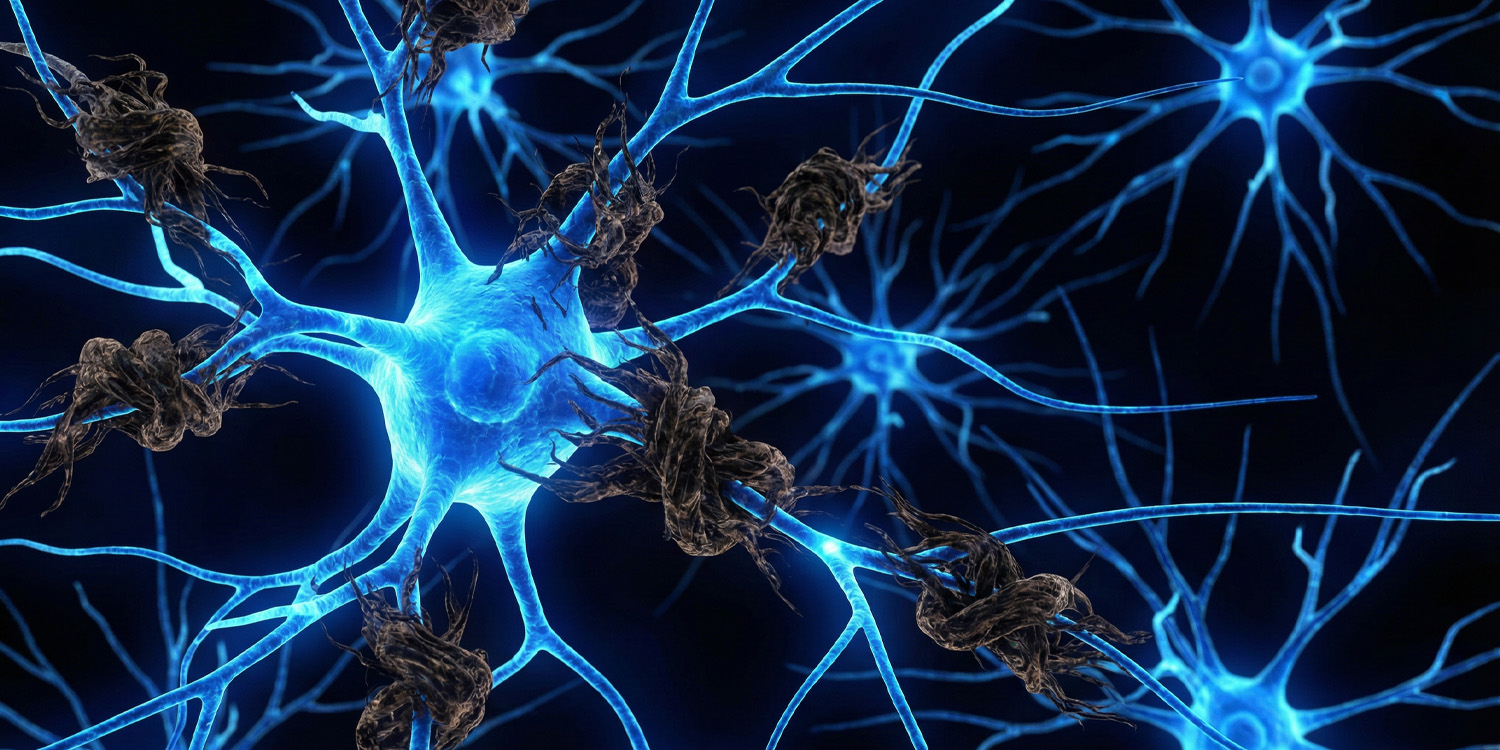
A study in Japan found that people whose psychosis began after age 40 were far more likely than healthy older adults to show buildups of amyloid-beta and tau, two proteins linked to Alzheimer’s disease and other forms of dementia. Many patients showed tau buildup without the amyloid that marks Alzheimer’s, suggesting that more than one type of brain disease may be involved. The paper was published in Molecular Psychiatry.
Psychotic disorders, which involve symptoms such as hallucinations and delusions, usually begin in adolescence or early adulthood. In some people, however, these symptoms first appear after age 40, and sometimes after age 60. These cases are referred to as late-onset psychosis.
Late-onset psychosis often looks different from psychosis that begins earlier in life. Older patients tend to have more prominent persecutory delusions, such as the belief that others are out to harm them, along with fewer negative symptoms, such as emotional flatness and social withdrawal, and less disorganized thinking. These differences have raised the possibility that late-onset psychosis may involve partly distinct changes in the brain.
Small brain imaging studies have reported changes in white matter, particularly in rear regions of the brain, and altered blood flow in some people with late-onset psychosis. A large Swedish study also found that people who develop psychosis after age 60 have a higher risk of later dementia. Studies of patients’ brains after death have found several neurodegenerative diseases in such cases, including disorders involving abnormal tau buildup that differ from Alzheimer’s disease.
Most of that evidence comes from autopsies, because tools for detecting the full range of tau buildup in living people have been limited. The research team previously developed florzolotau, a radioactive tracer used in brain scans that binds to tau and can detect both the type of tau buildup seen in Alzheimer’s disease and the types seen in several other neurodegenerative diseases.
Study authors Manabu Kubota and Shin Kurose of the National Institutes for Quantum Science and Technology in Japan and their colleagues used this tracer to investigate the brain changes underlying late-onset psychosis. They hypothesized that amyloid-beta and tau buildup would be more common in patients with late-onset psychosis than in healthy older adults.
Participants were 37 patients with late-onset psychosis and 47 healthy older adults who served as a comparison group. Patients’ average age was 70, compared with 66 for the healthy participants, and 27 patients and 22 healthy participants were women. Most patients had been diagnosed with schizophrenia (20) or delusional disorder (13), and none had evidence of cognitive impairment or neurological disease when their symptoms began.
In 24 of the patients, symptoms started after age 60, while in the remaining 13 they started between 40 and 60. Compared with the healthy participants, patients scored lower on tests of thinking skills and had less education.
All participants underwent magnetic resonance imaging (MRI) and two positron emission tomography (PET) scans, which use small amounts of radioactive tracers that bind to specific proteins in the brain. One scan detected amyloid-beta, and the other used florzolotau to detect tau. Both proteins occur naturally in the brain, but they can build up abnormally, with amyloid forming plaques characteristic of Alzheimer’s disease and tau forming tangles seen in Alzheimer’s and a number of other neurodegenerative disorders.
Three raters examined the amyloid scans and classified each participant as amyloid-positive or amyloid-negative using standardized procedures from the Japanese Alzheimer’s Disease Neuroimaging Initiative. Tau positivity was determined with a computerized, point-by-point analysis of each person’s tau scan.
Thirteen of the 37 patients (35%) were amyloid-positive, compared with only one of the 47 healthy participants (2%). All of the amyloid-positive patients had developed psychosis after age 60. Tau buildup was even more common: 65% of patients were tau-positive, compared with 15% of healthy participants.
The patients fell into three groups of roughly equal size. Twelve of the 13 amyloid-positive patients were also tau-positive, a combination consistent with Alzheimer’s disease, while half of the 24 amyloid-negative patients showed tau buildup without amyloid, which may point to other tau-related diseases. The remaining 12 patients showed neither.
The tau patterns varied widely from patient to patient. As a group, patients showed more tau tracer in the parietal cortex, a region toward the top and back of the brain involved in attention and integrating information, and this difference held even when the analysis was limited to amyloid-negative participants. Among amyloid-negative patients, tau levels did not differ between those whose symptoms began before or after age 60.
Among the 13 amyloid-positive patients, those with more parietal tau tended to score lower on a test of executive function, the mental skills used to plan and control behavior. Tau levels were not linked to the severity of patients’ psychiatric symptoms.
The authors concluded that late-onset psychosis “may be associated with heterogeneous tau-related neurodegenerative processes,” meaning that a variety of tau-related brain diseases may be involved. They suggest that for some patients, late-onset psychosis may be an early stage of a dementing illness, though following patients over time will be needed to test this.
There are some caveats to consider. The study was relatively small, and the authors describe the findings as exploratory. Because no autopsy data were available, it has not been confirmed which specific diseases the tau patterns represent, and interpretations of the non-Alzheimer’s patterns rest on the tracer’s ability to distinguish different types of tau.
The patients and healthy participants also differed in age, sex, and education. Most results held when the researchers adjusted for education or excluded younger male controls, though the difference in tau in the occipital lobe among amyloid-negative patients weakened to a trend in both analyses. The study captured patients at a single point in time, so it cannot show whether those with tau buildup will go on to develop dementia, and two of the authors hold patents on compounds related to the research.
The paper, “High prevalence of tau pathologies in late-onset psychosis: A PET study,” was authored by Manabu Kubota, Shin Kurose, Kenji Tagai, Yuki Momota, Masanori Ichihashi, Hironobu Endo, Chie Seki, Sho Moriguchi, Yasuharu Yamamoto, Yuko Kataoka, Ryoji Goto, Takehiro Tamura, Hiroki Shiwaku, Kiwamu Matsuoka, Hisaomi Suzuki, Mitsumoto Onaya, Takahiko Tokuda, Hiroyuki Uchida, Hidehiko Takahashi, Kazunori Kawamura, Ming-Rong Zhang, Makoto Higuchi, and Keisuke Takahata.