


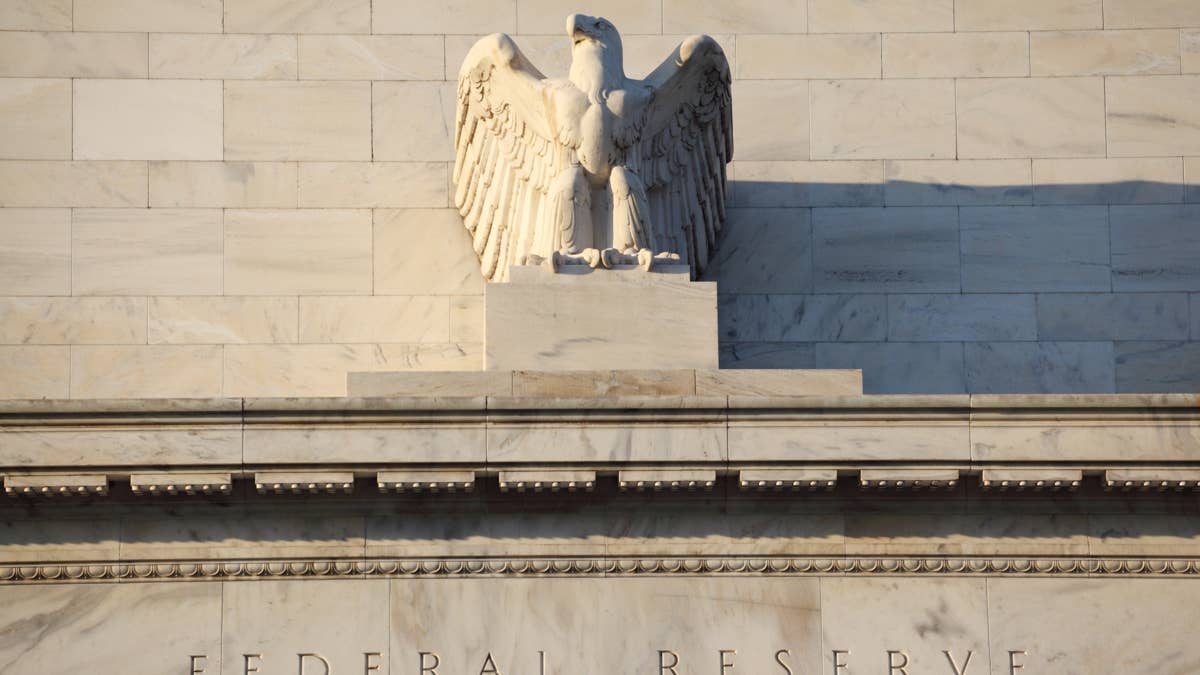
Central banks spend decades building a reputation and can spend the whole thing in a single afternoon.Every institution that manages expectations for a living runs into the same trap. Move too slowly and you look asleep at the wheel. Move without warning and you teach everyone watching that your signals were never worth much.The Federal Reserve has kept its benchmark rate parked in a range of 3.5% to 3.75% since December, holding at four consecutive meetings while inflation stayed stubbornly above the 2% target, according to the Federal Reserve. Fed Chair Kevin Warsh has promised price stability without saying much about how he intends to deliver it.Crude oil has made that promise harder to keep, running up roughly 20% across July before pulling back sharply this week, according to Kiplinger.So the Federal Open Market Committee (FOMC) walks into the afternoon of July 29 with a question that has not been genuinely open in years. Not whether to cut. Whether to raise.And if the committee does raise, it will be doing something it has not done once since 1994, according to Bank of America (BAC).
Bank of America says a hike Wednesday would break a pattern running since 1994.Tom Williams / Getty Images
How the Fed tells you what it is about to doThe Fed does not really surprise anybody anymore, and that is by design.Long before a decision lands, policymakers give speeches, testify to Congress, and publish minutes. Traders take all of it and push money into federal funds futures, contracts that pay out based on where the benchmark rate actually settles.Add those bets up and you get a percentage. That number is what people mean when they say a move is “priced in.”The reason the Fed watches that number so closely is that surprises are expensive. When a central bank moves in a direction markets have not funded, positions unwind all at once, and the damage lands somewhere nobody intended.Related: Fed interest-rate decision could stun Wall Street this weekThat is the backdrop against which Warsh has spent his first two months as chair. The June meeting produced a unanimous hold, but the minutes showed a committee already arguing about which direction the next move goes.Cooler June inflation looked, briefly, like it had settled the question, as TheStreet reported. Then oil turned.Bank of America says a July hike would be unprecedentedHere is the part that reframes the whole debate.Reviewing federal funds futures data going back to 1994, the bank found that the Fed has never once hiked rates with less than 60% priced in beforehand, according to Bank of America. Markets have priced roughly 10 basis points of tightening into Wednesday, the bank said, which works out to well under half that threshold.A move this week would be “unprecedented,” according to Bank of America, and would establish “Warsh credibility on independence & inflation.”More Federal Reserve:Fed Interest-Rate Decision Could Deliver a July SurpriseJuly Fed Meeting Fuels New Interest-Rate DebateFed’s Waller issues stark warning on inflation, interest ratesThe bank’s base case is still a hold, with two hike dissents expected from Dallas Fed President Lorie Logan and Cleveland Fed President Beth Hammack, though a move higher “can’t be ruled out,” said BofA rates strategist Mark Cabana.What struck me when I ran BofA’s threshold against this week’s pricing is how wide the gap actually is. Traders are giving a hike roughly 38% odds, according to the CME Group FedWatch Tool. Every hike of the past 32 years arrived with at least 60% behind it.That is not a small miss. In my analysis, it is the difference between a Fed that follows the market and a Fed that decides the market has been reading it wrong.What a quarter-point move does to your borrowing costsStrip away the mechanics and a rate decision is a bill.The federal funds rate sets what banks charge each other overnight. That feeds the prime rate, which sets your credit card APR, your home equity line, and most variable-rate debt you carry. A quarter-point hike shows up on card statements inside one or two billing cycles.Mortgages work differently. Thirty-year rates track the 10-year Treasury yield, which responds less to the decision itself than to what Warsh says about the path ahead at his 2:30 p.m. press conference.Savers get the other side of it. Higher benchmark rates push up yields on high-yield savings accounts and certificates of deposit, usually with a lag of a few weeks.The dollars are smaller than the drama suggests. A quarter point on an $8,000 credit card balance runs about $20 a year. On a $50,000 home equity line, closer to $125.That math changes if July 29 is the first of several. BofA said a hike now would pull forward expected 2026 tightening from about 45 basis points to roughly 60, according to Bank of America.Where things stand going in:Current target range: 3.5% to 3.75%, held by a 12 to 0 vote in June, according to the Federal Reserve.Minimum priced-in level before any Fed hike since 1994: 60%, according to Bank of America.Tightening priced into Wednesday’s meeting: roughly 10 basis points, according to Bank of America.Market-implied odds of a quarter-point hike: near 38%, according to the CME Group FedWatch Tool.Crude oil’s July move: up roughly 20% for the month, according to Kiplinger.The oil line is doing more work than it looks. Energy costs bleed into transportation, food, and utilities on a lag, which is why a barrel of crude ends up in a grocery bill two months later.Why September may matter more than todaySkip the headline number and read the vote count instead.A unanimous hold tells you the committee is comfortable waiting. A hold with two or three dissents tells you the hawks are organizing, and that September, the next scheduled meeting, becomes the real fight.There is no August meeting, which means whatever the Fed does Wednesday stands for roughly seven weeks regardless of what oil or inflation does in the meantime.BofA is positioned for the consequences either way. The bank said it remains paid on the two-year Treasury, holds 2s10s flatteners, and is bullish on the dollar, according to Bank of America.For everyone else, the practical move is smaller and duller. If you carry a variable-rate balance, a hike makes paying it down more valuable this month than last. If you have cash sitting in a checking account earning nothing, a hawkish Warsh press conference is your cue to go shopping for yield.The record BofA dug up does not tell you what the Fed will do. It tells you what it would cost the Fed to do it, and that is usually the better thing to watch.Related: Fed interest-rate decision could stun Wall Street this week