


Hello again, and welcome back to Fast Company’s Plugged In.
Recently, I dropped into my local Best Buy to pick up a hard drive. There was just one snag. I couldn’t find the storage department.
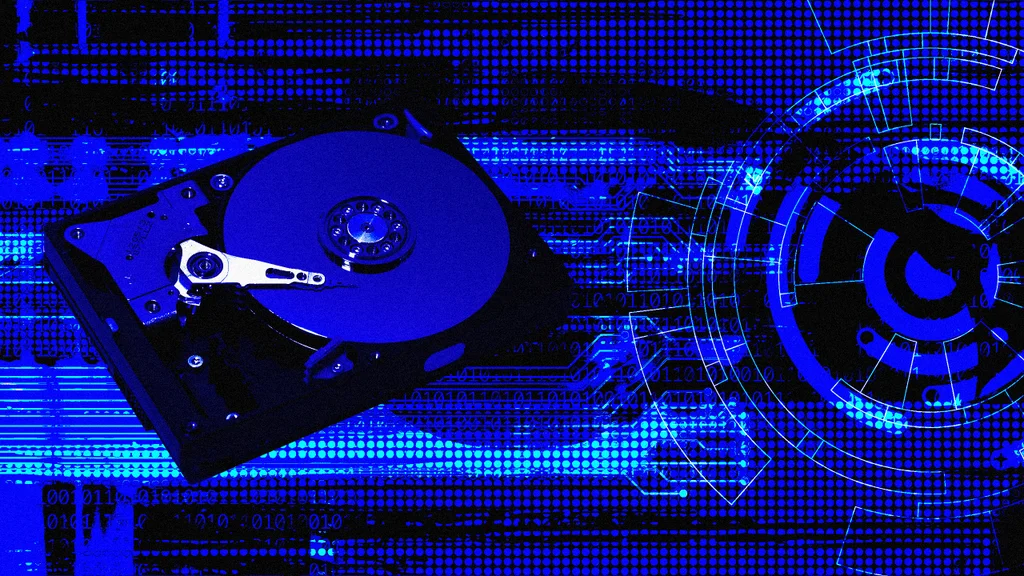
Discombobulated, I circled the store until I spied two lonely disks sitting on an otherwise unoccupied expanse of shelving. Then it dawned on me: The storage section was still there, it was just nearly devoid of storage. I bought one of the drives, leaving a grand total of one in stock.
Such is life as a tech user in the time of AI. The companies building massive data centers have such a voracious need for components—RAM, solid-state disks, hard drives like the one I was trying to buy—that they’ve drained the supply available for the consumer market. That has led to shortages such as the one I seemingly encountered. But an even more noticeable result has been the impact on the cost of devices.
This phenomenon is known as RAMageddon (not to be confused with the SaaSpocalypse), and there are too many examples to fit into one newsletter. Apple, for instance, started by warning that price hikes would be unavoidable. Then it announced a slew of them, including the MacBook Neo losing its defining $599 price. Microsoft’s Surface laptops all went up, too, sometimes by hundreds of dollars. Its Xbox consoles are on their second round of increases, Nintendo’s Switch 2 is going from $450 to $500, and Sony’s PlayStation 5 is already up to $550.
Other manufacturers with lower profiles are also raising prices or skimping on configurations, including Dell and HP. Entire categories of gear, such as sub-$400 Android phones, are in trouble. There’s no reason to think the pain will subside anytime soon: If this fall’s iPhones aren’t significantly pricier, it will come as a pleasant shock.
Memory and storage shortages are not unprecedented—did you know that a U.S.-Japan trade pact led to Nintendo delaying Zelda II because it couldn’t get enough memory chips?—but they’re rare. Thanks to Moore’s Law, we are used to the electronics in our lives getting both better and cheaper, inflation be damned. Anything else is disorienting, but here we are.
All of this raises questions no AI can answer:
Is there anything unethical about component manufacturers shifting production from the consumer market to data center build-outs? Probably not. Capitalism is capitalism. But the upshot could be a lot uglier than individuals and businesses having to shell out more money. Some companies in RAMageddon’s blast radius could be driven out of business.
Should we be mad at tech giants for refusing to selflessly absorb the higher cost of components? After Apple raised prices, Vermont Senator Bernie Sanders accused CEO Tim Cook of “corporate greed.” But the company was already charging as much as it thought the market would bear, and had deferred increases longer than many of its competitors. Raising prices may hurt sales. It seems more the act of a company boxed into a corner than a ruthless money-grubber.
Could all that RAM and storage being diverted to AI eventually power products we’ll happily use, thereby providing a deferred benefit? Perhaps. But it could also enable algorithms that fill our lives with machine-generated slop, invade our privacy, or put us out of work, so I’m not inclined to look on the bright side in advance. Then again, it’s also possible that AI companies are overbuilding data center capacity and will end up with computing cycles nobody wants, rendering this whole moment pointless.
As I’ve mulled over the present crisis, I’ve realized that RAM and storage being so bountifully affordable is a semi-recent development. When I got interested in computers as a junior high school student, 16 KB of RAM was common and tolerable, 32 KB was more than adequate, and 48 KB felt downright sinful. Even a maxed-out microcomputer imposed discipline: Anyone writing software knew all sorts of clever techniques for getting more done in fewer bytes of code.
A bit later, in the 1990s, multiple megabytes of RAM and hard drives with hundreds of megabytes to gigabytes of space were the norm—and yet almost nobody had as much as they really wanted. Utilities such as Stacker, which compressed disk files to effectively double a hard disk’s space, were must-haves. Computer users were so tight on resources that they were susceptible to being scammed: It turned out that a program called SoftRAM, which claimed to be the Stacker of memory, didn’t actually do anything.
As far as I remember, computer users didn’t feel overly deprived in this era. Like someone living in a tiny Tokyo apartment, we just organized our (digital) possessions fastidiously and didn’t keep what we didn’t need. It may not have occurred to us that there would ever be any other option.
I can’t pinpoint when getting more RAM and disk space stopped being a major decision. I just know that it did. My current MacBook Air has 24 GB of RAM because it was an impulsive upgrade, not because I knew I’d notice any performance improvement. Mid-1990s me considered a 500 MB hard drive—which I finally splurged on after thinking it over for months—to be thrillingly ginormous. If he knew that 2026 me would own a laptop with a 2 TB solid-state drive, packing 4,000 times as much storage, he’d be confused and possibly appalled.
According to those in a position to know, AI-induced RAM and storage shortages may ease within a couple of years. If so, I may emerge unscathed. My iPhone, MacBook Air, and iPad Pro are nowhere near obsolescent. In March, when I was on Apple’s site looking for a desktop computer to run AI agents on, I even lucked into a refurbished Mac Mini—the base model that was hard to score at the time, and now no longer exists.
If anything, RAMageddon has left me more grateful for what I already have. It’s fine and, better still, already paid for. Back in WWII days, when resources of all kinds were precious, there was a slogan: “Use it up, wear it out, make it do, or do without.” Even in times of plenty—which today’s devices still offer, albeit at less tempting prices—that’s advice to live by.
You’ve been reading Plugged In, Fast Company’s weekly tech newsletter from me, global technology editor Harry McCracken. If a friend or colleague forwarded this edition to you—or if you’re reading it on fastcompany.com—you can check out previous issues and sign up to get it yourself every Friday morning. I love hearing from you: Ping me at hmccracken@fastcompany.com with your feedback and ideas for future newsletters. I’m also on Bluesky, Mastodon, and Threads, and you can follow Plugged In on Flipboard.