

Outback Steakhouse has been in turnaround mode since 2024, and it has hit some bumps on the road back.
As part of those turnaround efforts, the chain closed 24 locations in 2025, according to an SEC filing, and followed that with another 23 this year. In addition, the company has been rocked by its largest franchise operator, Cerca Trova, filing for Chapter 11 bankruptcy, even as the brand has been showing signs of improvement.
Denny’s, which has had its own problems over the past few years, was also rocked by a franchisee filing for Chapter 11 bankruptcy.
EYM Diner of DFW filed for Chapter 11 protection in the U.S. Bankruptcy Court for the Northern District of Texas on Nov. 4.
The company operated 41 Denny’s locations in Texas and Florida as of October 2025, Franchise Times reported at the time, but the franchisee has divested 11 of those restaurants and now operates 30 stores, according to Nation’s Restaurant News.
Kendall Ware, a certified franchise exec, former president of Cinnabon and Carvel, and author of “Built for Franchising,” has run franchise systems and owned franchises himself.
He sat down with TheStreet to explain what these bankruptcies mean, what consumers should look for, and how a franchisee bankruptcy relates to the health of the overall brand.
What consumers should be watching for in franchise bankruptcies
TheStreet: What signs should consumers watch for?
Kendall Ware: The challenge is that consumers generally don’t see the earliest warning signs of financial distress. By the time a guest notices declining service, inconsistent food quality, understaffing, or deteriorating facilities, the underlying problems may have been developing for years.
In franchising, there’s an important distinction between operational distress and financial distress. A restaurant can deliver a perfectly acceptable guest experience while its ownership group struggles with excessive debt, insufficient liquidity, or other financial obligations.
But eventually, those pressures can make their way into the restaurant.
When operators face financial challenges, one of the first places they often look is expenses. They start reducing labor, deferring maintenance, cutting operating costs, or limiting investments in the business. And while managing expenses is essential, there’s a point where those decisions begin negatively affecting the guest experience.
Fewer employees can mean slower service. Reduced maintenance can affect the condition of the restaurant. And when the guest experience begins to deteriorate, customers visit less frequently, creating even more pressure on revenue and profitability.
This is something I discuss in my book, “Built for Franchising.” If you become so focused on cutting costs that you lose sight of what drives revenue, eventually you’ll cost yourself right out of business.
The warning sign for consumers isn’t necessarily one bad experience. It’s a sustained deterioration in the value and consistency of the experience.
TheStreet: Can one franchisee fail while the overall franchise is healthy?
Ware: Absolutely. Two franchisees operating the same brand can experience dramatically different financial outcomes.
They may share the same products, brand recognition, and operating systems, but their debt obligations, real estate costs, leadership capabilities, and operational execution can be entirely different.
Throughout my career leading franchise systems, I’ve encountered operators who don’t regularly review their profit and loss statements or fully understand their financial performance. I’ve heard some variation of the same response countless times: “There’s still money in my bank account, so I must be doing fine.”
But cash in the bank isn’t the same as profitability, and profitability isn’t the same as financial health. An operator can have cash today while accumulating debt, deferring expenses, or operating a business that’s becoming less sustainable every month.
Sometimes the issue isn’t the franchise model. It’s how the individual business is being managed.
At the same time, franchisors have a responsibility to create an environment where franchisees have access to the tools, training, financial visibility, and support necessary to succeed.
A healthy franchise system requires accountability on both sides of the relationship.
There are signs that Chapter 11 is coming
TheStreet: Did you see it coming with the Outback or Denny’s failures?
Ware: I wouldn’t claim to have personally predicted either bankruptcy without access to their internal financial information. However, looking at the reported circumstances, neither situation appears to have developed overnight.
Outback’s franchisee reportedly experienced financial challenges dating back to 2018, nearly eight years before its November 2026 bankruptcy filing. Those challenges included substantial debt, refinancing difficulties, and declining guest traffic. With Denny’s, the operator’s financial difficulties across other restaurant brands were already publicly documented.
What stands out to me isn’t simply that these warning signs existed. It’s how important the relationship between franchisor and franchisee becomes when those challenges emerge.
More Restaurants:
40-year-old fast-food franchisee files for Chapter 11 bankruptcy
Landry’s rescues 9 restaurants from bankruptcy as closures mount
Outback Steakhouse restaurant franchisee files for Chapter 11 bankruptcy
I’ve spent much of my career leading franchise systems, and I believe one of the biggest mistakes in franchising is waiting until there’s a crisis to have difficult financial conversations.
Franchisors need visibility into the financial health of their franchisees, and franchisees need to feel comfortable being transparent about their challenges without every conversation becoming adversarial.
In Denny’s case, the company has indicated that it spent approximately two years working with the operator to transition restaurants. That’s an important distinction because recognizing financial distress doesn’t necessarily mean there’s an immediate or simple solution.
The strength of the franchise relationship is often tested long before a bankruptcy filing. The earlier both parties are willing to confront financial realities together, the more options they may have to protect the business.
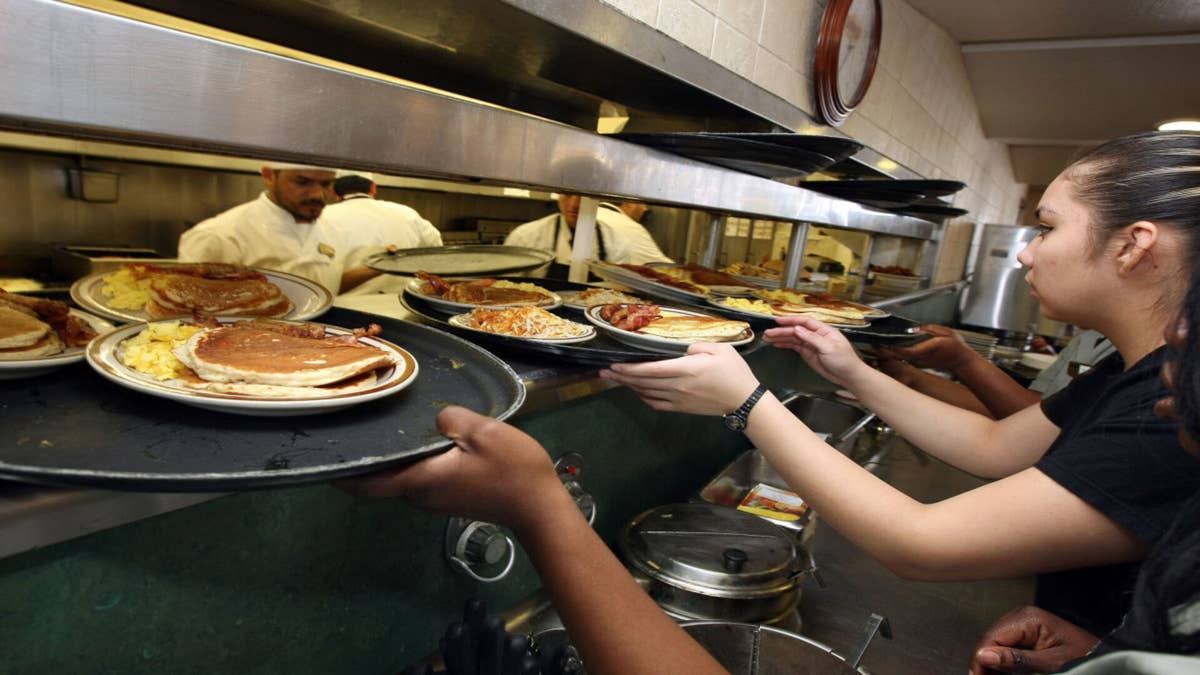
Denny’s has closed restaurants as well.Image source: Justin Sullivan/Getty Images
TheStreet: Can these locations be operated successfully by another operator?
Ware: Absolutely, provided the underlying restaurant economics support it.
A bankruptcy filing tells us that the current ownership entity cannot meet its financial obligations under its existing circumstances. It doesn’t automatically mean every restaurant it operates is economically unviable.
Consider two operators running the same restaurant. One acquired the business with significant debt and expensive lease obligations. Another acquires that same restaurant at a substantially lower purchase price, with less debt and a healthier cost structure.
The guest demand could be identical, but the financial outcome could be dramatically different.
That appears to be part of the opportunity being evaluated in both cases. Bloomin’ Brands has proposed acquiring the Outback franchisee’s assets, while Denny’s has indicated that other franchisees are interested in taking over viable locations.
However, changing ownership doesn’t fix a fundamentally broken unit economic model. Any prospective operator still needs to evaluate sustainable sales, restaurant-level profitability, required reinvestment, and the capital structure supporting the acquisition.
This is also why I believe every franchisor should understand a franchisee’s exit strategy from the very beginning of the relationship.
More Bankruptcy:
39-year-old travel agency shuts down in bankruptcy, cancels all flights
Major mattress chain files Chapter 11 bankruptcy
40-year-old fast-food franchisee files for Chapter 11 bankruptcy
When a franchisee signs an agreement, we spend enormous amounts of time discussing their business plan, opening strategy, and operational expectations. But how often do we ask what they ultimately want to accomplish with the business?
Do they want to build a multi-unit organization and eventually sell? Create a family business to pass down to their children? Operate for a defined period and retire?
Some franchisors are uncomfortable having those conversations because they don’t want to introduce the idea of selling or exiting. I believe that’s a mistake.
Understanding a franchisee’s long-term objectives allows both parties to plan for succession, capital requirements, ownership transitions, and ultimately a successful exit.
The goal shouldn’t simply be to help franchisees enter the system successfully. It should be to help them build businesses they can eventually exit successfully, too.
TheStreet: Are some franchises just not a good business?
Ware: Absolutely. And I would go a step further: A good franchise brand isn’t necessarily a good franchise investment at every price or under every financial structure.
One of the biggest misconceptions in franchising is confusing growth with financial success.
A brand can increase its restaurant count, expand systemwide sales, and generate additional royalty revenue while the underlying economics for individual franchisees are becoming less attractive.
The most important financial question is whether the restaurant generates enough cash flow to support operating expenses, franchise fees, debt obligations, ongoing reinvestment, and an acceptable return for the owner.
But this is where responsibility must be shared.
Franchisors need to understand their entire economic model, not just what it costs to operate the restaurant. By the time you account for royalties, advertising contributions, required purchases, and any markups on goods, services, or equipment, the franchisee still needs a realistic opportunity to generate sustainable profits and an acceptable return on their investment.
If the economics aren’t working, franchisors have to be willing to examine the model and identify solutions. That might include improving purchasing efficiencies, addressing unnecessary operating costs, providing targeted financial relief when appropriate, or finding ways to help franchisees drive additional revenue.
Franchisees, in turn, need to understand their financial statements, manage their businesses responsibly, and actively participate in the systems designed to help them succeed.
Neither party can fulfill the other’s responsibilities, but both can influence the other’s success.
I’ve always believed that sustainable franchise growth begins with strong unit economics and strong relationships.
If the business model only works under ideal conditions, or requires franchisees to continually contribute additional capital just to sustain operations, that should raise serious concerns.
The long-term value of a franchise system depends on the financial health of the businesses operating within it.
TheStreet: What else should consumers look for?
Ware: I think consumers should understand that restaurant bankruptcies don’t necessarily mean the brand is disappearing or that every affected location will close.
Chapter 11 can create an opportunity to restructure obligations, transfer ownership, and preserve viable restaurants. That’s particularly relevant in these two cases, where potential ownership transitions are already being discussed.
But there’s a much larger economic issue that often gets overlooked.
When a franchised restaurant closes permanently, the franchisor doesn’t just lose a location. It loses a recurring stream of royalty revenue, potentially for years.
Consider a restaurant generating $1 million in annual sales at a 5% royalty. That’s $50,000 in annual royalty revenue, or $500,000 over a standard 10-year franchise agreement if sales remain constant.
Multiply that across dozens of locations, and the financial implications become substantial.
That’s why I believe franchisee support should be viewed as an investment in enterprise value, not simply an operating expense.
And support goes well beyond providing an operations manual or conducting occasional field visits. It requires financial transparency, open communication, strong relationships, and a genuine understanding of what each franchisee is trying to accomplish.
The most successful franchise relationships aren’t built around the franchisor and franchisee having identical responsibilities. They’re built around both parties understanding their individual responsibilities while remaining committed to a shared outcome.
Ultimately, the financial success of the franchisor and franchisee should never be viewed as competing interests. The strongest franchise systems recognize that their long-term success depends on one another.
Related: 80-year-old women’s clothing retailer closing dozens of stores