

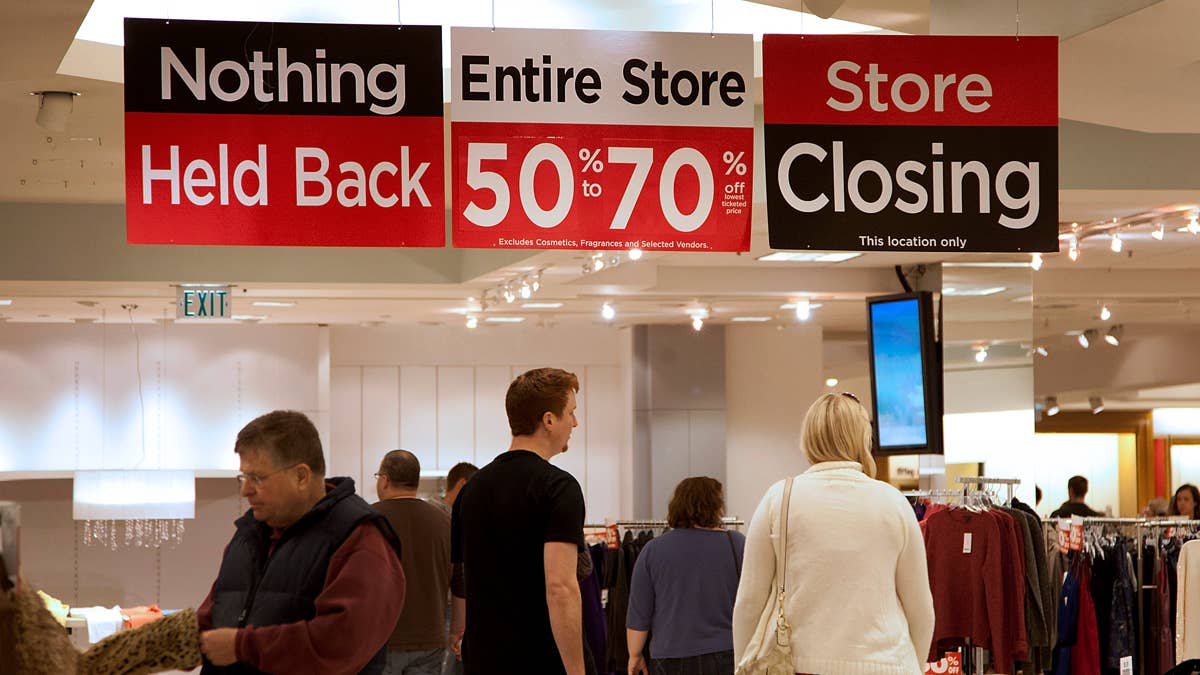
A major fast-fashion retailer continues to reshape its store network, closing locations in markets around the world while eliminating the physical presence of an entire brand.
The retailer has already reduced its store count compared with a year ago, and its latest plans call for even more locations to close in 2026. For some shoppers, that could mean saying goodbye to stores that have become familiar parts of their communities.
Founded in 1947, H&M Group operates in more than 80 markets, with online sales in over 60 of them. Its portfolio includes brands such as H&M, COS, Weekday, Cheap Monday, Monki, & Other Stories, Arket, Singular Society, and Sellpy.
H&M closes 95 stores worldwide
H&M had 95 fewer stores as of Aug. 31, 2026, compared with the same period a year earlier, bringing its total store count to 4,023 worldwide, according to its third quarter of fiscal 2026 earnings report.
Most of the year-over-year reduction occurred across its H&M and H&M Home brands. The decline represents a 2% reduction in the company’s store count across all brands and markets.
CEO Daniel Ervér said during H&M’s latest earnings call that the closures are part of an effort to improve the productivity of the company’s store portfolio.
“As we invest in the most attractive locations, we close the least productive ones, and we upgrade existing stores and expand into new markets.”
H&M is continuing to invest in technologies intended to improve the customer experience and store operations. The company is also offering a more relevant assortment in each store and increasing personalization across its digital channels as it works to create a more seamless customer journey.
“Through a more optimized store portfolio, more upgraded stores and a more personal digital experience, we are also elevating the customer experience as well as productivity in store and online,” Ervér said in a statement in the company’s earnings report.
During the nine months ended Aug. 31, 2026, H&M’s net sales declined 4% in Swedish Krona (SEK) and remained flat in local currencies, according to its latest earnings report.
Operating margin for the same period increased to 8.5%. The company said improved profitability was driven primarily by its work on purchasing, cost control, and more efficient operations.
H&M store closure strategy extends into 2026
The latest closures build on actions the retailer began last year.
H&M previously announced plans to close around 200 locations globally by the end of 2025, primarily in established markets, as part of a broader effort to optimize its physical footprint in response to evolving consumer demand, according to its second-quarter fiscal 2025 earnings report.
The company noted that it can renegotiate or exit about one-third of its leases each year, giving it flexibility to redirect capital toward stronger-performing stores, relocations, renovations, and digital investments.
The strategy is designed to increase productivity per location while reducing costs associated with excess inventory, staffing, and markdown activity.
Here’s some of my previous coverage of H&M:
79-year-old fast-fashion retailer closes 128 stores
79-year-old fast-fashion leader closing more stores
H&M brings back popular designer collab after 20 years
That effort has continued into 2026.
At the beginning of the third quarter, H&M had 128 fewer stores than at the same point in the previous year. By the end of the quarter, that gap had narrowed to 95 fewer locations year over year.
The comparison with the previous year was affected by the closure of all Monki stores in 2025. The brand is now integrated into its sister label Weekday.
For shoppers, the strategy means that H&M’s overall store count is declining, even as the company continues to invest in locations it considers more productive and strategically important.
H&M closes 95 stores worldwide.Victor Golmer / Getty Images
H&M’s next phase focuses on omnichannel growth
Looking ahead, H&M’s expansion strategy centers on meeting customers across physical and digital channels.
For 2026, H&M plans to open approximately 90 new stores and close around 170, with most openings concentrated in growth markets.
Physical and digital capabilities remain the company’s largest investment priorities, although online sales now account for more than 30% of total sales.
During 2026, the company continues to update a large number of stores by improving layout, presentation, and technology to strengthen the customer experience and the connection between its physical and digital channels.
Industry trends support H&M’s new strategy
H&M’s strategy reflects a broader shift in retail as companies balance physical stores with growing digital businesses.
The global e-commerce market was valued at $25.93 trillion in 2023 and is projected to grow at a compound annual growth rate of 18.9% through 2030, according to Grand View Research.
At the same time, retailers continue to invest in physical locations as stores remain an important part of the shopping experience.
Brick-and-mortar stores accounted for approximately $14.4 trillion of total retail sales of $18.9 trillion in 2025, according to Euromonitor research gathered by EY.
“It’s clear that the physical store still plays an important role,” said EY Retail Analysts Malin Andrée and Jon Copestake. “Not only do stores have plenty of runway left in delivering revenue, but they also have opportunities to drive new growth and alternative revenue streams and, by working in tandem with digital channels, they can maximize returns on investment.”
H&M’s restructuring reflects this balance, with the retailer reducing its overall store count while investing in select locations, digital capabilities, and a more personalized experience.
Related: 79-year-old fast-fashion retailer closes 128 stores