

[[{“value”:”Reaching for and enjoying a snack should be a feel-good moment. While it’s common knowledge that not all snacks are healthy, the last thing you’d expect is for them to contain traces of heavy metals like lead and cadmium. Consumer Reports, an independent, nonprofit member organization, has tested various food products and detected heavy metals in some of them.
“Contaminants can enter snacks and food from different sources including environment, manufacturing processes and cooking, or from contact with packaging materials and equipment. Although ongoing efforts aim to minimize contaminant levels in foods, eliminating all contaminants is not always feasible,” explains Tetyana Cheairs, M.D., M.S.P.H., Associate Dean for Ph.D. Programs, Assistant Professor of Pathology, Microbiology and Immunology, New York Medical College.
The bottom line? Know what you’re snacking on—and what to watch out for when shopping. To help you out, here are six snack products that exceeded CR’s level of concern for lead or cadmium, according to research conducted by CR.
The Research
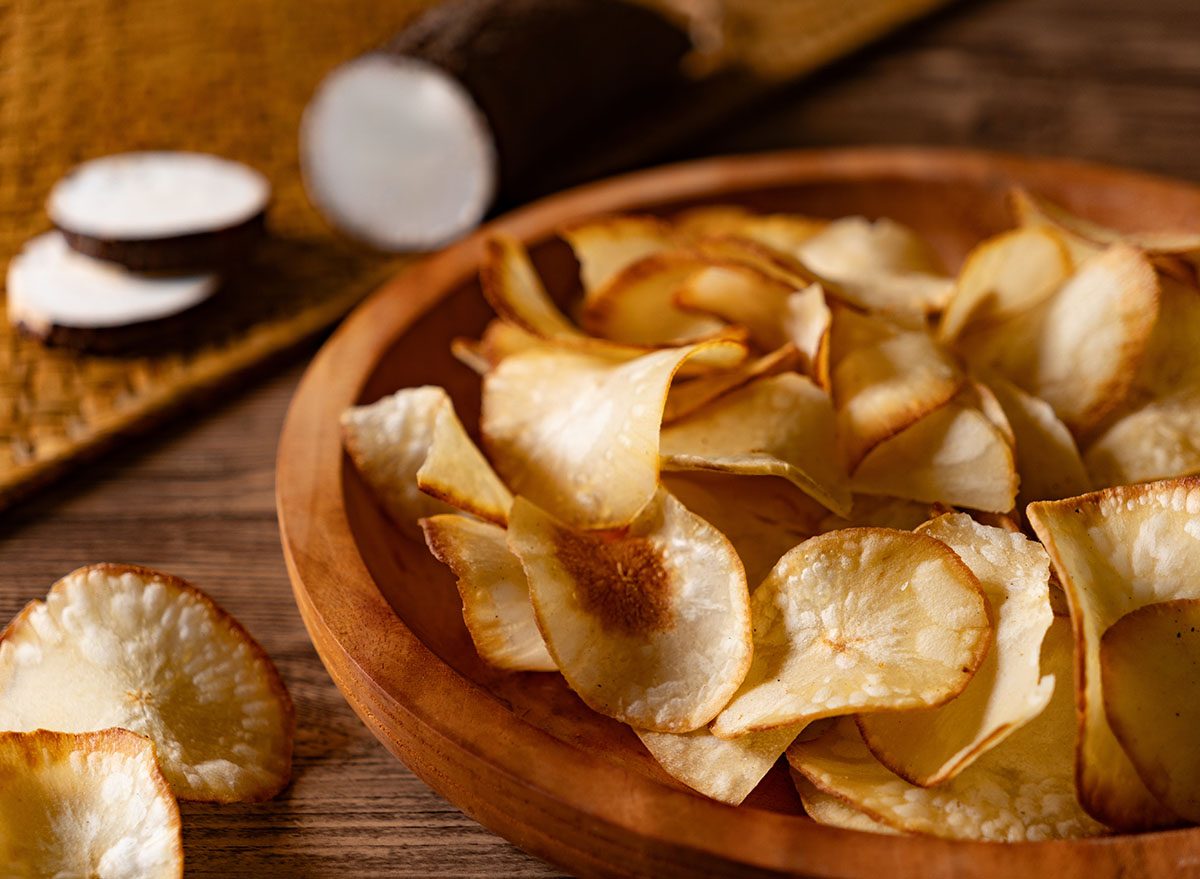
In a May 2025 study, CR tested certain cassava snack products and found lead that exceeded CR’s “level of concern.” CR dubbed the worst offenders “products to avoid.” In another August 2026 study, CR evaluated 21 kids’ snacks for phthalates, process contaminants, and heavy metals—and some of the findings were quite concerning.
According to CR, the snack products below contained contaminants at the time the reports were published. Note that the data below came from those respective reports and is based on CR’s levels of concern, not FDA limits. For lead, CR’s level of concern is based on California’s Prop 65 limit of 0.5 micrograms per day, and CR’s calculations assume one serving per day. Several manufacturers told CR that lead occurs naturally in soil and can’t be fully avoided.
“I would not be surprised to find metals in root-based products. It is important to know that these are basic elements (e.g., lead and cadmium) that are found naturally within the earth. These products can be influenced by the soil they grow within. There are previous U.S. FDA data that show that soil-grown raw produce (e.g., carrots, potatoes, turnips, etc.) contain these metals even before further processing as product ingredients,” says Alex LeBeau, PhD, Exposure Scientist, Toxicologist, and Environmental Health Expert at Exposure Consulting.
“Typically, manufacturers establish internal specifications that their products must meet for safe consumption. I would want to understand if these manufacturers had heavy metal specifications for their products, what their testing demonstrated, and what methods they used for analysis to see how they compare to the Consumer Report findings,” LeBeau adds.
RELATED: The #1 Unhealthiest Order at 30 Major Fast-Food Chains
365 Whole Foods Market Sea Salt Cassava Tostones Cassava Chips
Study: May 2025 CR
Serving size: 28 grams (5 chips)
Contaminants: 1,723% of CR’s Level of Concern for Lead
CR category: Products to Avoid
RELATED: The 60 Unhealthiest Grocery Store Foods in America
Artisan Tropic Cassava Strips Sea Salt
Study: May 2025 CR
Serving size: 30 grams (13 pieces)
Contaminants: 629% of CR’s Level of Concern for Lead
CR category: Okay to Eat Occasionally (limit to 1 serving per week)
RELATED: 8 Food Dyes the FDA Is Banning That Shoppers Should Know About
Iberia Yuca Cassava Chips Lightly Salted
Study: May 2025 CR
Serving size: 28 grams (1 ounce)
Contaminants: 379% of CR’s Level of Concern for Lead
CR category: Okay to Eat Occasionally (limit to 1½ servings per week)
Barnana Organic Cassava Chips Himalayan Pink Salt
Study: May 2025 CR
Serving size: 28 grams (14 chips)
Contaminants: 308% of CR’s Level of Concern for Lead
CR category: Okay to Eat Occasionally (limit to 2 servings per week)
RELATED: 25 Awful Ingredients Everyone Still Uses—But Shouldn’t!
Heaven & Earth Cassava Chips
Study: May 2025 CR
Serving size: 28 grams (15 chips)
Contaminants: 102% of CR’s Level of Concern for Lead
CR category: Okay to Eat Occasionally (limit to 6½ servings per week)
Gimme Roasted Seaweed Snacks, Sea Salt
During CR’s research testing popular kids’ snacks, cadmium was detected in 15 out of 21 products. However, only Gimme Roasted Seaweed Snacks, Sea Salt exceeded CR’s level of concern for cadmium, and CR recommends limiting consumption.
Study: August 2026 CR
Serving size: 5 grams (1 5-g package or 1/2 10-g package)
Contaminants of concern: Cadmium (rated 2 out of 5, “fair”), acrylamide (3 out of 5, “good”), glycidyl esters (3 out of 5, “good”)
CR recommendation: Limit consumption (don’t eat them every day)
The post 6 Popular Snacks Consumer Reports Flagged for Lead and Cadmium appeared first on Eat This Not That.”}]]