

[[{“value”:”I’ve coached plenty of men who are willing to train; they just have zero interest in spending their morning at a gym. That’s completely workable. You can build and maintain plenty of useful strength at home with a few basic exercises and some dumbbells.
After 65, the bigger goal is keeping enough strength to stay active and handle everyday movement comfortably. You still want the muscles working against resistance, and you still need a way to make the exercises harder over time. None of that requires a crowded weight room or a complicated program.
Morning is a good time to knock this out before the rest of the day starts filling up. These five exercises cover the legs, upper body, and core with very little setup. Keep the first few sessions manageable, then add weight or reps as your strength improves.
Goblet Box Squat
The goblet box squat gives you a simple way to train the legs with a little extra resistance. The box keeps your depth consistent, while holding the weight at your chest makes the thighs and glutes work harder than they would during a regular sit-to-stand. It’s also easy to progress by moving up to a slightly heavier dumbbell.
Muscles Trained: Quads, glutes, hamstrings, core.
How to Do It
Stand in front of a sturdy box or chair.
Hold a dumbbell against your chest.
Set your feet about shoulder-width apart.
Sit your hips back and bend your knees.
Lower until you lightly touch the box.
Press through your feet to stand.
Recommended Sets and Reps: Perform 2 to 3 sets of 8 to 12 reps. Rest for 60 seconds.
Best Variations: Bodyweight box squat, heavier goblet box squat, slow-tempo goblet squat.
Form Tip: Touch the box lightly without relaxing onto it.
RELATED: How Many Days a Week Should You Lift Weights After 60 to Rebuild Muscle?
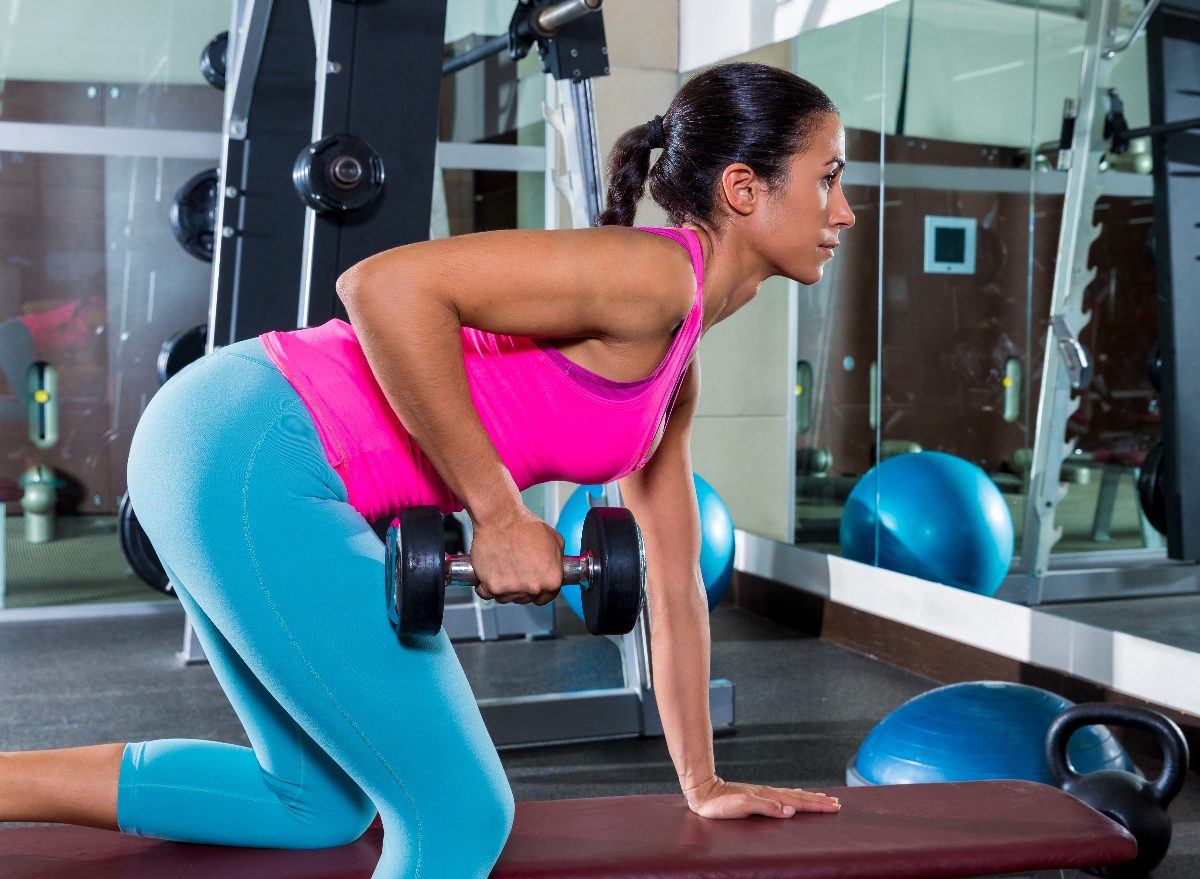
Single-Arm Dumbbell Row
Rows give the upper back some direct work, which is easy to miss if most of your activity is walking or lower-body focused. Working one arm at a time also lets you use a sturdy bench or chair for support so that you can focus more on the pull itself. Keep the dumbbell close to your side and control the lowering phase.
Muscles Trained: Upper back, lats, biceps.
How to Do It
Place one hand on a sturdy bench or chair.
Hold a dumbbell in the opposite hand.
Hinge forward slightly at your hips.
Let the dumbbell hang beneath your shoulder.
Pull your elbow toward your ribs.
Lower the weight slowly and finish your reps before switching sides.
Recommended Sets and Reps: Perform 2 to 3 sets of 8 to 12 reps per arm. Rest for 45 to 60 seconds.
Best Variations: Supported two-arm row, lighter single-arm row, heavier single-arm row.
Form Tip: Pull the dumbbell toward your hip instead of shrugging it toward your shoulder.
Dumbbell RDL
The RDL puts more attention on the hamstrings and glutes than the squat does. Pushing the hips backward loads the back of the legs through a hinge, which helps round out your lower-body strength work. You don’t need to lower the dumbbells very far to make the exercise effective.
Muscles Trained: Glutes, hamstrings, back, core.
How to Do It
Stand with a dumbbell in each hand.
Soften your knees slightly.
Push your hips backward.
Lower the dumbbells along your legs.
Stop when you feel tension through the hamstrings.
Drive your hips forward and return to standing.
Recommended Sets and Reps: Perform 2 to 3 sets of 8 to 12 reps. Rest for 60 seconds.
Best Variations: Single-dumbbell RDL, kickstand RDL, shorter-range RDL.
Form Tip: Think about sending your hips backward instead of dropping straight down.
RELATED: 4 Exercises That Flatten Your Midsection Without Getting on the Floor After 65
Incline Push-Up
Incline push-ups make upper-body pressing strength easy to adjust without needing a bench press setup. The higher your hands are, the less body weight you have to move. As you get stronger, use a lower surface and let the exercise progress with you.
Muscles Trained: Chest, shoulders, triceps, core.
How to Do It
Place your hands on a sturdy counter, bench, or table.
Step your feet backward.
Keep your body in a straight line.
Bend your elbows and lower your chest toward the surface.
Stop near a 90-degree bend at your elbows.
Press through your hands to return to the top.
Recommended Sets and Reps: Perform 2 to 3 sets of 8 to 15 reps. Rest for 45 seconds.
Best Variations: Wall push-up, higher-incline push-up, lower-incline push-up.
Form Tip: Move your chest toward the surface instead of dropping your head first.
Kneeling Plank With Shoulder Taps
This gives you a core exercise that doesn’t require a long hold. Each shoulder tap briefly lifts one hand off the floor, so your midsection has to keep your torso controlled as your weight shifts. The kneeling setup lowers the difficulty while still giving the abs plenty to do.
Muscles Trained: Abs, obliques, shoulders, chest.
How to Do It
Start on your hands and knees.
Walk your hands slightly forward.
Keep your hips extended so your body forms a straight line from your knees to your shoulders.
Lift your right hand and tap your left shoulder.
Return your hand to the floor.
Alternate sides.
Recommended Sets and Reps: Perform 2 to 3 sets of 8 to 12 taps per side. Rest for 30 to 45 seconds.
Best Variations: Kneeling plank hold, incline shoulder taps, full plank shoulder taps.
Form Tip: Widen your knees slightly if you need more stability.
RELATED: 5 Exercises That Undo 10 Years of Doing Nothing Faster Than Yoga After 65
Keep the Home Routine Moving Forward
Training at home works well when the exercises stay challenging enough to keep producing progress. You don’t need new movements every week, just a way to make the ones you already have a little harder.
Add weight gradually: Move up in dumbbell weight when the final few reps stop feeling challenging.
Use harder versions of exercises: Lower the incline on your push-ups or move from kneeling taps to a full plank when you’re ready.
Train two to three mornings per week: That gives you regular strength work while leaving enough time to recover.
Keep walking on the other days: Regular movement helps you stay active without turning every morning into another strength session.
Make the routine easy to start: Keep your dumbbells and training space ready so there’s less friction between waking up and getting the workout done.
References
Roberts, Christian K et al. “Effects of Home-Based Exercise Training Systems, Combined with Diet, on Cardiometabolic Health.” International Journal of Exercise Science vol. 12,2 871-885. 1 May. 2019, doi:10.70252/WEFP3647
Keller, Karsten, and Martin Engelhardt. “Strength and muscle mass loss with aging process. Age and strength loss.” Muscles, Ligaments and Tendons Journal vol. 3,4 346-50. 24 Feb. 2014
The post 5 Morning Exercises for Men Over 65 Who Hate the Gym appeared first on Eat This Not That.”}]]