

[[{“value”:”Feeling physically younger usually starts with regaining strength and freedom of movement. After 65, a few inactive years can leave you feeling stiffer and less confident with exercises that once came naturally. Give your body consistent work for the next 30 days, and you can start feeling stronger and more capable.
You’re not going to erase a decade of aging in a month, and you don’t need to. A better target is improving the qualities that tend to slip when activity drops off. Strength can come back, mobility can improve, and regular training can help you handle more work without tiring as quickly. Those changes can make a noticeable difference in how your body feels.
For the next month, this routine gives you a mix of movement and resistance without making the setup complicated. One exercise opens up the hips and shoulders, while the rest build strength through the upper and lower body. Finish with loaded carries, and you’ve got a simple session that covers a lot of ground.
Down Dog to Cobra
Start by moving through positions that ask the shoulders, spine, and hips to work through a bigger range. Down Dog to Cobra gives you a chance to loosen up before the strength work while still making the upper body support some of your weight.
Muscles Trained: Shoulders, chest, abs, hamstrings.
How to Do It
Begin in a high plank position.
Push your hips upward and backward into Down Dog.
Let your heels move toward the floor as far as comfortable.
Shift your body forward.
Lower your hips and lift your chest into Cobra.
Move back into Down Dog and repeat.
Recommended Sets and Reps: Perform 2 to 3 sets of 6 to 8 reps. Rest for 30 seconds.
Best Variations: Shorter-range transition, elevated Down Dog to Cobra, slower transition.
Form Tip: Move through a range that feels comfortable instead of forcing either position.
RELATED: 4 Daily Exercises That Build Lean Muscle Faster Than Weight Training After 65
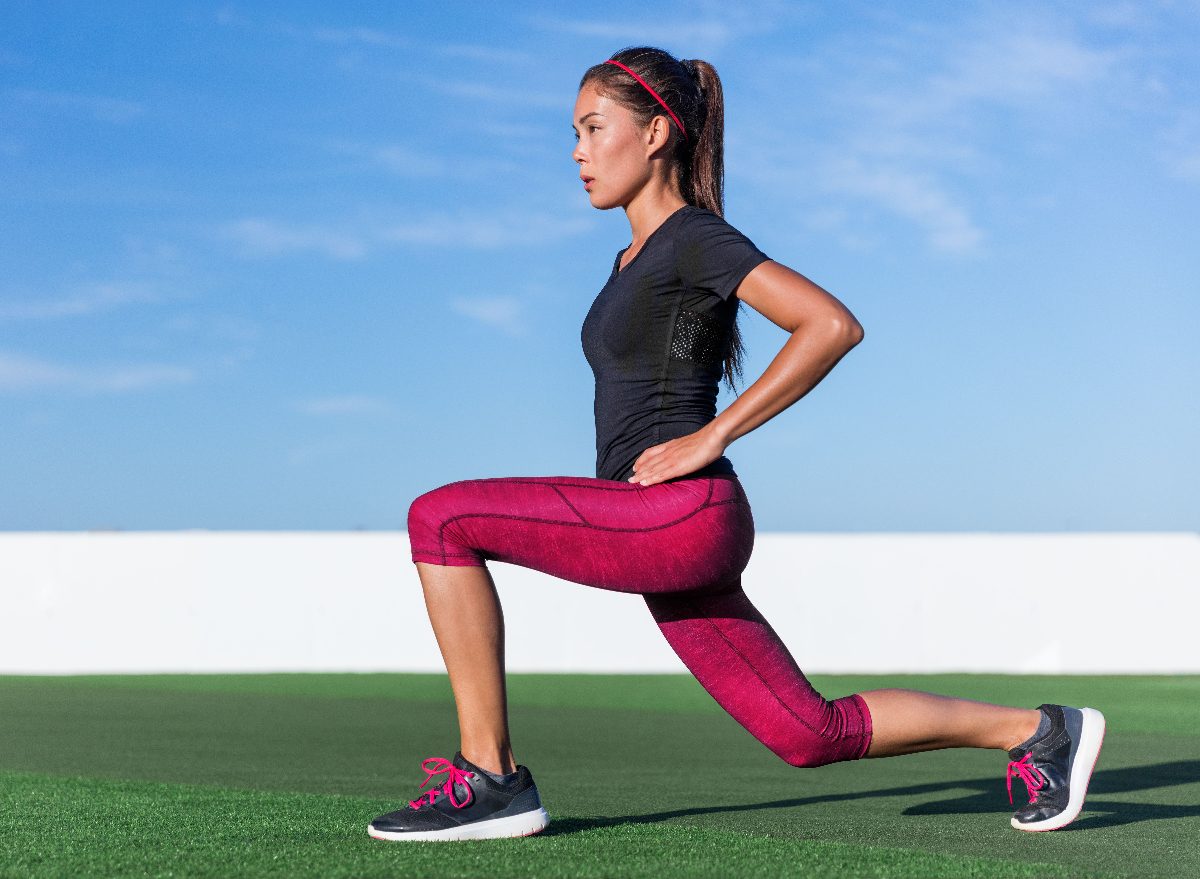
Walking Lunge
Walking lunges ask each leg to support you, then push you into the next step. That makes them useful when you want to rebuild lower-body strength while keeping the movement athletic. Shorten your stride or use nearby support if balance starts limiting the set.
Muscles Trained: Quads, glutes, hamstrings, calves.
How to Do It
Stand tall with your feet about hip-width apart.
Step forward with your right foot.
Bend both knees into a comfortable lunge.
Press through your front foot.
Bring your back leg forward into the next step.
Continue alternating sides.
Recommended Sets and Reps: Perform 2 to 3 sets of 6 to 10 reps per side. Rest for 45 to 60 seconds.
Best Variations: Supported walking lunge, shorter-stride lunge, alternating reverse lunge.
Form Tip: Choose a stride length that lets you stay controlled from one step to the next.
Incline Push-Up
Upper-body strength can come back without starting on the floor. An incline reduces how much body weight you have to press, giving you room to build clean reps before moving harder. Lower the surface as your strength improves.
Muscles Trained: Chest, shoulders, triceps, abs.
How to Do It
Place your hands slightly wider than shoulder-width on a sturdy counter or bench.
Step your feet backward.
Brace your abs.
Bend your elbows and lower your chest toward the surface.
Stop when your elbows reach about 90 degrees.
Press through your hands to return to the top.
Recommended Sets and Reps: Perform 2 to 3 sets of 8 to 12 reps. Rest for 30 to 45 seconds.
Best Variations: Wall push-up, lower incline push-up, slow-tempo incline push-up.
Form Tip: Keep your body in one straight line as you lower.
RELATED: 4 Couch Exercises That Firm Sagging Arms Faster Than Gym Classes After 60
Single-Arm Band Row
One-arm rows let you focus on each side of your upper back separately. They’re easy to progress by increasing band tension, and the single-arm setup also asks your core to keep your torso from turning as you pull.
Muscles Trained: Upper back, lats, rear shoulders, biceps.
How to Do It
Anchor a resistance band around chest height.
Hold the band in your right hand.
Step backward until you feel light tension.
Extend your arm toward the anchor.
Pull your elbow back toward your side.
Return slowly and complete your reps before switching arms.
Recommended Sets and Reps: Perform 2 to 3 sets of 10 to 15 reps per side. Rest for 30 to 45 seconds.
Best Variations: Two-arm band row, stronger-band row, slower single-arm row.
Form Tip: Keep your chest facing forward as you pull.
Farmer Carry
Farmer carries are simple, but they demand strength from the moment you pick up the weights until you put them down. Your grip has to hold on while your core supports the load, making this a good way to finish the session with sustained full-body effort.
Muscles Trained: Grip, shoulders, upper back, core, legs.
How to Do It
Hold a dumbbell or kettlebell in each hand.
Stand tall with the weights at your sides.
Brace your abs.
Walk forward at a controlled pace.
Turn carefully when needed.
Continue until the interval ends.
Recommended Sets and Reps: Perform 2 to 3 carries of 30 to 45 seconds. Rest for 45 to 60 seconds.
Best Variations: Lighter farmer carry, heavier short carry, suitcase carry.
Form Tip: Carry the weights beside you without letting them pull your shoulders forward.
RELATED: 5 Standing Exercises That Flatten Belly Pooch Faster Than Sit-Ups After 65
Make the Next 30 Days Count
Thirty days gives you enough time to build a rhythm and start noticing what feels different. Use this routine two to four days per week and make small progressions when the current workload starts feeling comfortable.
Build the reps gradually: Add a rep or two before jumping to a harder variation.
Keep some resistance in the routine: Your muscles need enough challenge to keep adapting.
Walk between strength days: Light movement can keep you active while giving your muscles time to recover.
Eat enough protein: Consistent protein intake supports the strength you’re trying to rebuild.
Pay attention to recovery: Make the next workout lighter when soreness or fatigue sticks around.
Look for changes beyond the mirror: Easier movement and stronger sets are useful signs that the month is working.
References
Ruegsegger, Gregory N., and Frank W. Booth. “Health Benefits of Exercise.” Cold Spring Harbor perspectives in medicine vol. 8,7 a029694. 2 Jul. 2018, doi:10.1101/cshperspect.a029694
Eckstrom, Elizabeth et al. “Physical Activity and Healthy Aging.” Clinics in Geriatric Medicine vol. 36,4 (2020): 671-683. doi:10.1016/j.cger.2020.06.009
The post 5 Exercises That Make You Feel 10 Years Younger in 30 Days After 65 appeared first on Eat This Not That.”}]]