

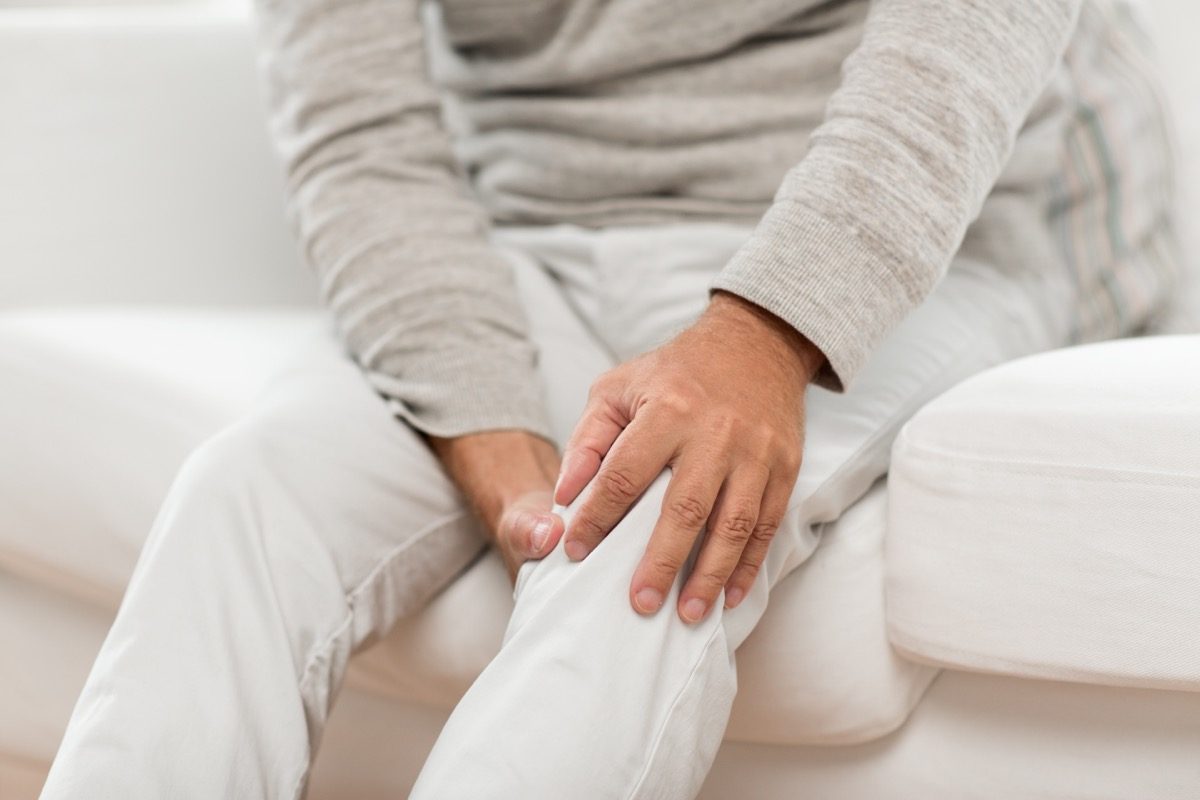
[[{“value”:”Stiff, achy joints are what people over 65 most often chalk up to age, and the reason many of them give for doing less than they used to. It creeps up gradually, so most people accept it as inevitable and plan their week around it.
I’ve been a personal trainer for four decades and co-founded TRAINFITNESS, the UK’s best provider of in-person and online personal training courses, more than 25 years ago. In that time I’ve found that most joints feel better the more they’re used, as long as they’re used well. These five exercises cover your shoulders, hands, spine, hips and knees, and they can help you move more easily in about 10 minutes a day.
Broomstick Overhead Raise
The overhead reach is the range that shrinks quickest when it isn’t used, and plenty of my older clients have lost a lot of it without noticing. Holding a stick lets the stronger arm help the stiffer one, so you get a full overhead movement even when one shoulder is reluctant.
How to Do It:
Stand or sit tall, holding a broom handle or walking stick with both hands about shoulder-width apart, palms down.
Start with your arms straight in front of you at hip height.
Slowly raise the stick in front of you and up overhead, as far as is comfortable.
Pause for 2 seconds at the top.
Lower slowly back to the start.
Then hold the stick behind your back with both hands, and gently lift it away from your back.
Avoid These Mistakes:
Don’t arch your lower back to get the stick higher. Keep your ribs down.
Don’t force through pain. Stop at the point of a comfortable stretch.
Sets and Reps: 10 repetitions overhead, then 8 repetitions behind the back.
Form Tip: Don’t chase the range. It improves week by week on its own.
RELATED: 5 Morning Exercises That Restore Walking Strength Faster Than Treadmills After 65
Tendon Glides
This moves each joint of the fingers through its range in sequence, which keeps the tendons sliding smoothly under the skin. I give this to anyone with stiff hands, because it makes a real difference to buttons, jars, keys and grip, and you can do it anywhere.
How to Do It:
Hold one hand up, fingers straight and together (position 1).
Bend only the top two joints of the fingers into a hook, keeping the big knuckles straight (position 2).
Curl into a full, gentle fist, thumb across the fingers (position 3).
Open to a tabletop, fingers straight but bent forward at the big knuckles only (position 4).
Return to straight fingers.
Hold each position for 3 seconds.
Avoid These Mistakes:
Don’t rush through the positions. Take your time with each one.
Don’t squeeze hard into the fist. These are gentle positions, not a grip exercise.
Sets and Reps: 5 to 10 rounds on each hand.
Form Tip: If your hands are stiff, warm them in warm water first.
Standing Cat-Cow
This moves the whole spine gently through bending and arching without getting down on the floor, which is what rules out the classic version for a lot of people over 65. It eases a stiff upper and lower back, and it’s the one I tell clients to do on days when their back feels locked up from sitting.
How to Do It:
Stand with your feet hip-width apart and your knees slightly bent.
Rest your hands on your thighs, just above the knees.
Breathe out and round your back, tucking your tailbone under and letting your chin drop toward your chest.
Breathe in and gently arch, lifting the chest forward and the tailbone back, looking slightly forward.
Move slowly between the two positions.
Avoid These Mistakes:
Don’t force the arch or throw your head back. Keep it small, slow and comfortable.
Sets and Reps: 8 to 10 slow rounds.
Form Tip: Try to spread the movement through your whole spine rather than hinging in one spot.
RELATED: 5 Standing Exercises That Restore Hamstring Strength Faster Than Walking After 65
Seated Band Leg Press
This strengthens the thigh and glute muscles that protect the knees and hips, without putting your body weight through a sore joint. Stronger thighs take load off the knee every time you stand, walk or climb, and this is the least intimidating way I’ve found to build them.
How to Do It:
Sit on the front of a firm chair.
Loop a resistance band around the sole of one foot and hold the ends in both hands, elbows bent by your sides.
Start with that knee bent up toward your chest.
Push the foot forward and down against the band until the leg is straight out in front of you, but not locked.
Return slowly, taking 2 to 3 seconds on the way back.
Avoid These Mistakes:
Don’t snap your knee straight. Push steadily.
Don’t let the band yank your leg back. Control the return.
Sets and Reps: 2 sets of 10 to 12 repetitions on each leg.
Form Tip: Keep a slight bend in the knee at the end of the movement to protect it.
Water Walking
The water takes much of your body weight off the hips, knees and ankles, while its resistance works the muscles all around them. Warm pool water also eases stiffness. I’ve seen plenty of people who can’t walk far on land without pain walk comfortably in a pool for 20 minutes, and that’s often the first real exercise they’ve managed in months.
How to Do It:
Get into the shallow end, in water roughly waist to chest height.
Walk forward across the pool with a normal stride, swinging your arms through the water.
Then walk backward for a stretch, then sideways.
Hold the side to start with if you need to.
Avoid These Mistakes:
Don’t tiptoe on the balls of your feet. Walk heel to toe as you would on land.
Don’t hunch forward. Stand tall and use your arms.
Sets and Reps: Build up to 10 to 20 minutes.
Form Tip: Many community centers and gyms run water aerobics classes for older adults, which are worth asking about.
RELATED: 5 Daily Exercises That Shrink Belly Pooch Faster Than Gym Classes After 65
Common Joint Problems After 65
The most common by far is osteoarthritis, usually in the knees, hips or hands. Then there are a lot of stiff, sore shoulders that won’t reach overhead or behind the back, which shows up when people struggle with a sweater or can’t reach a high shelf.
I see plenty of stiff fingers and weaker grips too, which people notice with buttons, jars and keys. A stiff lower and upper back is very common, and the pattern I hear again and again is stiffness first thing in the morning and after any long stretch of sitting.
There’s also the knock-on problem: one sore joint makes others work harder. A sore knee changes how someone walks, which loads the hip and back differently, so before long nothing feels quite right.
When to Check With a Doctor
A joint that’s hot, red and swollen, one that locks or gives way, severe pain, or pain after a fall needs a doctor or a physical therapist before you start anything.
Mild aching during exercise that settles within a day is fine. Sharp pain, or pain that’s worse the next day, means ease back.
RELATED: 5 Daily Exercises Men Over 65 Need to Keep Their Heart Strong
Why Movement Keeps Joints Younger
Joints are built to move. Cartilage doesn’t have a blood supply the way muscle does. It gets its nourishment from movement and loading, so a joint that’s used regularly is better fed than one that’s left alone.
The other half of it is the muscles around the joint. They absorb a lot of the load, so stronger thighs mean less strain going through the knee itself every time you stand up or walk.
Moving a joint through its full range regularly also keeps it from stiffening up, which is why I tell clients that the morning stiffness they hate responds well to gentle movement rather than staying in bed. And keeping your weight down reduces the load on hips and knees.
The common worry is that exercise “wears joints out.” For most people, sensible regular exercise does the opposite, and rest tends to make a stiff joint stiffer. The exercises above cover the whole body, shoulders, hands, spine, hips and knees, rather than one joint, because that’s how you move in real life.
How Often to Do This
Keep it simple. The first three, the broomstick raise, the tendon glides and the standing cat-cow, are daily, and they only take about 10 minutes between them. Do them in the morning when joints are at their stiffest, or straight after a warm shower if mornings are rough, because the warmth gets things moving.
The seated band leg press is three times a week, on non-consecutive days, so Monday, Wednesday and Friday works well. Water walking is once or twice a week if you can get to a pool, and if you can’t, a walk on flat ground on the other days does a similar job.
Beyond that, spread activity through the day rather than saving it all for one big session, and change position every 30 to 45 minutes. On a day when one joint is sore, do the gentler range-of-movement moves and skip the leg press. Doing less of the right thing beats doing nothing.
RELATED: 4 Home Exercises That Firm Upper Arms Faster Than Gym Classes After 60
What to Expect
In the first week or two, most people tell me their joints feel easier after each session, and that morning stiffness wears off sooner. By four to six weeks, you should notice more reach overhead and behind the back, less stiffness in your hands, and that getting up from a chair feels easier. By eight to twelve weeks, your legs are noticeably stronger, and many people find their joints cope better with walks and gardening, with fewer flare-ups.
Exercise can’t reverse the wear and tear inside a joint. What it can do is make joints move better, hurt less and cope with more, which is what “10 years younger” really means in practice.
The other thing I tell every client is that keeping it up is what keeps joints moving. Stop for a few weeks and the stiffness creeps back, so build the ten minutes into your morning and treat the pool or the leg press as appointments rather than options.
The post 5 Exercises That Keep Your Joints 10 Years Younger After 65 appeared first on Eat This Not That.”}]]