

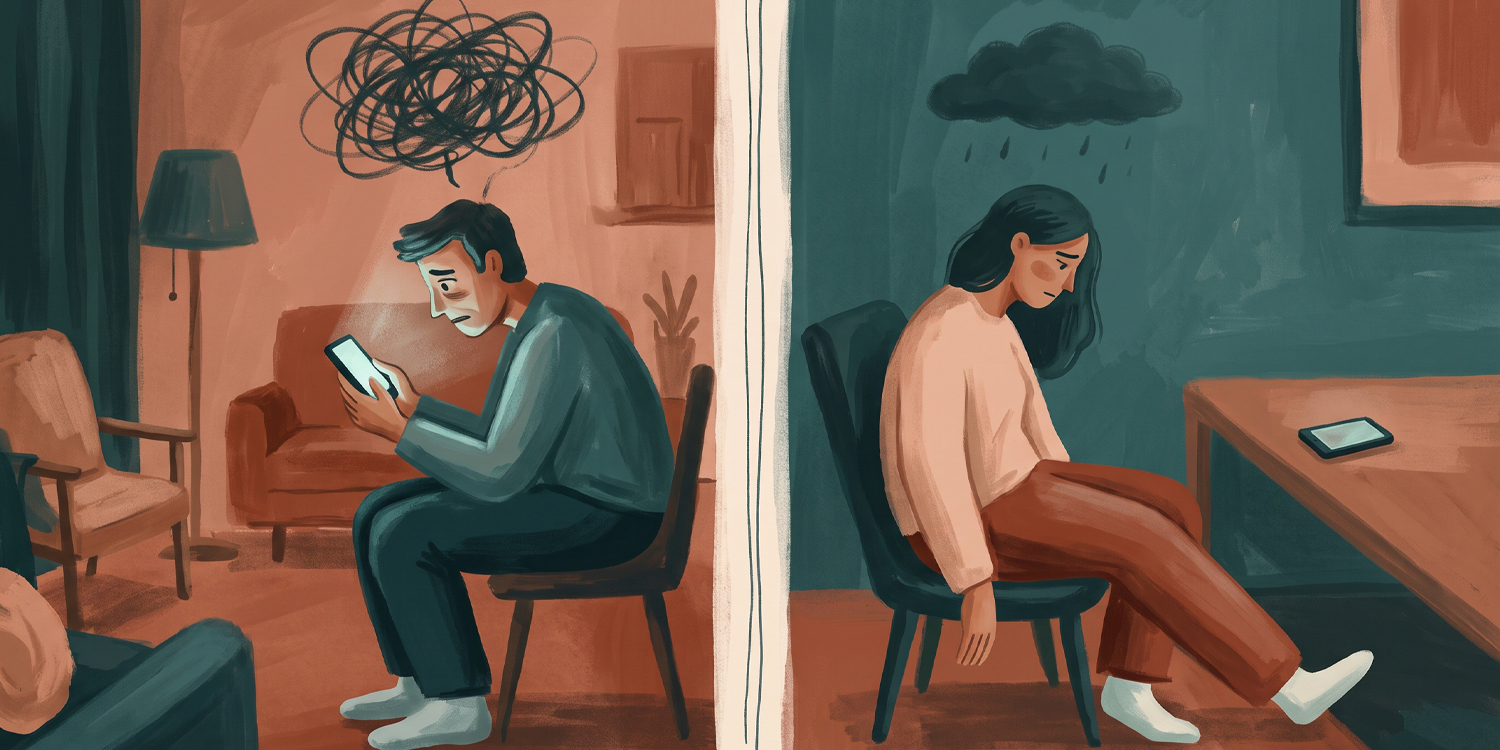
There’s a particular kind of quiet that settles in after you send a casual text and get nothing back. An hour passes, then an afternoon, then a couple of days, and your brain starts filling in the blank—usually in the least generous way possible.
Did you come across as annoying? Did you say something weird? Mostly, it’s easy to assume the person on the other end saw your message, shrugged, and didn’t think twice about ignoring you.
We tend to picture ghosting as a cold, deliberate brush-off. In everyday digital life, though, silence is often far messier: someone glances at a text while distracted, means to answer later, and forgets, or puts off replying without realizing the other person already feels shut out.
The quiet side of the screen
Research suggests that when a conversation goes dark, the person who stopped replying is rarely as unbothered as they look from the outside.
To examine how both sides misread unanswered messages, Sophia Li of the Haas School of Business at the University of California, Berkeley, and Coral Zheng of the University of Cambridge’s Judge Business School ran a series of studies published in Personality and Social Psychology Bulletin. Asking adults to recall past online exchanges, imagine texting with a casual friend, and chat live with strangers, they compared how bad people actually felt about going quiet with how bad the waiting side expected them to feel.
In both the recalled and imagined conversations, people who stopped responding felt—or expected to feel—worse than those left waiting predicted. When adults looked back on real unanswered messages, people left hanging underestimated the other person’s guilt and sadness, along with their relief.
That blind spot grew widest when the silence was an accident, such as simply forgetting to text back. Interestingly, people who went quiet had a fairly accurate sense of how bad the waiting side felt; the misunderstanding ran the other way.
What one tiny reply changes
Going radio silent doesn’t just make the quiet person look indifferent—it nudges the waiting person toward self-blame. When 601 adults imagined texting with a friend they didn’t know very well and suddenly getting no reply, about a third assumed they had been annoying.
Then the researchers tested a small change. Instead of vanishing, the friend sent one brief line: “Sorry, but I can’t talk right now.”
That single message dropped the share of people assuming they had been annoying to about one in five, with most figuring the friend was simply busy. It eased things for the sender, too: people imagining sending that quick heads-up expected to feel less bad, and the waiting friend’s guesses landed closer to the mark.
PsyPost’s full coverage of the study walks through all three experiments in detail, including the live chatroom test—where two people in the exact same exchange often didn’t even agree on whether ghosting had happened—along with Zheng’s full comments on why ghosting is such a subjective experience.
Where the silence gets complicated
The study contributes to the scientific understanding of everyday digital silence and the emotional blind spots that open up when a conversation stalls. However, the live chatroom experiment with strangers did not show the overall effect on its own—it reappeared only in an unplanned look at participants who saw the skipped chat as ghosting—and every participant lived in the United States, where norms around directness may differ from other cultures.
Readers interested in the rest of the study’s caveats—including how brief chats with strangers compare with a breakup between close partners—can find them in the original report.
“If you’ve been ghosted, it may help to know that the person who hasn’t responded probably feels worse than you expected. If you’re the one who hasn’t responded, maybe consider sending a short reply before going silent,” Zheng said.
Waiting on an unanswered message still stings, and a quick line won’t smooth over every awkward pause. Even so, radio silence rarely tells the whole story—and the person behind it may be carrying more guilt, or simply more distraction, than our worst guesses allow.