

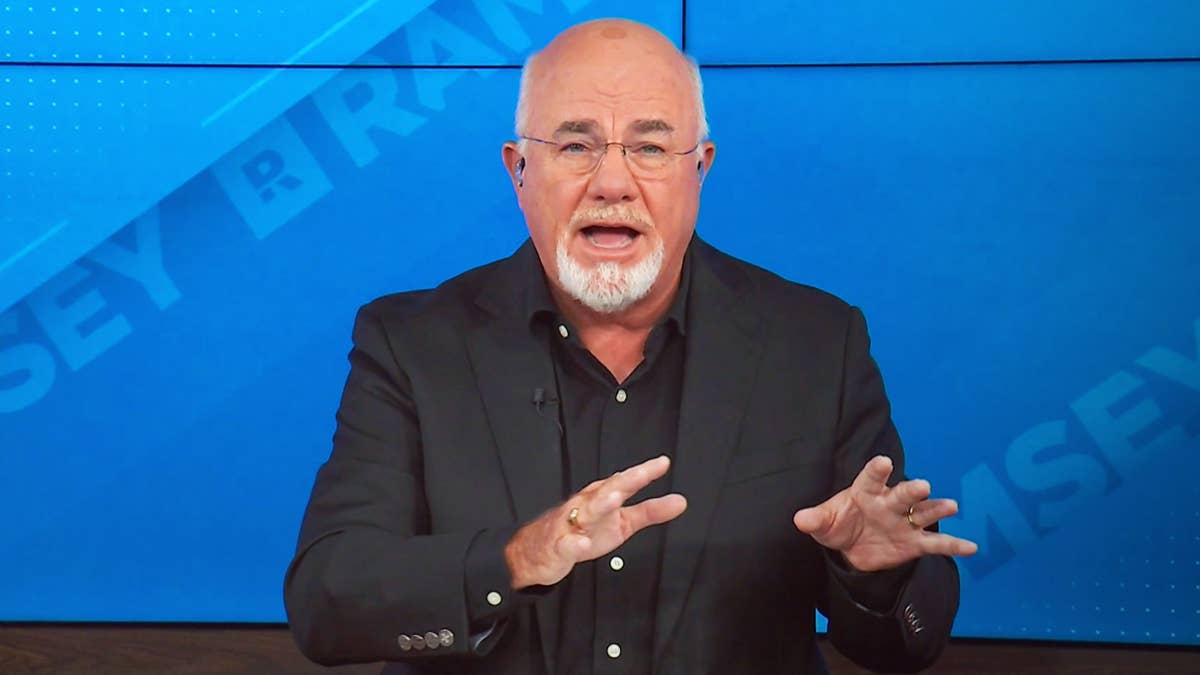
Millions of American workers rely on a single “set-it-and-forget-it” investment inside their workplace 401(k) or Individual Retirement Account (IRA) — a strategy that personal finance author Dave Ramsey warns could quietly starve their nest egg of decades of compound growth.
With the IRS increasing the 401(k) employee contribution limit to $25,500 for 2027 while keeping the IRA cap at $7,500, savers are preparing to funnel even more money into workplace retirement accounts.
For most employees, those payroll deductions automatically flow into target-date funds — all-in-one mutual funds that gradually shift from stocks into bonds as a worker’s target retirement year approaches.
According to Vanguard’s research, 84% of workplace plan participants hold a target-date fund.
Yet Ramsey Solutions argues that the automatic shift toward conservative bonds leaves retirees dangerously exposed to inflation — sparking a sharp philosophical clash with Fidelity, Charles Schwab, and Vanguard over how aggressively retirement savers should stay invested.
Why Dave Ramsey warns against target-date funds
Ramsey Solutions explains that target-date funds are the default choice promoted inside many company retirement plans, designed to reduce risk as retirement nears. However, Ramsey argues that dialing back stock exposure too early sacrifices the long-term growth needed to fund a multi-decade retirement.
“We don’t recommend target date funds because by the time you’re ready to retire, your 401(k) will be mostly invested in bonds and money markets that won’t give you the growth you need to support you through 30-plus years of retirement,” Ramsey Solutions wrote.
Rather than letting an automated “glide path” shift savings into fixed income, Ramsey advises workers to build a portfolio split across four categories of growth stock mutual funds — growth and income, growth, aggressive growth, and international — and keep growth-oriented stocks working even after leaving the workforce.
“If you’re not careful, your target-date fund might be so conservative that inflation starts to kick your butt as you age,” Ramsey Solutions added. “We recommend keeping growth stock mutual funds in your portfolio even after you retire. Your money can still grow!”
Ramsey Solutions, Fidelity, Vanguard, Charles Schwab
Fidelity and Schwab defend the ‘glide path’
Major brokerage firms take a decidedly different view, arguing that target-date funds solve two of the biggest behavioral mistakes everyday investors make: failing to diversify and panic-selling during market downturns.
Charles Schwab notes that target-date funds automatically rebalance across U.S. and international stocks and bonds without requiring savers to constantly monitor market swings.
“By automating investment decisions, target date funds can help you avoid making emotional decisions that can negatively impact their financial goals,” Charles Schwab explained.
“Panic-selling when markets are down, or attempting to time market entries and exits, has historically lowered returns.”
More Retirement:
Annuities can be a retirement safety net to prevent outliving savings
Vanguard flags a retirement fear built into 401(k) plans
Suze Orman has a serious retirement warning for 2027
Fidelity Investments directly counters the concern that target-date funds abandon growth too soon, emphasizing that professionally managed glide paths are specifically engineered to combat longevity and inflation risks while cushioning portfolios against a market crash right before retirement.
“Many target date funds maintain a healthy level of stocks up to the goal date and beyond, so a portion of your money has the chance to keep growing,” Fidelity noted.
Vanguard highlights the hidden trade-offs inside 401(k) menus
Vanguard — the largest manager of target-date fund assets — points out that automated default funds have dramatically improved diversification for workplace savers, noting that 73% of target-date investors hold their entire plan balance inside a single fund.
Still, both Vanguard and Schwab stress that target-date funds are not identical across providers — a nuance savers often miss when checking a box on their 401(k) enrollment form.
Check the equity landing point: Vanguard’s standard glide path reaches a final allocation of 30% stocks and 70% bonds around age 72, though the firm also offers higher-equity landing points (such as 50% stocks) for retirees comfortable with greater market swings. (Source: Vanguard)
Compare fees and management styles: “Fees vary by provider and underlying investments, and even small differences can compound over time and affect long-term outcomes,” Schwab warned. (Source: Charles Schwab)
Know whether your fund is “To” or “Through”: Some funds stop adjusting at the target retirement date, while others continue shifting more conservatively well into retirement. (Source: Charles Schwab)
When examining these perspectives, it becomes apparent that for savers preparing to take advantage of higher 2027 contribution limits, an important guideline emerges.
Whether you choose Ramsey’s all-stock mutual fund approach or a brokerage target-date fund, never treat your 401(k) investment menu as a blind default.
Related: Charles Schwab flags 401(k) tax-saving scheme; Vanguard, Fidelity warn on rules