

[[{“value”:”Whether you wanted to feel like a movie star, escape to the tropics, or just pile into the family station wagon, restaurant chains in the 1960s had you covered. Experiences ranged from skyline-view fine dining to a chic “ladies who lunch” spot to grabbing burgers with friends at the drive-in. Many of the popular ’60s restaurants have disappeared or dramatically changed, but they made memories — and dinner — special.
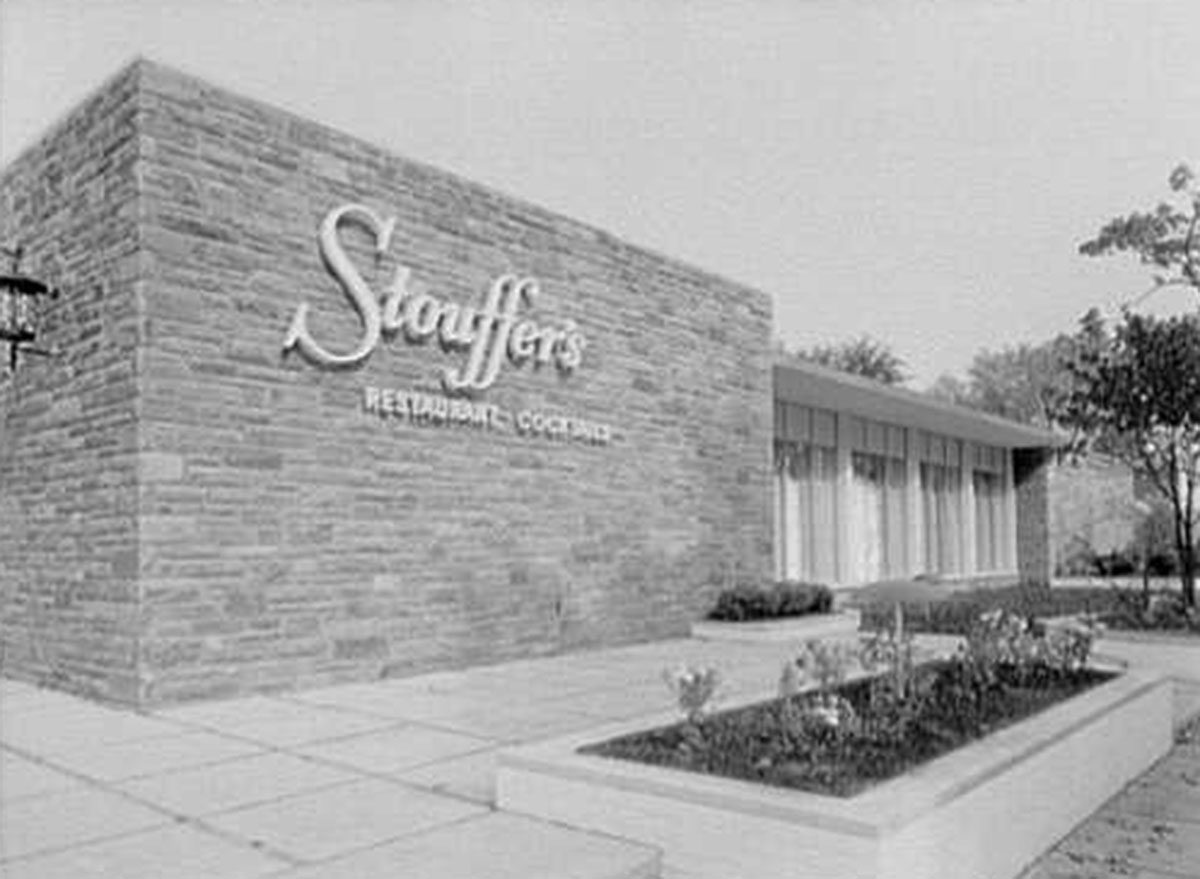
Stouffer’s Rooftop Restaurants
Before Stouffer’s became primarily known for frozen food, it was a restaurant chain for glamorous nights out at high-rise rooftop dining rooms in major American cities. At Top of the Sixes in New York City, Top of the Hub in Boston, and Top of the Rock in Chicago, among others, guests would take an express elevator up dozens of floors and dine on prime rib and lobster thermidor while looking at a sparkling skyline. Rising rent in skyscrapers and a shifting focus toward its frozen food led Stouffer’s to exit the restaurant business, but you can still pretend you’re dining in rooftop luxury as you eat your chicken pot pie or macaroni and cheese from the freezer.
Trader Vic’s
If you wanted dinner to feel like a mini vacation without ever leaving your city, Trader Vic’s was the place to go. Even though the business started decades before, Trader Vic’s capitalized on the post-war tiki culture boom in the ’60s, expanding the footprint of its Polynesian-fusion restaurants. Under dim lighting, thatched roofs, carved tiki idols, and pufferfish lamps, customers could sip mai tais and scorpion bowls or share a pu pu platter with the family. As the tiki fad faded in the ’70s and ’80s, Trader Vic’s consolidated, and there are only two locations left in the United States.
Red Barn
Red Barn was founded in 1961 and quickly hit its stride, opening more than 200 restaurants in the U.S. before the end of the decade. With an iconic jingle — “When the hungries hit, hit the Red Barn” — and bright red, barn-shaped buildings, Red Barn bridged the gap between drive-ins and sit-down restaurants. Families piled into the station wagon on Friday night and headed there for a bucket of fried chicken or Big Barney burgers. The chain grew to between 300 and 400 locations in the ’70s before corporate shuffling stopped the expansion and allowed fast-food titans like McDonald’s and KFC to win out.
Schrafft’s
East Coast institution Schrafft’s paired an upscale candy and bakery counter up front with a white-tablecloth dining room in the back. It was a popular destination for the “ladies who lunch” crowd, and was one of the first major restaurant chains to welcome unescorted women. In addition to classic sandwiches, they also served hot fudge sundaes assembled from house-made ice cream and chocolates. As time went on, Schrafft’s formal, old-world dining rooms had trouble attracting the younger crowd, and the chain closed down in the ’80s.
Valle’s Steak House
Valle’s was a steak house that looked like a banquet hall, with massive dining rooms that seated between 800 and 1,400 people. Affordable, high-quality steaks and double-lobster dinners were the centerpiece of a sprawling menu — which was also massive, literally, at two feet wide. Between the reasonable prices, quick service, and large footprint, Valle’s was a popular spot for group celebrations before competition and heavy debt drove the chain into bankruptcy and closure.
Hot Shoppes
Before Marriott was known primarily for hotels, its core business was a restaurant chain. Hot Shoppes were the hangout spot for Mid-Atlantic teenagers in the ’60s, offering both drive-in service and sit-down dining rooms where customers could get a Mighty Mo double-decker burger, a ham and cheese sandwich called the Teen Twist, and hot fudge ice cream cake for dessert. As fast food and newer casual dining chains grew, Marriott decided to focus on its hotels and gradually phased out Hot Shoppes.
The post 6 Restaurant Chains That Made Dinner Out a Special Occasion in the 1960s appeared first on Eat This Not That.”}]]