

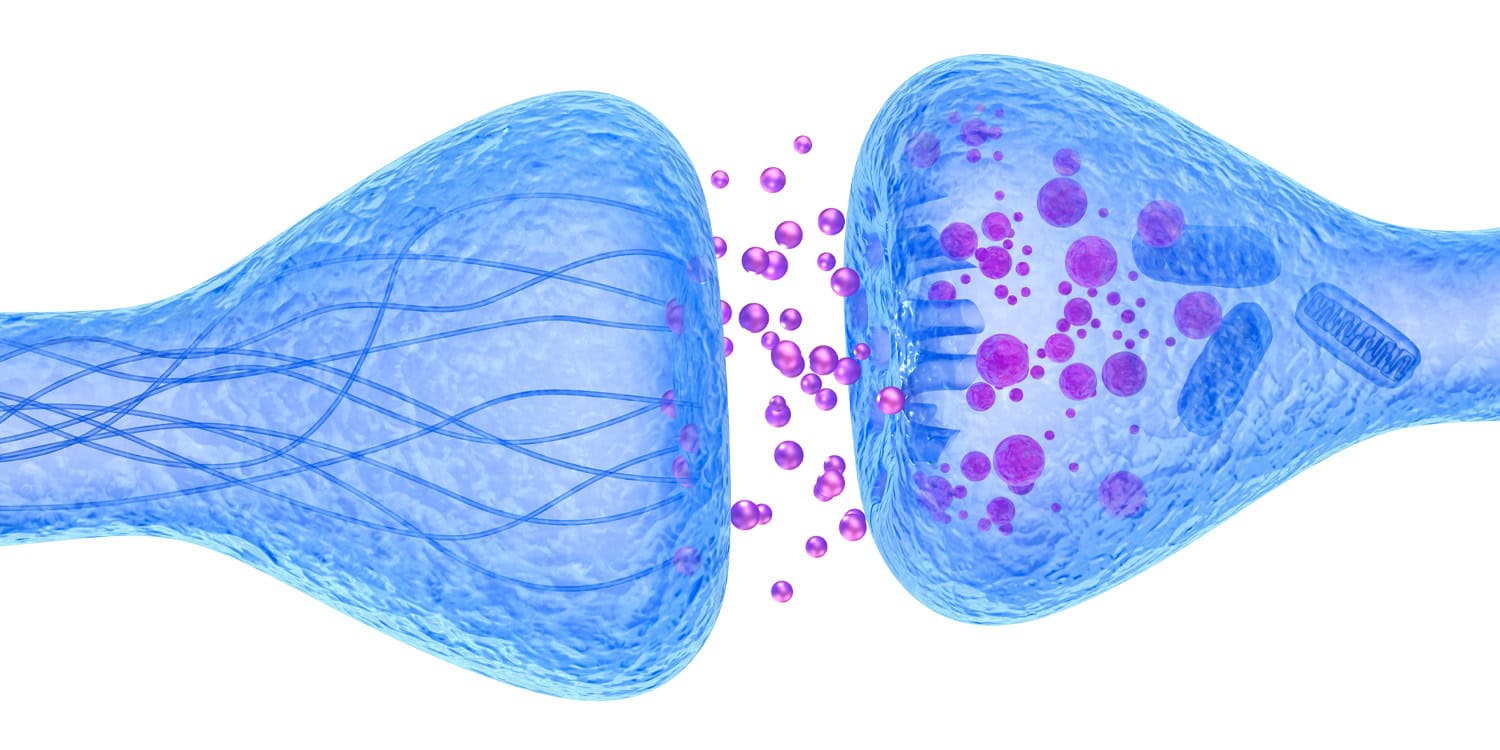
A brain signaling system important for learning and memory appears to be linked to the brain structure that supports children’s math and reading abilities, according to a study published in Nature Communications. Across two groups of children, brain regions where gray matter volume was most closely tied to academic skills tended to be regions rich in NMDA receptors, which respond to the chemical messenger glutamate.
Scientists have long known that mathematics and reading rely on networks of brain regions rather than a single “math area” or “reading area.” Less understood is how the brain’s chemical signaling systems relate to the development of these networks.
The researchers expected two systems to be especially relevant: glutamate, the brain’s main excitatory chemical messenger, and GABA, its main inhibitory messenger, since the balance between the two is thought to be important for learning. NMDA receptors, which are proteins on brain cells that respond to glutamate, play an important role in plasticity, the ability of connections between neurons to change and strengthen with experience.
Previous studies have linked levels of glutamate and other neurotransmitters to academic abilities, but they have generally concentrated on selected areas of the brain. The new study instead asked whether the brain-wide distribution of different chemical receptors corresponded with structural patterns associated with children’s math and reading skills.
Led by Yuan Zhang of Stanford University, the researchers analyzed structural brain scans and academic test scores from 991 typically developing children between the ages of 7 and 14. The initial sample included 760 children (average age 9.7 years; 275 girls) from the Child Mind Institute’s Healthy Brain Network, a large research dataset. The findings were then tested in an independent sample of 231 children (average age 9.2 years; 98 girls) drawn from studies conducted at Stanford.
Children completed standardized tests of numerical calculations, mathematical problem-solving, word reading and reading comprehension. The researchers examined gray matter volume across 218 brain regions to identify patterns associated with stronger academic performance, accounting for age. They then compared these patterns with an existing atlas, based on PET scans, showing the typical brain-wide distribution of 19 different neurotransmitter receptors and transporters.
Of those 19 systems, NMDA receptors produced the most consistent finding. In both groups of children, regions where gray matter volume was more strongly tied to math and reading performance tended to have higher densities of NMDA receptors. These associations were modest, with NMDA receptor distribution accounting for between 8% and 20% of the variation across brain regions.
Other chemical systems, including those involving dopamine, acetylcholine, serotonin and GABA, produced weaker or inconsistent findings. Some, such as acetylcholine and histamine for math, showed associations in one sample but not the other, making NMDA receptors the only system that replicated across both groups for both skills.
There were also differences between academic skills. For mathematics, NMDA receptor distribution corresponded with structural patterns across several brain networks, including the default mode, salience and higher-order visual networks. For reading, the relationship that held up in both samples was concentrated within a network involved in higher-level visual processing, which includes regions important for recognizing written words.
Math and reading scores were strongly correlated, and additional analyses suggested that the NMDA associations mainly reflected brain structure shared by both skills. The researchers suggest glutamate-related signaling may be a common biological feature of academic learning that is expressed through somewhat different brain systems depending on the skill.
Zhang and colleagues summarized, “NMDA receptor distribution showed robust and spatially selective associations with brain structural organization for both mathematical and reading abilities across two independent cohorts.”
Some limitations should be noted. The researchers did not measure NMDA receptors or glutamate in these children. Instead, the receptor maps came from previous imaging of more than 1,200 healthy adults and were used as a reference against which the children’s brain structures were compared, and because neurotransmitter systems change during development, adult maps may not accurately represent children’s brains.
Because the analysis compared patterns across brain regions rather than measuring receptors in individual children, it does not show that children with more NMDA receptors are better at math or reading. The study was also cross-sectional and included only typically developing children aged 7 to 14, so it cannot establish whether glutamate signaling shapes the development of these skills.
The study, “Glutamatergic signaling underlies brain structural organization for mathematical and reading abilities in children,” was authored by Yuan Zhang, Hyesang Chang, Dawlat El-Said and Vinod Menon.