


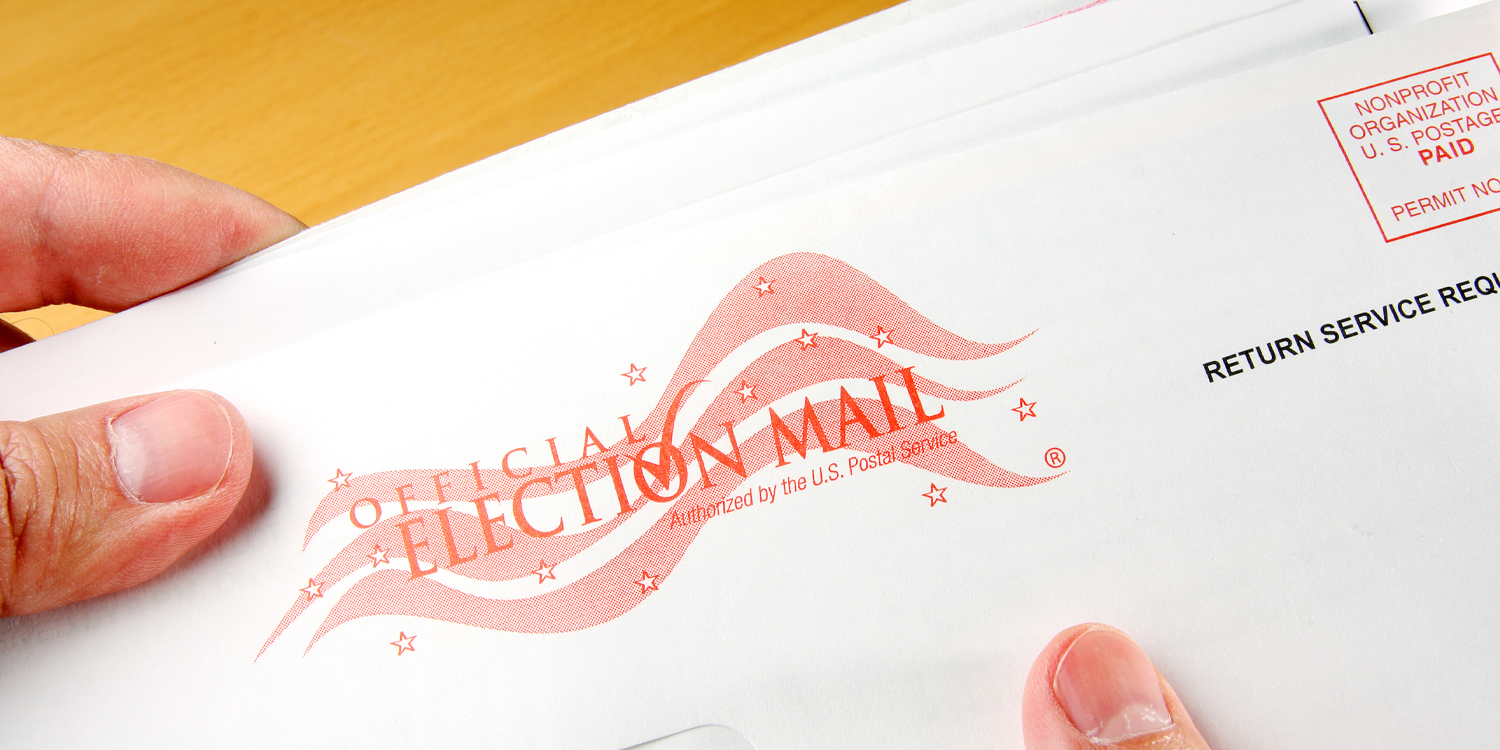
A recent large study found that African American adults living in counties with higher rates of hate crimes are more likely to cast their ballots by mail rather than going to a polling place. The research suggests that utilizing absentee options might offer a way to participate in elections while avoiding potential intimidation or violence in public spaces. The findings were published in American Politics Research.
The United States has an extensive history of violence and intimidation directed at African American voters. During the late nineteenth and twentieth centuries, the threat of attacks and community hostility successfully kept many individuals away from the polls. Researchers have demonstrated that historical racial violence depressed voter participation numbers in affected regions. In contemporary times, physical intimidation at polling places sometimes occurs, manifesting alongside increases in reported hate crimes during major national elections.
A hate crime is defined as a criminal offense motivated by bias against a characteristic like race, religion, or sexual orientation. The Federal Bureau of Investigation tracks these events locally to monitor trends and determine resource allocation across the country. Research shows that a hate crime affects more than just its immediate victim. These actions can generate fear and anger among the broader population that shares the targeted person’s identity, signaling hostility to an entire community.
Political scientists Regina Branton and Martha Kropf initiated this research to understand how community-level adversity influences civic behavior. Both authors are researchers within the Department of Political Science at the University of North Carolina at Charlotte. They wanted to evaluate whether the recent availability of alternative voting methods changed how people respond to local violence. In particular, they questioned if mail-in voting allows targeted groups to maintain political participation without exposing themselves to physical risks.
To test this idea, the researchers combined two sets of information into one large study. First, they looked at the 2016 Collaborative Multiracial Post-Election Survey. This poll asked thousands of adults across the country how they voted in the 2016 presidential contest. Options included voting early in person, voting in person on Election Day, or using an absentee ballot through the mail.
Next, the researchers acquired incident records from the Federal Bureau of Investigation. They tracked the location of every documented hate crime committed against African American individuals between 2013 and 2016. The team mapped these crimes to the county level across the entire country. They then matched the county-level crime data with the individual survey responses to see if a link existed between local crime rates and personal voting choices.
Analyzing survey information from more than 3,100 African American participants, the researchers utilized statistical models to look for associations. Because many variables can influence how a person votes, the researchers adjusted their calculations to account for alternative explanations. They factored in demographic details ranging from a person’s age, education, and health to their marital status and employment. They also noted which states required a formal excuse, like an illness, to request a mail-in ballot.
The data showed an association between the frequency of local hate crimes and the likelihood of utilizing the postal service to vote. In counties with the lowest raw numbers of such crimes, the probability that an African American voter bypassed the polling place in favor of mail was about 10 percent. In counties with the highest numbers of hate crimes, that probability scaled up to 26 percent. The researchers documented this association even when controlling for other community factors like rural location and ethnic diversity.
Looking at raw crime numbers can sometimes skew interpretations because heavily populated counties will naturally have more recorded events of all types. To address this, the researchers also examined the crime rates relative to the size of the African American population in each county. Using this per capita measure, the pattern showed an even stronger association. The probability of an individual choosing mail-in voting reached 33 percent in the areas with the highest concentrated rates of hate crimes.
To verify that the association was not a random anomaly, Branton and Kropf repeated their evaluation using records from the next presidential election cycle. They combined data from the 2020 version of the national survey with hate crime statistics spanning 2017 to 2020. This follow-up analysis formed another large study with over 4,200 participants. The 2020 evaluation yielded the same basic behavior pattern.
Voting behavior in 2020 was complicated by the viral pandemic, which pushed unprecedented numbers of people in all demographic groups to vote by mail. The researchers added a measure of local virus infection rates to their models to prevent the pandemic from skewing the interpretation of the crime data. Even after accounting for illness density, higher levels of hate crimes remained associated with increased use of mail-in ballots among African American participants.
As a final verification step, the researchers ran the exact same statistical models using the white participants from the surveys and hate crimes categorized against white individuals. The models found that any potential link between those crimes and the voting method chosen by white citizens was not statistically significant. The authors suggest this contrast indicates that the relationship between neighborhood intimidation and mail-in voting behavior is specific to targeted minority populations.
While the study provides an expansive look at election behavior, the authors noted several caveats. First, their research relies on observational data rather than a controlled experiment. This means the statistical model can show an association between crime and voting methods, but it cannot prove that the crime directly caused the behavior. In addition, the Federal Bureau of Investigation relies on local law enforcement agencies to voluntarily report hate crimes, meaning the official numbers might underestimate the actual level of hostility in some communities.
The researchers also highlighted a practical problem involving the use of the postal system as a safe harbor for voters. Previous studies have documented that mail-in ballots submitted by minority voters are rejected at higher rates than those from white voters. Rejections often occur due to strict signature matching requirements or missed deadlines. If people rely on mail-in ballots to avoid harassment, their votes run a higher risk of being discarded due to minor technical errors.
The overall landscape of election administration has also shifted since the data for this study was collected. After 2020, several state legislatures moved to implement stricter rules regarding mail-in and absentee voting. Some locations shortened the window for requesting a ballot or raised the identification requirements needed to return one by mail or via a drop box. The researchers recommend that future studies investigate how these changing rules impact populations that might face localized hostility.
Overall, this research highlights how community environments uniquely influence marginalized groups. When voters choose when and where to cast a ballot, their calculation involves far more than just convenience.
The study, “Mail Voting as a Tool to Avoid Voter Intimidation and Hate Crimes,” was authored by Regina Branton and Martha Kropf.